
Vegan, Gluten-Free, Sugar-Free: Marketing or Reality?

 02 Jan 2026
 9 Min Read
 Views
Views

Summary :
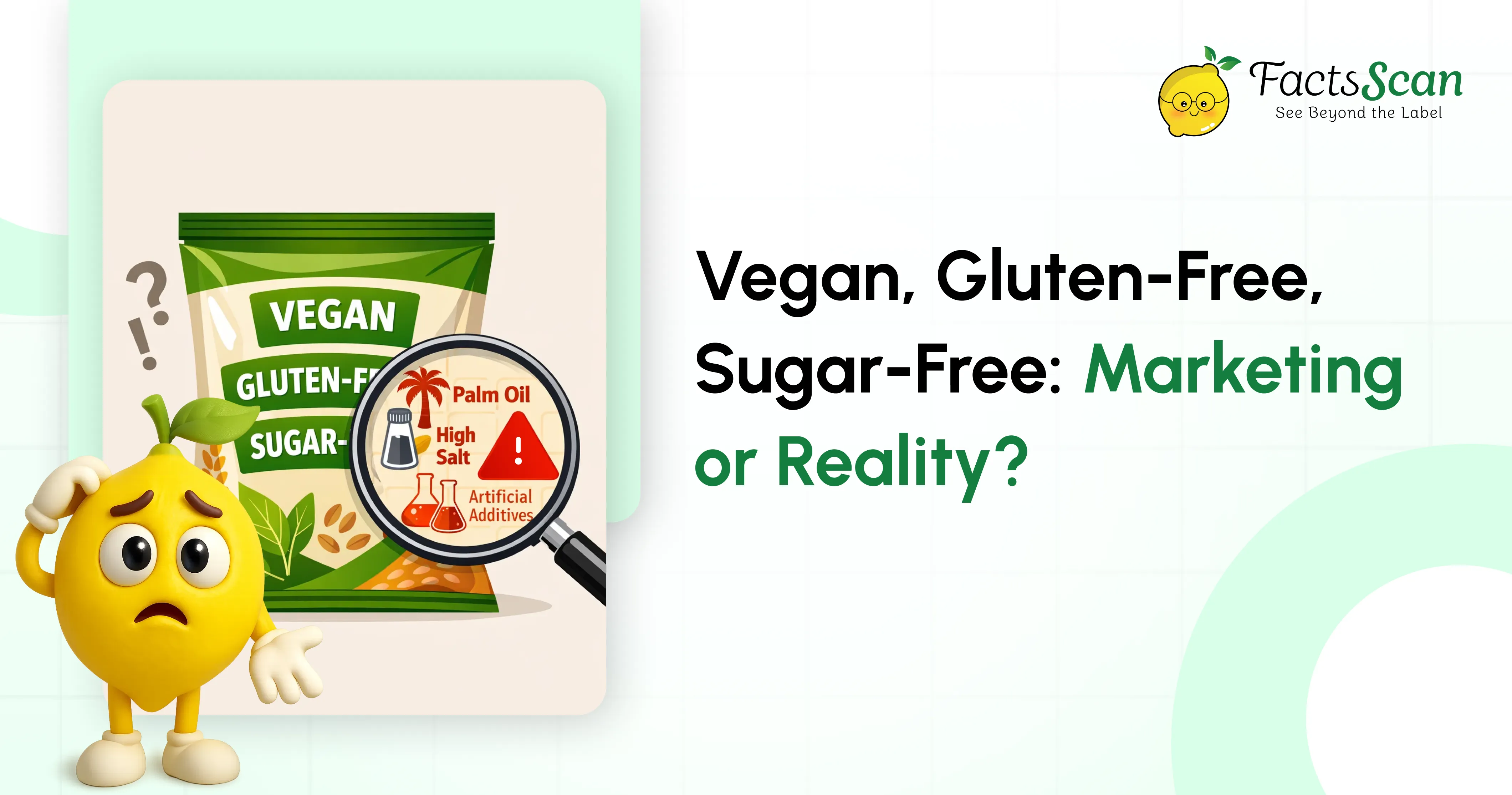
Vegan, gluten free and sugar free labels attract health conscious shoppers, but these marketing claims do not guarantee nutritional quality and often hide excessive palm oil, salt, saturated fat and artificial additives.
Introduction
Walk through any supermarket today and you will encounter shelves dominated by products shouting vegan, gluten free, sugar free and other free from claims. The global market for such products has exploded as consumers increasingly seek healthier alternatives to conventional packaged foods. These labels create an immediate impression of purity, wellness and superior nutrition. However, the reality behind these marketing terms is far more complex than attractive packaging suggests. Many products bearing these claims contain hidden ingredients that compromise their health value significantly.
What Vegan, Gluten Free and Sugar Free Actually Mean
Legal and Nutritional Perspective
Vegan means a product contains no animal derived ingredients including meat, dairy, eggs, honey or gelatin. The certification requires manufacturers to verify their supply chain excludes all animal products and byproducts. However, vegan status says nothing about sugar content, saturated fat levels or overall nutritional quality.
Gluten Free indicates the absence of gluten protein found in wheat, barley and rye. Products must contain less than 20 parts per million of gluten to qualify for this label in most jurisdictions. This claim matters medically for people with celiac disease or gluten sensitivity but offers no inherent health advantage for the general population.
Sugar Free legally means a product contains less than 0.5 grams of sugar per serving. Manufacturers often replace sugar with artificial sweeteners like aspartame, sucralose or saccharin, or use sugar alcohols such as erythritol and xylitol. These substitutes may reduce calories but can cause digestive discomfort and do not necessarily make the product healthier overall.
Why Brands Use These Claims So Aggressively
1. Consumer Perception and Market Advantage
Food companies understand that health conscious consumers make quick purchasing decisions based on front of pack claims without examining complete ingredient lists or nutrition facts. A vegan label immediately attracts plant based dieters, environmental advocates and those avoiding dairy. Gluten free appeals to wellness seekers who mistakenly believe eliminating gluten benefits everyone. Sugar free promises guilt free indulgence to weight watchers and diabetics.
2. The Health Halo Effect
The health halo effect occurs when a single positive attribute like vegan or gluten free makes consumers perceive the entire product as healthy, even when other nutritional aspects are problematic. Studies show shoppers assume vegan cookies contain fewer calories and less fat than regular cookies, despite similar or sometimes higher values. This cognitive bias allows brands to charge premium prices while delivering questionable nutritional improvements.
Hidden Ingredients Behind Free From Labels
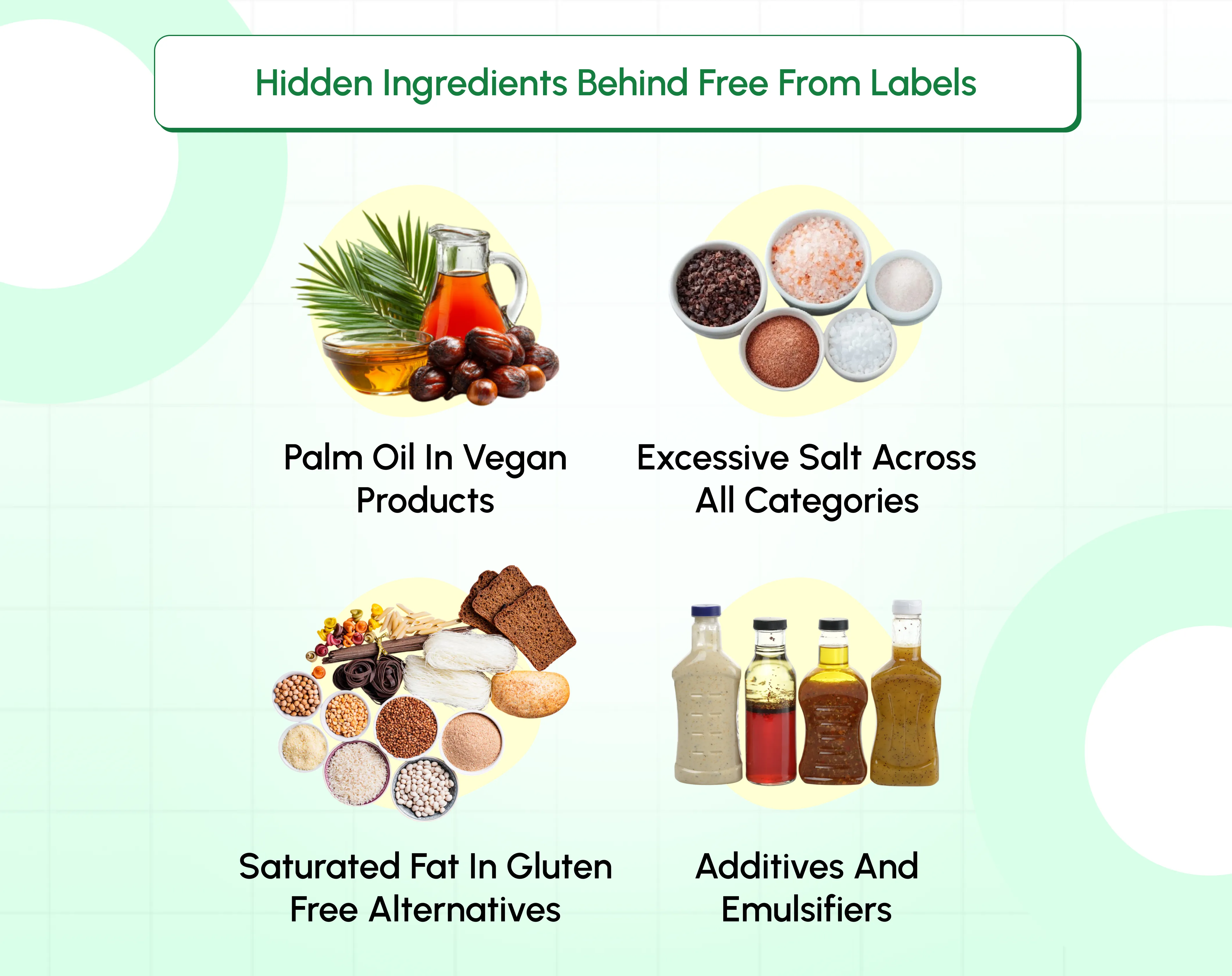
1. Palm Oil in Vegan Products
Vegan manufacturers frequently rely on palm oil and palm kernel oil to replace butter and other animal fats. These oils provide the desired texture and mouthfeel in baked goods, spreads and snacks. However, palm oil contains approximately 50% saturated fat and palm kernel oil reaches 80% saturated fat content. Regular consumption raises LDL cholesterol levels just as animal fats do, undermining cardiovascular health despite the vegan credential.
2. Excessive Salt Across All Categories
Gluten free and vegan processed foods often compensate for reduced flavor complexity by dramatically increasing salt content. Gluten free bread, crackers and snacks may contain 30% to 50% more sodium than conventional versions to mask taste differences created by alternative flours. Salt acts as a flavor enhancer that manufacturers depend on heavily when reformulating products.
3. Saturated Fat in Gluten Free Alternatives
Gluten free baked goods require substantial fat additions to achieve acceptable texture without gluten’s binding properties. Manufacturers add coconut oil, another saturated fat source containing 90% saturated fatty acids, alongside palm oil. A single gluten free muffin can deliver half the recommended daily saturated fat limit while appearing healthier than wheat based versions.
4. Additives and Emulsifiers
Sugar free products replace natural sweetness with combinations of artificial sweeteners, modified starches, gums and emulsifiers to replicate texture and mouthfeel. Vegan and gluten free items similarly require extensive additive lists including xanthan gum, guar gum, methylcellulose and numerous stabilizers. These chemical additions increase ingredient complexity substantially compared to traditional recipes.
Popular Food Claims Versus What You Should Still Check
| Marketing Claim | What It Guarantees | What It Does NOT Guarantee | Key Ingredients to Check |
|---|---|---|---|
| Vegan | No animal products | Low saturated fat, low calories, low sodium | Palm oil, coconut oil, sodium content, total fat |
| Gluten Free | No wheat/barley/rye gluten | Better nutrition, weight loss, lower calories | Saturated fat, sodium, sugar content, additives |
| Sugar Free | Less than 0.5g sugar per serving | Healthy, low calorie, no sweeteners | Artificial sweeteners, sugar alcohols, total carbs, calories |
| Organic | Certified organic ingredients | Low sugar, low fat, low sodium, nutritious | Added sugars, palm oil, total calories, portion size |
| Natural | Minimal processing claims | Healthy, low additives, no preservatives | Sugar content, fat type, sodium levels, calories |
Are These Foods Always Healthier Choices
The answer is definitively no. A vegan donut fried in palm oil with 30 grams of sugar remains nutritionally poor despite plant based status. Gluten free cookies made with refined rice flour, coconut oil and corn syrup offer no health advantage over wheat flour versions and often contain more saturated fat and calories. Sugar free candies sweetened with sugar alcohols may cause bloating, gas and diarrhea when consumed beyond small amounts.
These products serve specific medical needs. People with celiac disease require strictly gluten free diets. Diabetics benefit from carefully chosen sugar free options. Ethical vegans avoid animal products for moral reasons. However, the general population should not assume these labels automatically indicate superior nutrition or health benefits. The underlying ingredient quality and overall nutritional profile matter far more than any single free from claim.
How to Read Ingredient Lists Beyond Front of Pack Claims
Ignore the front label initially and flip directly to the ingredients list and nutrition facts panel. Ingredients appear in descending order by weight, so the first three to five items reveal what the product primarily contains. If you see palm oil, coconut oil, sugar substitutes or sodium appearing early, the health halo disappears regardless of vegan or gluten free status.
Check serving sizes carefully because manufacturers manipulate portions to make nutrition facts appear better. A sugar free candy listing 0.4 grams of sugar per serving may define one serving as a single small piece, meaning realistic consumption delivers much more. Compare saturated fat grams to total fat and ensure saturated fat stays below 10% of your daily value per serving. Examine sodium levels and avoid products exceeding 400 milligrams per 100 grams unless specifically needed.
Common Misconceptions Consumers Believe
1. Myth: Gluten free foods help with weight loss
Fact: Gluten free products often contain more calories, fat and sugar than regular versions to compensate for texture and taste differences. No evidence supports gluten free diets for weight loss in people without celiac disease.
2. Myth: Vegan automatically means low fat and healthy
Fact: Vegan junk food exists abundantly. Products can be vegan while containing excessive palm oil, refined sugars and artificial additives that harm health just like conventional junk food.
3. Myth: Sugar free means calorie free or low calorie
Fact: Sugar free products replace sugar with ingredients that may still provide calories. Sugar alcohols contain approximately half the calories of sugar. Fat and overall calorie content remain important.
4. Myth: Natural and organic labels guarantee no harmful ingredients
Fact: Organic sugar is still sugar. Natural flavors can include highly processed extracts. These terms regulate sourcing and processing methods but do not limit sugar, salt or saturated fat content.
5. Myth: Free from products are always worth the premium price
Fact: Many free products offer no nutritional advantage over conventional options for people without specific medical conditions, making higher prices unjustified from a health perspective.
How to Choose Genuinely Healthier Options
Use these practical strategies to identify truly nutritious products: Prioritize whole food ingredients you recognize like oats, nuts, fruits and vegetables over extensive chemical names. Choose products with five to ten ingredients maximum rather than lengthy additive lists. Verify saturated fat stays below 5 grams per 100 grams regardless of vegan or other claims. Select items with less than 5 grams of sugar per 100 grams and less than 400 milligrams sodium per 100 grams. Compare similar products across brands to find versions with cleaner ingredient lists and better nutrition profiles. Read reviews and ratings from reliable sources beyond manufacturer marketing materials. Consider whether the free from claim addresses a genuine medical need or ethical preference versus marketing appeal.
How a Food Label Checking App Like FactsScan Helps Decode Such Claims
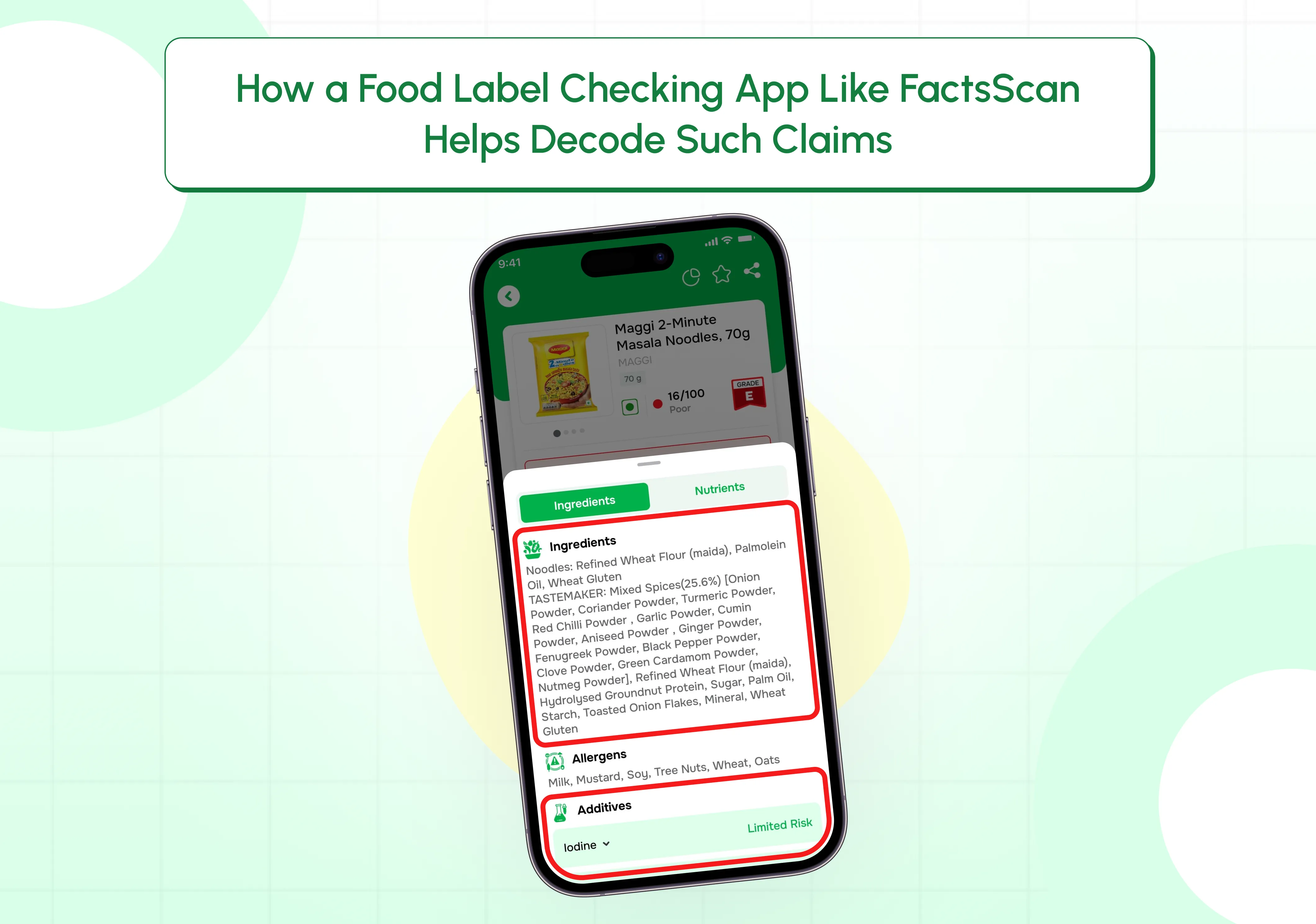
Modern shopping requires tools that cut through marketing noise instantly. FactsScan empowers consumers to see beyond vegan, gluten free and sugar free labels by providing comprehensive ingredient analysis in seconds. Scan any product barcode and receive immediate breakdowns of sugar content, saturated fat levels, sodium amounts and additive presence regardless of what the front packaging emphasizes.
The app highlights ingredients like palm oil hiding behind vegan claims or excessive salt concealed in gluten free products. FactsScan compares similar items side by side, showing you which vegan cookie actually contains less saturated fat or which sugar free beverage uses fewer artificial additives. This technology transforms label reading from a confusing chore into a simple, informed decision making process that protects your health and budget simultaneously.
Conclusion
Vegan, gluten free and sugar free labels represent marketing strategies as much as nutritional reality. While these claims serve legitimate medical and ethical purposes for specific populations, they create misleading health halos that allow inferior products to appear superior. Palm oil saturated vegan snacks, sodium loaded gluten free crackers and artificially sweetened sugar free desserts demonstrate that free from does not equal healthy.
Your responsibility as a consumer extends beyond accepting front of pack promises. Question every claim, examine every ingredient list and verify nutritional facts before purchasing. Marketing teams design packaging to trigger emotional responses and bypass rational analysis. Counter this manipulation with knowledge, skepticism and technology.
Look beyond the attractive free from labels calling for your attention. Turn packages around, read what manufacturers hope you will ignore and make decisions based on complete information rather than partial truths. Download the FactsScan app today and make it your essential shopping partner. Scan every product before it enters your cart to understand ingredients clearly, compare options intelligently and choose foods that genuinely support your health goals.
Transform how you shop by letting FactsScan reveal what marketing hides. Use the app regularly to decode confusing claims, identify hidden ingredients and make informed food choices every single day. Your health deserves more than clever packaging promises. It deserves truth, transparency and tools that put knowledge in your hands instantly. Start scanning today and discover the reality behind the marketing.
Ready to make Healthier Choices?
Download FactsScan now from the Google Play Store and App Store and take charge of your food choices.





Sweety Patel

Author

Sweety Patel, founder of FactsScan, has over 14 years of experience in the development industry, where she has successfully created multiple applications. Driven by her passion for food safety and health, she launched FactsScan to provide consumers with a reliable solution to understand what they’re eating, its nutritional value, and better alternatives. With extensive research in food and nutrition, Sweety is committed to empowering people to make informed food choices for a healthier lifestyle.
Recent Articles

You Trust the Brand. But Have You Actually Read the Label?
What surveys and real data reveal about how Indian consumers actually shop, and why a trusted logo on the front is not the same as knowing what is inside.
Top Health Awareness Apps in India to Make Smarter Lifestyle Choices (2026)
Discover the top health awareness apps in India (2026) that help you make smarter lifestyle choices. From tracking nutrition and fitness to decoding packaged food, these apps empower you to stay informed, eat better, and live healthier every day.