
You Trust the Brand. But Have You Actually Read the Label?

 01 May 2026
 7 Min Read
 Views
Views

Summary :
What surveys and real data reveal about how Indian consumers actually shop, and why a trusted logo on the front is not the same as knowing what is inside.
Introduction
Here is a scene most of us recognise. You pick up a biscuit packet you have been buying for years, flip it over, check the expiry date, and drop it in your cart. Done. Label read. Healthy choice made.
Except, not quite. According to research conducted across Indian supermarkets, what most of us call "reading the label" is really just checking one thing: the date. And that habit, however sensible it feels, leaves an enormous amount of information unread, information that food companies spend considerable effort putting there and even more effort hoping you will skip.
The Gap Between What We Say and What We Do
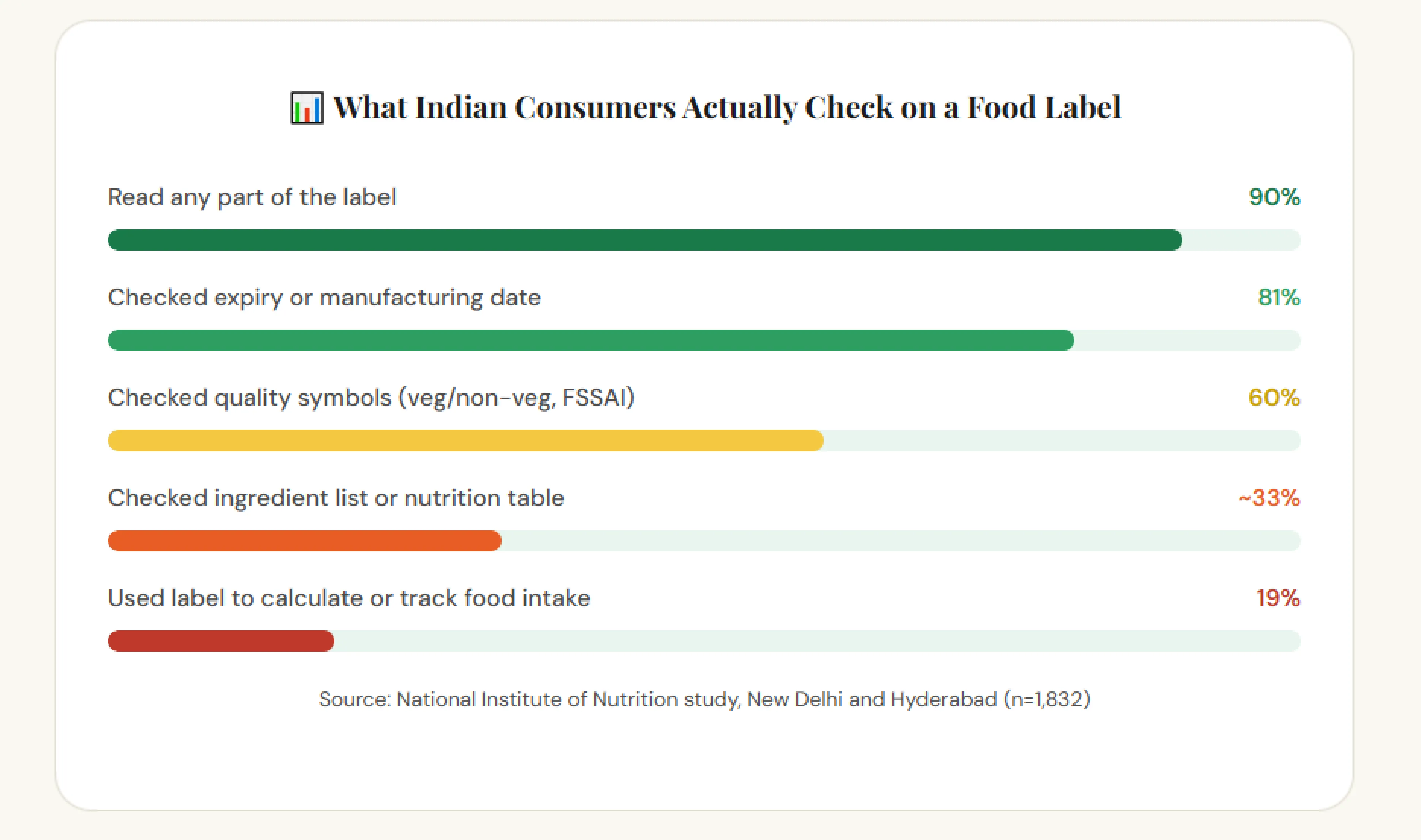
If you ask Indian consumers whether they read food labels, most will say yes. In a study conducted across New Delhi and Hyderabad supermarkets with over 1,800 shoppers, 90% reported reading food labels. That sounds encouraging. Then you ask what they actually looked at. That last number is the interesting contradiction: 84% of Indian consumers say food safety matters deeply to them, yet only a third are reading the parts of the label that reveal what a product is actually made of. Something is not adding up, and understanding that gap is exactly where we need to focus.
Why We Trust the Brand Instead of the Label
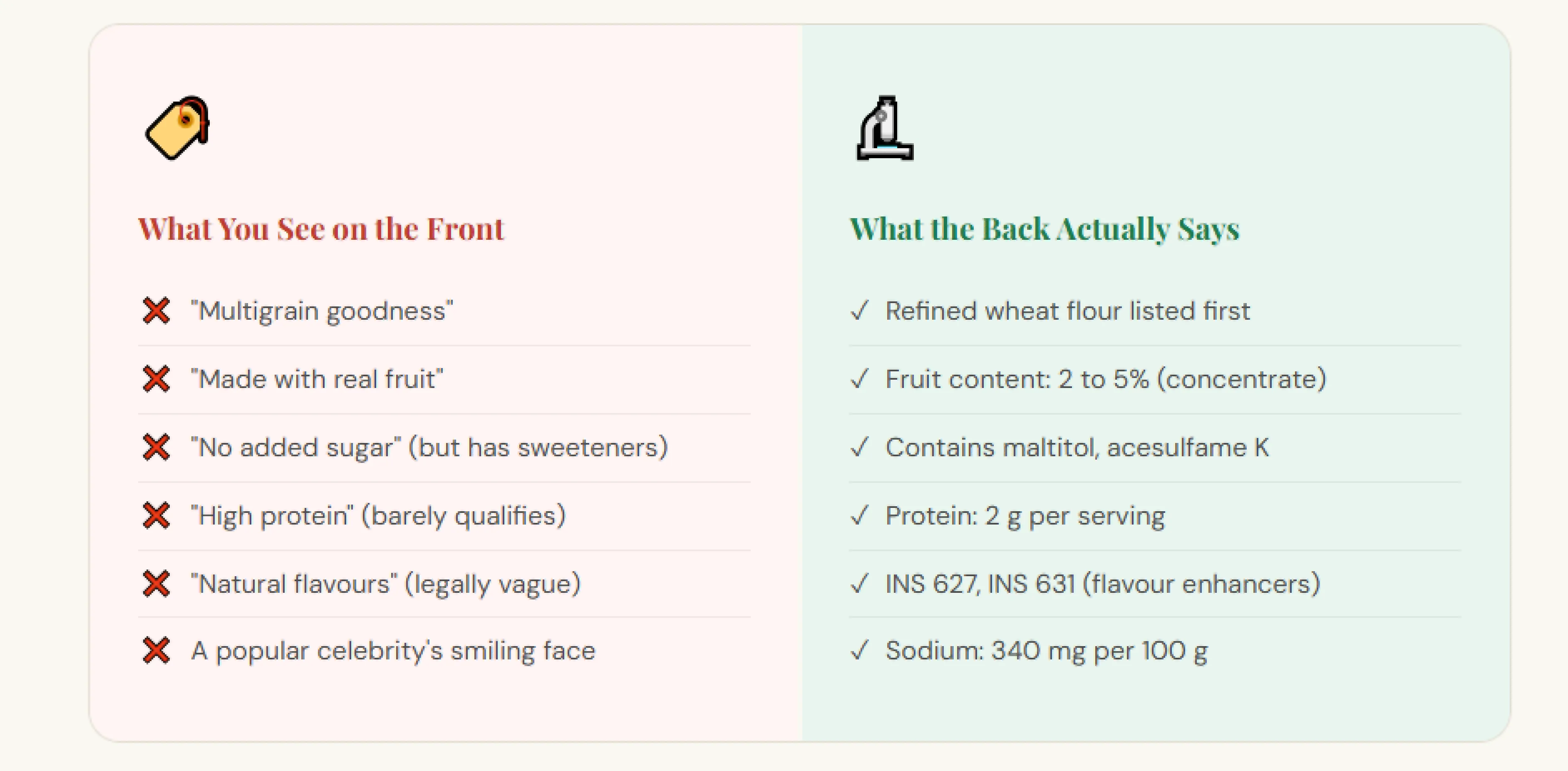
The answer is not laziness. When researchers spoke to shoppers in focus groups, a common belief emerged: “I have been buying this brand for years. They would not put anything harmful in it.” Trust in a logo on the front was functioning as a substitute for reading the back. Brand familiarity was being used as a proxy for nutritional safety, and that is a very convenient arrangement for food companies.
India’s ultra-processed food industry is now worth over Rs. 2,500 billion, and according to the 2024-25 Economic Survey, its growth has been fuelled in part by misleading advertising and celebrity endorsements. The information the law requires to be on the back of every pack is there. It is just being skipped.
“If the front misleads and the back confuses, where does that leave the everyday eater?” — Good Food Movement, December 2025
Something Is Shifting
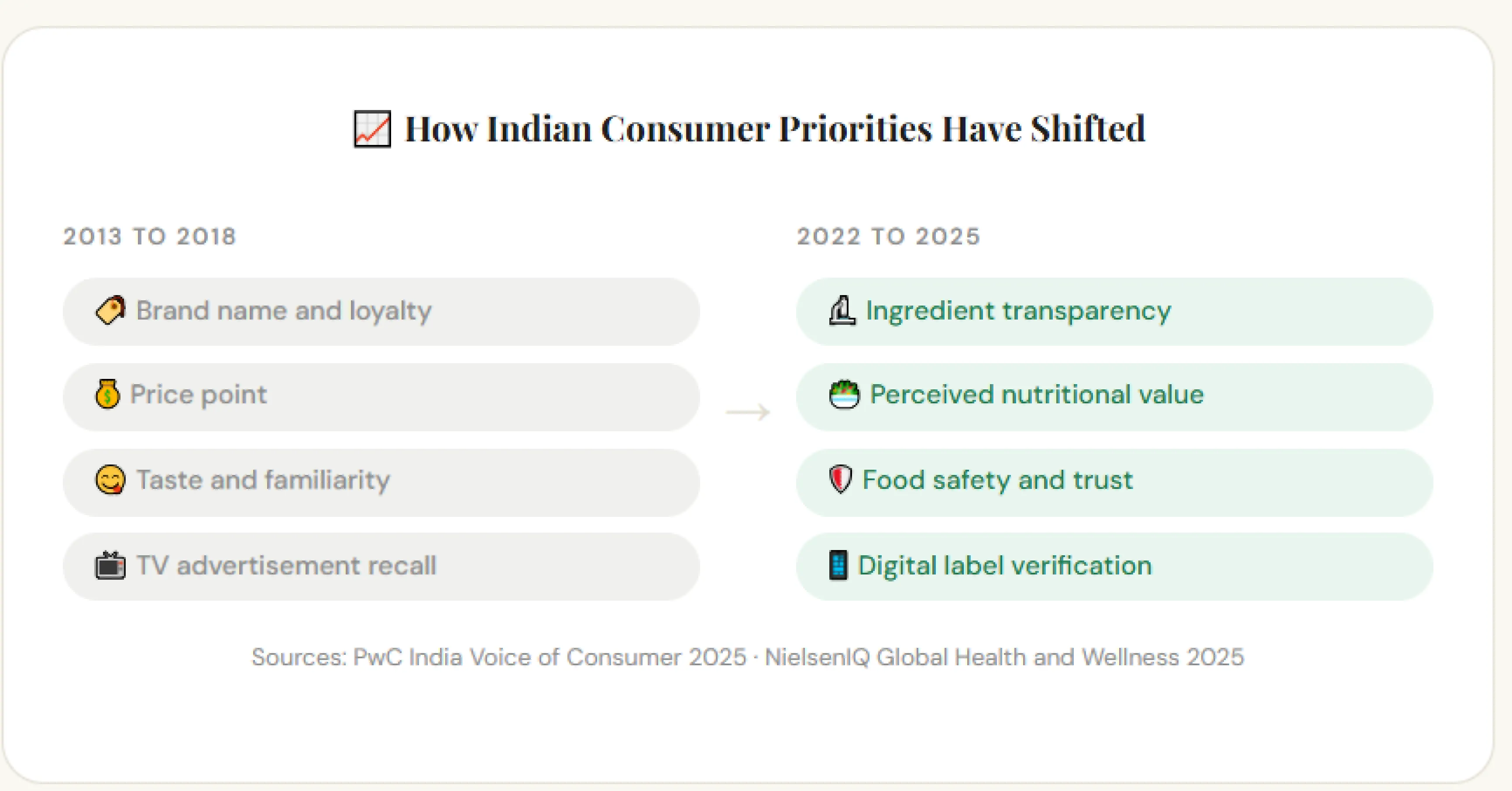
PwC’s 2025 Voice of the Consumer report found that traditional brand loyalty is weakening. Consumers are increasingly choosing products based on perceived nutritional value and ingredient transparency, not just the logo. NielsenIQ’s Global Health and Wellness 2025 report found that 53% of Indian consumers now actively manage their diet and monitor their health metrics.
“Traditional brand equity drivers now rank lower than product-led differentiation. Consumers are increasingly basing choices on perceived nutritional value, ingredient transparency, and price.” — PwC India, Voice of the Consumer 2025
But awareness of wanting to eat healthier is not the same as having the tools to do it. Most Indian consumers who want to make better choices still face the same barrier: the back of the pack is dense, technical, and written in a language that takes years of nutrition training to decode confidently.
Common Everyday Traps
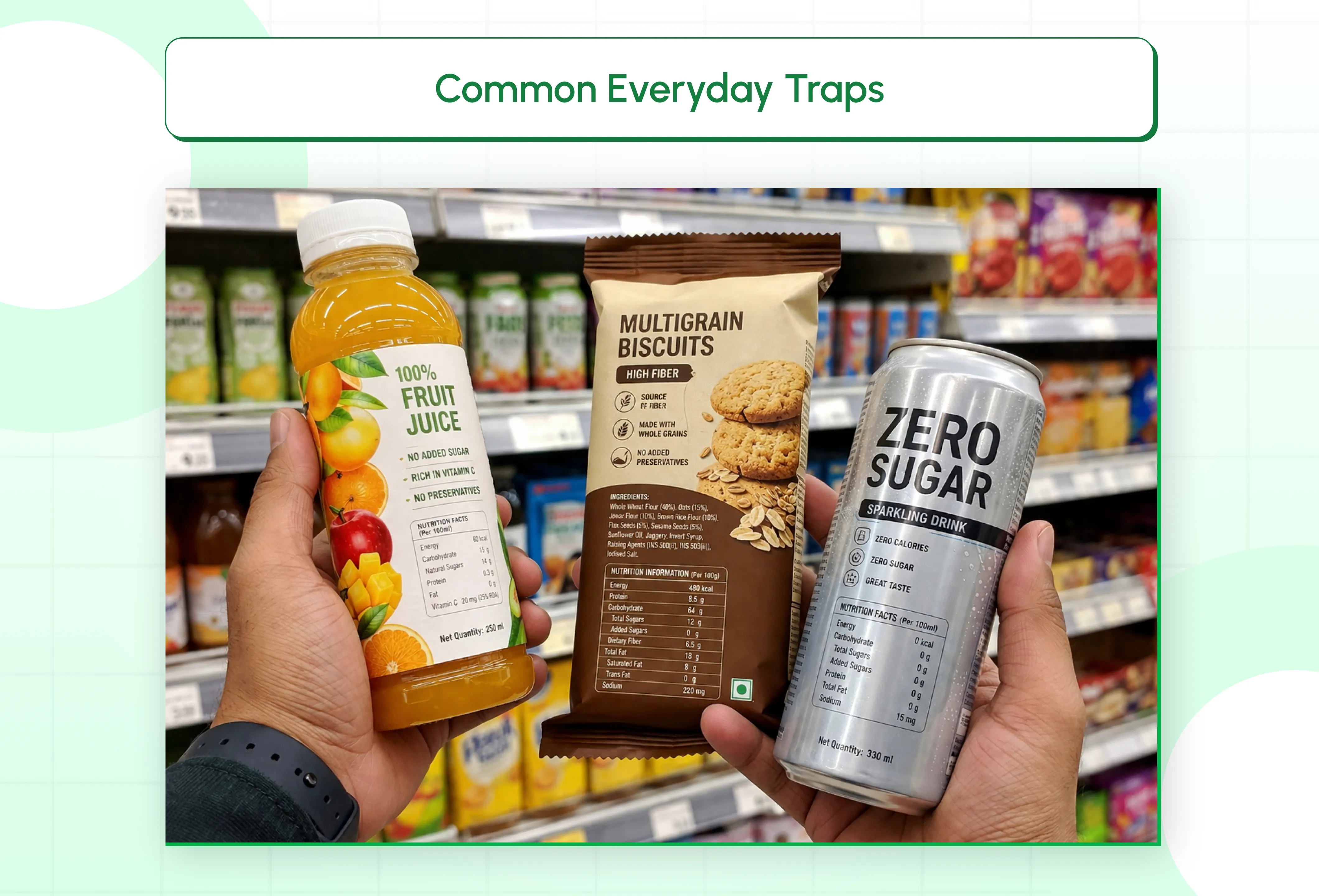
1. Fruit Drinks — That “real fruit” bottle in your child’s lunchbox
The front shows lush fruit imagery and words like “natural” and “goodness.” The back often tells a different story.
Front of Pack:
- “Real fruit flavour”
- “Natural ingredients”
- “No artificial colours”
Back of Pack (Actual):
- Water (first ingredient)
- Sugar (second)
- Fruit content: 5%
- INS 330, INS 211 (preservatives)
2. “Multigrain” Biscuits — The word “multigrain” on a packet means almost nothing
There is no regulated minimum for how much of each grain must be present to make this claim. A biscuit can have trace amounts of oats or ragi and still carry “multigrain” branding. Check the ingredients list. If refined wheat flour is the first item, that is the dominant ingredient regardless of what the front says.
3. “Zero Sugar” Drinks — No sugar does not mean no sweetener, or no health concern
“Zero sugar” products qualify legally when sucrose is removed. But they often contain aspartame (INS 951), acesulfame K (INS 950), or sucralose (INS 955). These are artificial sweeteners whose long-term effects are still actively debated in nutrition science. Neither straightforwardly good nor bad, but worth knowing about rather than assuming “zero” means “healthy.”
Three Things That Actually Matter on the Back
Since most of us are not doing a full nutritional analysis in the grocery aisle, here is a practical shortcut. As a dietitian, if I had to pick just three things to check on any packaged food label, these would be them.
1. The First Three Ingredients: Ingredients are listed in descending order of weight. Whatever appears first is what the product is mostly made of. If the first ingredient of your “oats biscuit” is refined wheat flour, it is a wheat flour biscuit with some oats added for marketing purposes. Check this first, always.
2. Total/ Added Sugar per 100 g: Not per serving, but per 100 g. Serving sizes on Indian packs are often set unrealistically small. Sugar per 100 g gives you a standardised, comparable number across products. Hidden sugar is the biggest trap.
3. Additives Starting with “INS”: Every number following “INS” is an additive: a preservative, colour, emulsifier, or flavour enhancer. If you see more than 4 to 5 INS codes on a product you eat daily, it is worth a closer look. INS = the fine print worth reading.
How to Read a Label in 30 Seconds
INGREDIENTS: Refined wheat flour (maida) ① First = most, sugar, palmolein oil, oat flour (5%), ragi (3%), invert syrup, salt, INS 500(ii) ③ Additive, INS 503(ii), INS 270, artificial flavouring substances.
NUTRITION INFORMATION (per 100 g): Energy: 462 kcal | Protein: 6.8 g | Carbohydrate: 68 g of which sugars: 22 g ② Check sugar/100g Total Fat: 18 g | Sodium: 310 mg
- ① First ingredient = dominant content
- ② Sugar or any primary nutrient you are on lookout for per 100 g (compare across brands)
- ③ INS = food additive codes
Where FactsScan Fits In
The data makes one thing clear: the problem is not that Indian consumers do not care. They do. The problem is that caring and being able to act on that care are two very different things when the information is buried in a 6pt font on the back of a packet.
- FactsScan is built precisely for this moment, the 30 seconds you actually have in a supermarket aisle to make a decision.
- You should not need a nutrition degree to know whether a product is worth buying.
- A scan should tell you what a dietitian would tell you if she were standing next to you in that aisle.
Conclusion
The shift in Indian consumer behaviour is real. People want to know. They are increasingly ready to look past the logo. The question is just how easy we make it for them.
- The information is there on every pack. It is just buried, technical, and easy to skip.
- Awareness is growing, but awareness alone does not change what ends up in your cart.
- Stop Guessing. Start Scanning. FactsScan decodes every label instantly: ingredients, health score, additives, and smarter alternatives. Because you deserve to know what is actually in your food.
Download FactsScan Free from the Play store and App store.
Ready to make Healthier Choices?
Download FactsScan now from the Google Play Store and App Store and take charge of your food choices.





Isha Khapandi

Author

Isha Khapandi is a Dietitian at FactsScan, working at the intersection of research, content, and food policy. Driven by FactsScan’s mission to bring transparency to food labeling, she translates complex nutrition science and regulatory frameworks into clear, practical insights for everyday choices. Her work focuses on helping people navigate an increasingly processed food environment with greater awareness, while advocating for stronger accountability in the food system.
Recent Articles
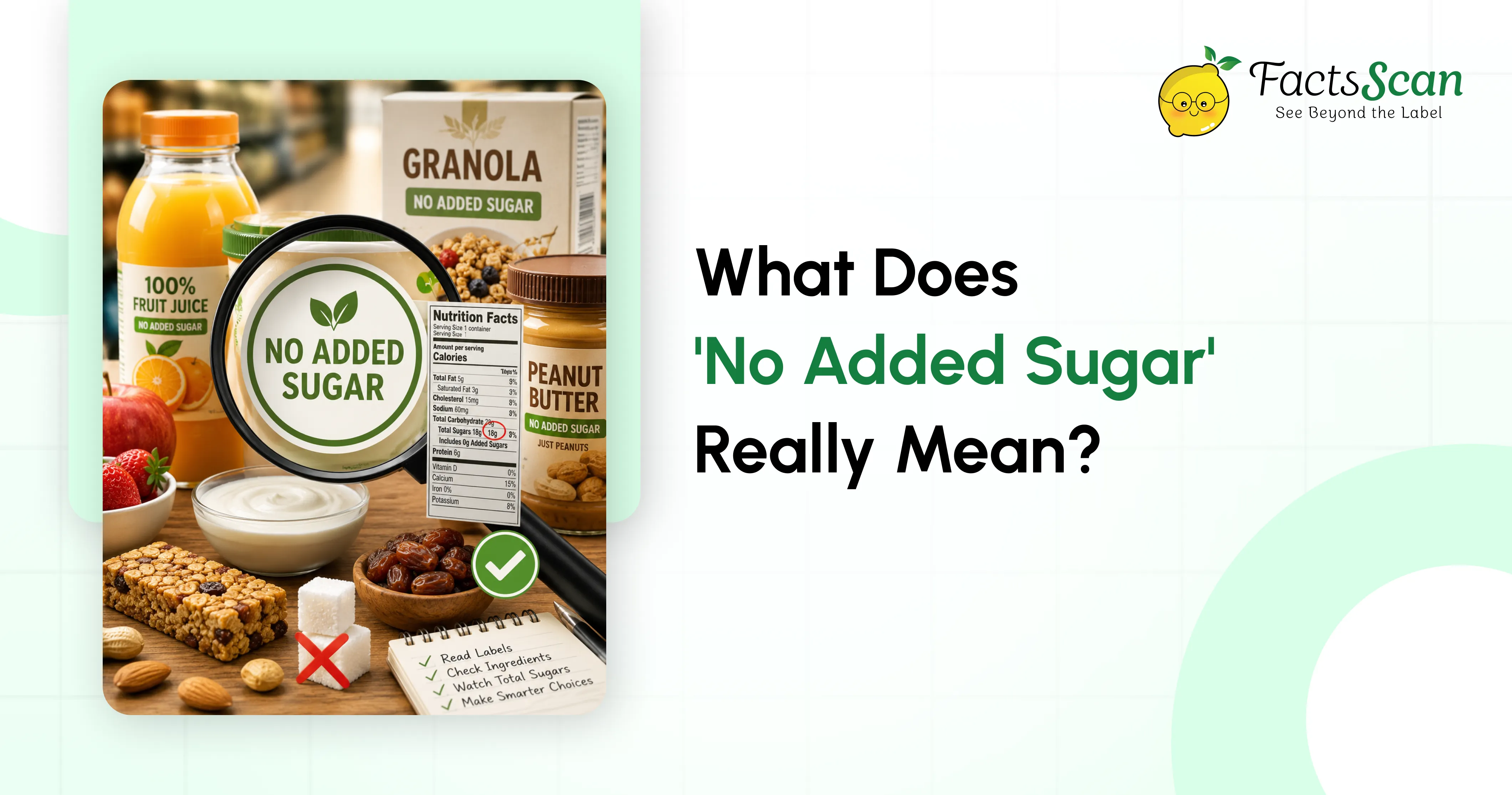

What Does ‘No Added Sugar’ Really Mean?
Many shoppers assume "No Added Sugar" means a product contains no sugar at all but that is not the full story. This article explains the difference between added and naturally occurring sugars, decodes common label claims, and shows you how to spot hidden sugars in everyday packaged foods. By the end, you will be equipped to read food labels with confidence and make genuinely healthier choices.

Top Health Awareness Apps in India to Make Smarter Lifestyle Choices (2026)
Discover the top health awareness apps in India (2026) that help you make smarter lifestyle choices. From tracking nutrition and fitness to decoding packaged food, these apps empower you to stay informed, eat better, and live healthier every day.
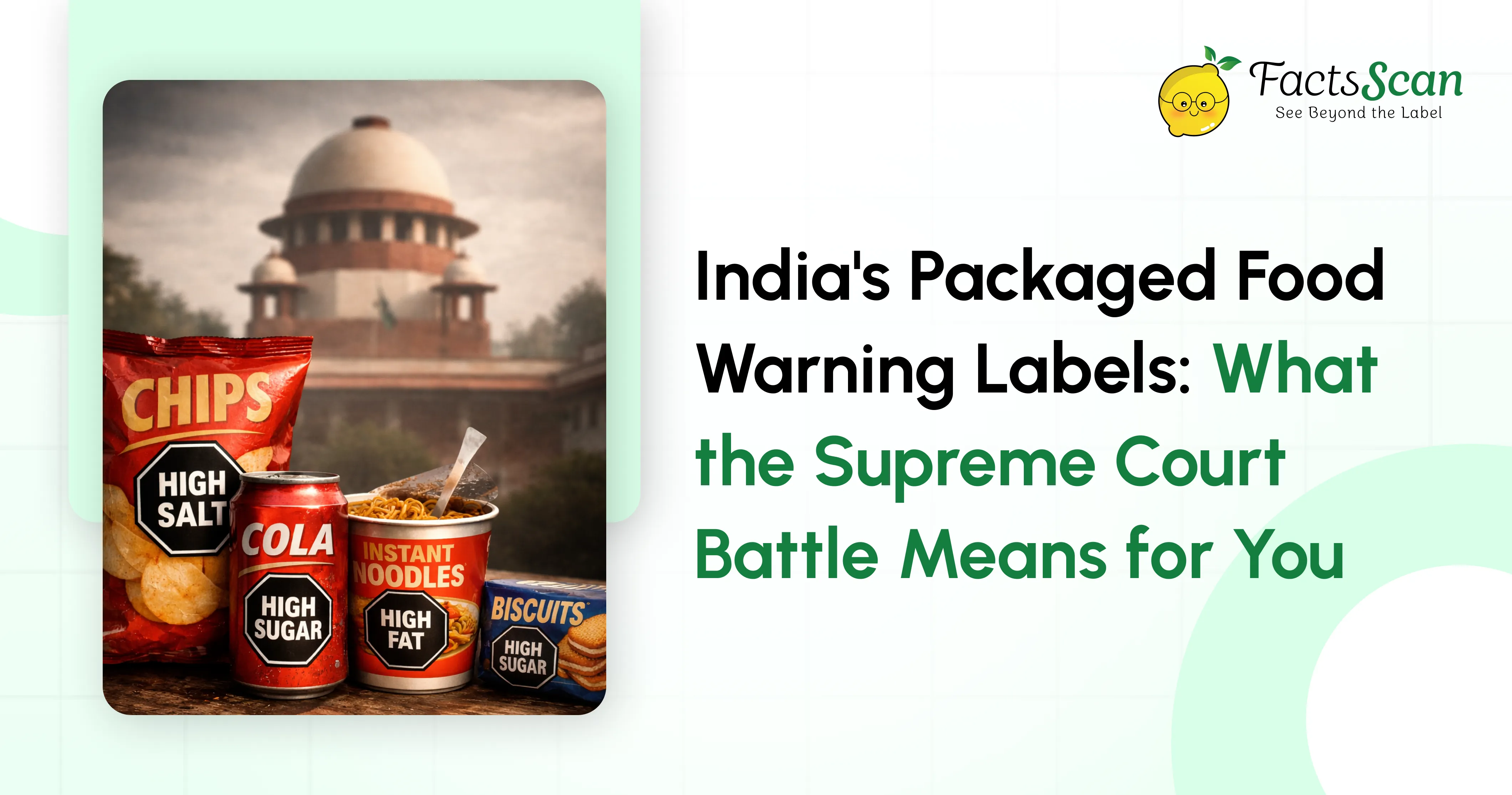
India’s Packaged Food Warning Labels: What the Supreme Court Battle Means for You
India's Supreme Court is actively pushing FSSAI to introduce mandatory front of pack warning labels on packaged foods high in fat, sugar, and salt. With the reform still in progress as of March 2026, millions of Indian consumers continue buying food based on misleading front panel claims. This article explains what's at stake, what global labelling models look like, and how you can make smarter food choices today — without waiting for the law to catch up.