
What Is INS 102 (Tartrazine)? Uses, Safety, and Foods That Contain It in 2026

 24 Jul 2026
 12 Min Read
 Views
Views

Summary :
INS 102, commonly known as Tartrazine, is a synthetic yellow food colour found in many packaged foods and drinks, including sweets, soft drinks, snacks, and flavoured yoghurts. This guide explains what Tartrazine is, why manufacturers use it, how to spot it on a food label, and what recognised food safety authorities such as JECFA, EFSA, FSSAI, and the FDA say about its safety, alongside possible side effects for sensitive individuals and how it compares with natural food colours.
If you have ever checked the ingredients list on a packet of sweets, a fizzy drink, or a flavoured yoghurt, you may have come across the term INS 102 or Tartrazine. It is one of the most widely used food colours in the world, yet many shoppers are not entirely sure what it is or whether it is something to worry about.
INS numbers are part of the International Numbering System for food additives, a global reference used to identify additives consistently across countries. INS 102 refers specifically to Tartrazine, a synthetic yellow colour added to many packaged foods and drinks.
In this guide, we will explain what Tartrazine actually is, why manufacturers use it, which foods commonly contain it, what food safety authorities say about its safety, and how you can spot it on a label. We will also look at how a tool like FactsScan can help you understand additives like this one when you are scanning products in the supermarket.
What Is INS 102 (Tartrazine)?
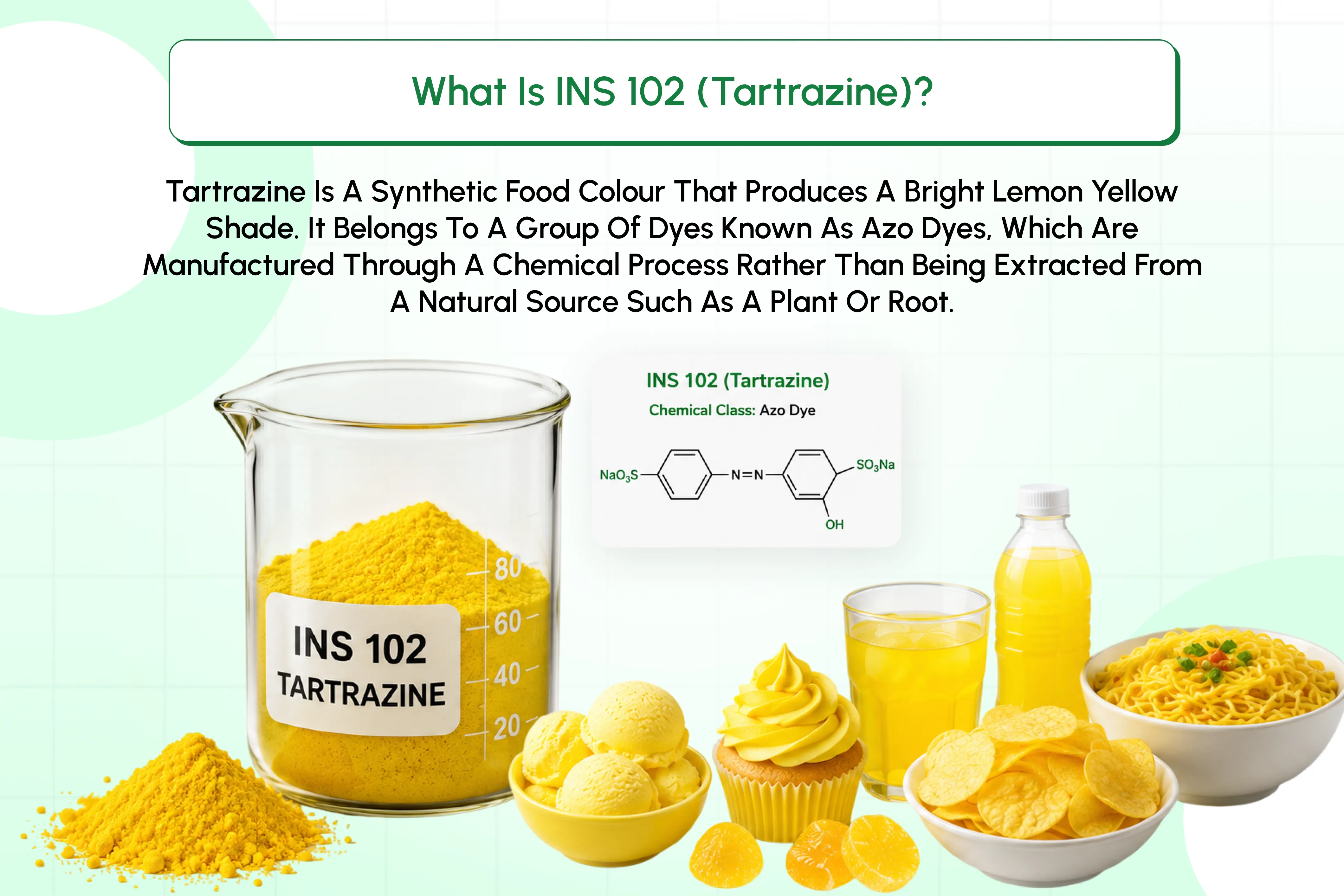
Tartrazine is a synthetic food colour that produces a bright lemon yellow shade. It belongs to a group of dyes known as azo dyes, which are manufactured through a chemical process rather than being extracted from a natural source such as a plant or root.
It is known by several names depending on the country and labelling system:
- INS 102 under the International Numbering System
- E102 in the European Union and United Kingdom
- FD&C Yellow No. 5 in the United States
- CI 19140 under the Colour Index system
As a food additive, Tartrazine falls into the category of colouring agents. It is typically supplied as a fine powder that is soluble in water, which makes it easy for manufacturers to mix into a wide range of products, from dry mixes to liquids.
Manufacturers use it because it is cost-effective, produces a consistent colour batch after batch, and remains stable under many processing and storage conditions compared with some natural alternatives.
Why Is Tartrazine Added to Foods?
Colour additives like Tartrazine are not added for nutritional reasons. Their purpose is entirely visual. Common reasons manufacturers use it include:
- Restoring colour lost during processing: Heating, freezing, or storage can fade the natural colour of some ingredients, and Tartrazine helps bring back a bright, appealing appearance.
- Creating batch-to-batch consistency: Natural ingredients can vary in shade depending on the season or growing conditions. A synthetic dye like Tartrazine gives manufacturers a predictable, uniform colour every time.
- Making products visually appealing: Bright colours are often used in confectionery, snacks, and drinks to make them stand out on the shelf.
- Mimicking flavour expectations: A yellow colour is often associated with lemon or pineapple flavours, so Tartrazine can be used to reinforce that expectation visually.
It is worth remembering that colour has no bearing on nutritional quality. A product can be perfectly wholesome without any added colour, and a brightly coloured product is not automatically less healthy because of its colour alone.
Which Foods Commonly Contain INS 102?
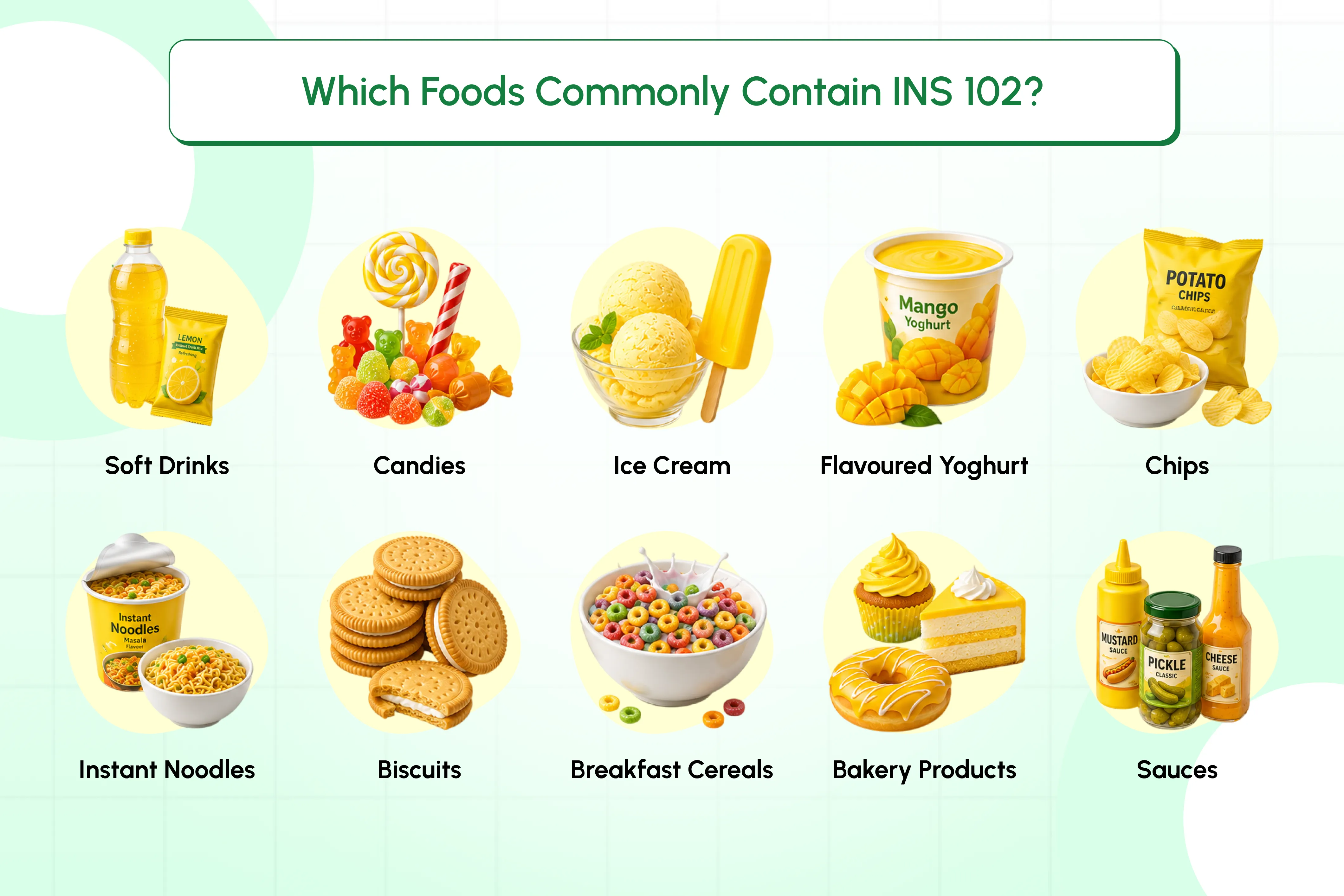
Tartrazine can appear across a wide range of food categories. The table below lists common categories where it is sometimes used. Not every product within these categories contains Tartrazine, so it is always worth checking the actual ingredients list.
| Food Category | Common Examples |
|---|---|
| Soft drinks | Squashes, flavoured fizzy drinks, powdered drink mixes |
| Candies | Boiled sweets, gummy sweets, lollipops |
| Ice cream | Flavoured ice creams and ice lollies |
| Flavoured yoghurt | Mango, pineapple, or mixed fruit yoghurts |
| Chips | Flavoured potato chips and extruded snacks |
| Instant noodles | Flavour sachets and seasoned noodle blocks |
| Biscuits | Cream-filled or coloured icing biscuits |
| Breakfast cereals | Brightly coloured cereals aimed at children |
| Bakery products | Cakes, pastries, and decorative icing |
| Sauces | Mustard, certain pickles, and some ready-made sauces |
Some manufacturers have moved towards natural colours in response to consumer demand, so the presence of Tartrazine varies considerably between brands, even within the same product category.
How to Identify Tartrazine on Food Labels
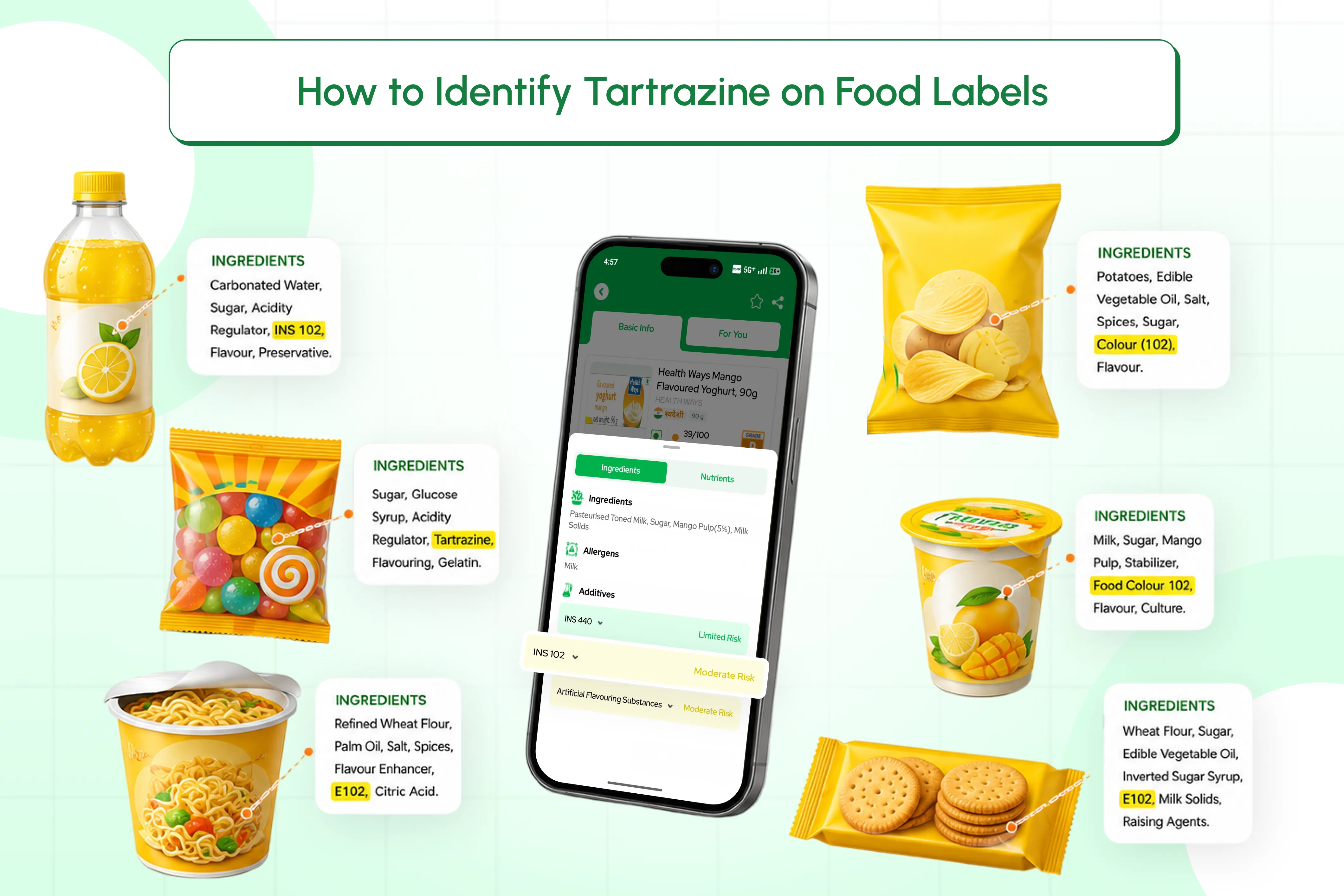
Because labelling conventions differ by country, Tartrazine can appear under a few different names on packaging. Look out for:
- INS 102
- Tartrazine
- Colour (102)
- Food Colour 102
- E102
Practical tips for reading labels:
- Check the ingredients list rather than the front-of-pack marketing, since the ingredients list is where additives must legally be declared.
- Look for the word colour or colouring followed by a number or name in brackets.
- Remember that additives are usually listed in descending order by weight, so their position can give a rough idea of how much is used relative to other ingredients.
- If a product is bright yellow or orange-yellow and you want to confirm whether the colour is natural or synthetic, the ingredients list is the most reliable place to check, not the product's appearance.
This is exactly the kind of task that FactsScan is designed to simplify. Instead of manually decoding INS numbers, users can scan a product with the FactsScan app to quickly see which additives are present and get a plain language explanation of what they are.
Is INS 102 (Tartrazine) Safe?
Tartrazine has been reviewed extensively by food safety authorities around the world, including the Joint FAO/WHO Expert Committee on Food Additives (JECFA) and the European Food Safety Authority (EFSA). Based on these reviews, it is an approved food additive in most countries, including the United Kingdom, the European Union, the United States, and India, where it is regulated by the Food Safety and Standards Authority of India (FSSAI) under the Food Safety and Standards (Food Products Standards and Food Additives) Regulations, 2011.
A key concept in additive safety is the Acceptable Daily Intake, or ADI. This is an estimate of the amount of a substance that a person can consume every day over a lifetime without an appreciable health risk. For Tartrazine, JECFA and EFSA have historically set the ADI at 7.5 mg per kilogram of body weight per day, based on animal and human toxicology studies. Regulatory bodies periodically re review additives as new research becomes available, so it is worth checking current guidance from FSSAI, EFSA, or the FDA if you want the most up-to-date position.
Because approved additives have a defined ADI, regulators also set maximum permitted levels for specific food categories, so that even regular consumption of multiple products is unlikely to approach the ADI for most people.
It is worth noting that regulatory positions on food dyes are an active and evolving area. In April 2025, the United States Food and Drug Administration announced a plan to work with industry to phase out several petroleum-based synthetic dyes, including FD&C Yellow No. 5, in favour of natural alternatives. As this initiative is still developing and timelines have been discussed in public statements rather than finalised regulation, readers in the United States may wish to check the FDA website for the latest status rather than relying on any single announcement.
In the European Union, foods containing Tartrazine and five other colours investigated in a 2007 study from the University of Southampton must carry a warning statement on the label, stating that the product may harm activity and attention in children. This requirement has applied since 2010. It reflects a precautionary approach to a body of research that EFSA reviewed, rather than a conclusion that Tartrazine is unsafe at approved levels.
Possible Side Effects of Tartrazine
For the general population, consuming Tartrazine within regulated limits is not associated with adverse effects for most people. However, some individuals may be more sensitive than others, and it is worth being aware of the following points.
- Allergic-type reactions: A small number of people report skin reactions such as hives or worsening of asthma symptoms after consuming Tartrazine. These reports are more frequently associated with individuals who already have aspirin-sensitive asthma or chronic hives, rather than the general population.
- Attention and activity in children: The 2007 Southampton study, funded by the UK Food Standards Agency, suggested a possible link between mixtures of certain food colours (including Tartrazine) plus the preservative sodium benzoate, and increased hyperactivity in some children. EFSA reviewed this study and concluded that the evidence was not strong enough to change the established ADI, though the precautionary warning label requirement in the EU followed from this research.
- Individual variation: As with many additives, sensitivity varies from person to person. Someone with a known intolerance may choose to avoid it, while most people can consume approved amounts without any noticeable effect.
Most people who consume foods containing Tartrazine at levels permitted by regulators do not experience adverse effects. If you notice a pattern of symptoms after eating specific foods, it is sensible to speak with a doctor or registered dietitian rather than relying on general information alone.
Tartrazine vs Natural Food Colours
Many manufacturers now offer natural alternatives to synthetic yellow colours. Here is a general comparison.
| Factor | Tartrazine (Synthetic) | Natural Colours (for example Turmeric, Annatto, Paprika, Beetroot, Spirulina) |
|---|---|---|
| Source | Manufactured through chemical synthesis | Derived from plants, roots, or algae |
| Colour stability | Generally very stable across a wide pH and temperature range | Can vary; some natural colours fade or shift shade with heat, light, or pH changes |
| Cost | Generally lower cost to produce at scale | Often more expensive to extract and standardise |
| Shelf life impact | Typically maintains colour well over a long shelf life | May require additional stabilisation or shorter shelf life for consistent colour |
| Common uses | Sweets, drinks, snacks, bakery products | Increasingly used in clean label products, drinks, and bakery items |
Neither category is automatically healthier simply because of its origin. A natural colour does not guarantee a product is nutritious, and a synthetic colour used within approved limits is not automatically harmful. What matters more for overall diet quality is the full nutritional profile of a food, not the colour additive alone.
Common Myths About INS 102
| Myth | Fact |
|---|---|
| All artificial colours are dangerous | Approved additives, including Tartrazine, undergo safety evaluation by bodies such as JECFA, EFSA, FSSAI, and the FDA before approval, and are subject to defined usage limits |
| Natural colours are always healthier | Natural colours can also cause allergic reactions in some individuals, and being natural does not automatically mean an ingredient is healthier |
| Every yellow food contains Tartrazine | Many yellow foods get their colour from natural sources such as turmeric, saffron, or beta carotene, or from other approved synthetic or nature-identical colours |
| INS numbers indicate harmful chemicals | INS numbers are simply a standardised identification system for additives, used for clarity and consistency on labels, not an indicator of risk |
Should You Avoid Foods Containing Tartrazine?
For most healthy adults and children, consuming foods that contain Tartrazine within regulatory limits is not considered a significant health concern by major food safety authorities. That said, a few groups may want to pay closer attention to labels.
- People with known sensitivities: If you have previously experienced hives, worsening asthma, or other reactions after consuming foods with Tartrazine, it is reasonable to check labels more closely or speak with an allergist.
- Parents monitoring a child's behaviour: Given the precautionary warning required in the EU, some parents choose to reduce their child's intake of the Southampton study colours, including Tartrazine, though this is a personal choice rather than a regulatory requirement to avoid the ingredient entirely.
- General consumers: For the wider population, the more useful habit is reading labels to understand what is in your food overall, rather than avoiding a single approved additive out of general concern.
A balanced approach means understanding what an ingredient is and making an informed decision, rather than avoiding entire categories of food unnecessarily.
How FactsScan Helps You Understand Food Ingredients
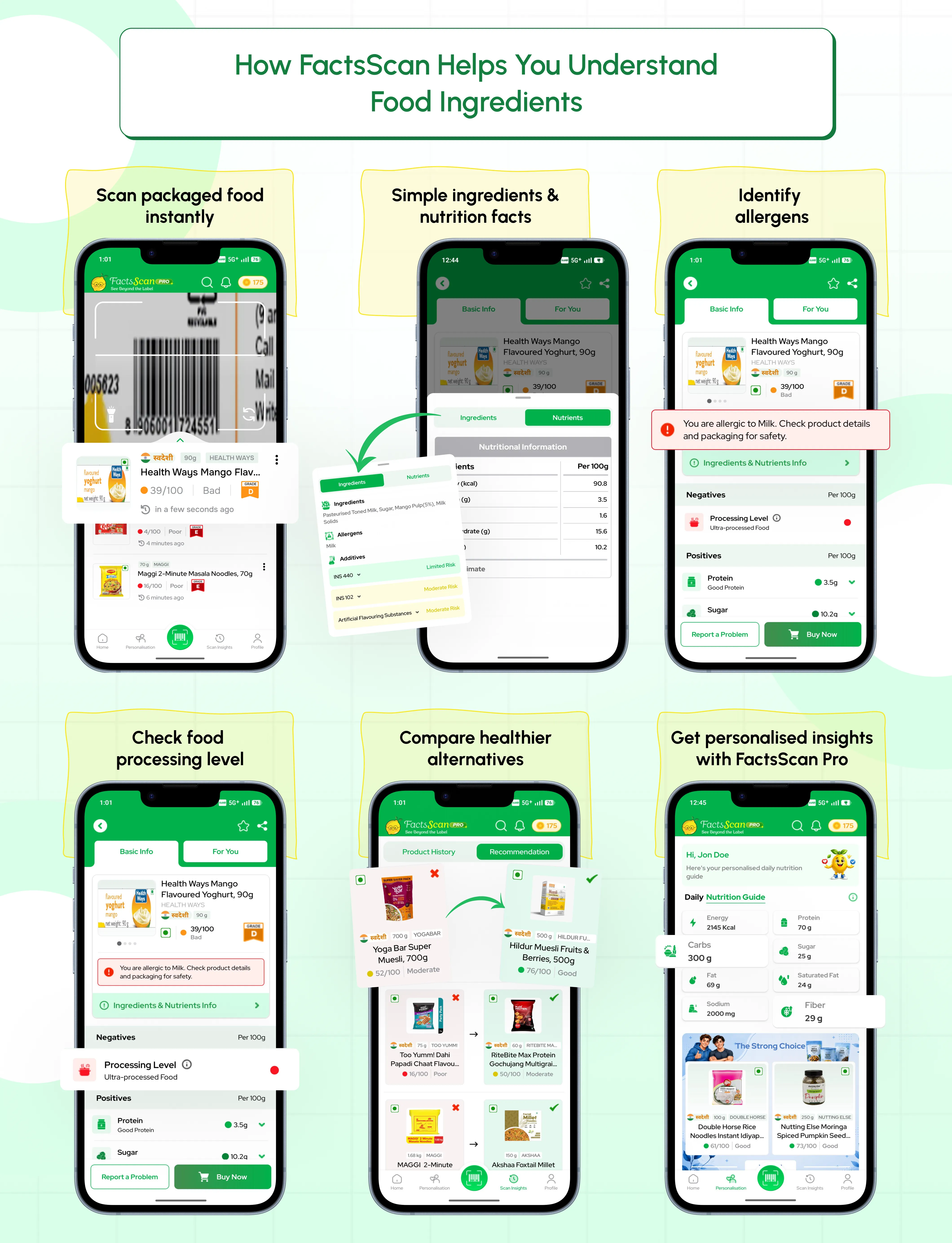
Reading and interpreting food labels can be time-consuming, especially when ingredient lists include unfamiliar INS numbers or E numbers. FactsScan is designed to make this process simpler.
With FactsScan, users can:
- Scan a packaged food product to get a breakdown of its ingredients
- See plain language explanations of food additives, including colours such as Tartrazine
- View nutrition information in an easy-to-understand format
- Identify allergens that may be relevant to their needs
- Understand the processing level of a product
- Compare similar products to find potentially healthier alternatives
- Access more detailed, personalised nutrition insights with FactsScan Pro
Rather than replacing your own judgement, FactsScan aims to provide the information you need to make decisions that suit your dietary needs and preferences.
Understanding Food Additives Helps You Make Better Choices
Tartrazine, or INS 102, is a synthetic yellow colour used across many packaged foods and drinks to improve or restore visual appeal. It has been reviewed by food safety authorities including JECFA, EFSA, the FDA, and FSSAI, and is approved for use within defined limits in most countries. As with many additives, most people can consume it within regulated amounts without noticeable effects, while a smaller group of sensitive individuals may prefer to limit their intake.
Rather than avoiding entire categories of food out of general concern, the more practical approach is to learn to read labels and understand what specific additives actually do. This puts the decision back in your hands as a consumer.
If you want an easier way to understand what is really in your packaged food, from additives like Tartrazine to allergens, processing levels, and nutrition facts, try scanning your next product with FactsScan before you buy. It is a simple habit that can help you make more informed choices, one scan at a time.
Frequently Asked Questions (FAQs)
INS 102 is the International Numbering System code for Tartrazine, a synthetic yellow food colour also known as E102 in the EU and UK, and FD&C Yellow No. 5 in the United States.
Major food safety authorities, including JECFA and EFSA, have evaluated Tartrazine and set an Acceptable Daily Intake for its use. It is approved for use within regulated limits in many countries, though some individuals may be more sensitive than others.
It can appear in soft drinks, sweets, flavoured yoghurts, snacks, instant noodles, biscuits, cereals, bakery items, and some sauces, although not every product in these categories contains it.
Tartrazine is produced synthetically and does not contain animal-derived ingredients, so it is generally considered suitable for vegetarians and vegans. Always check the full ingredients list of a product, since other components may not be.
Tartrazine is not banned in the UK, EU, or India. In the United States, the FDA announced a voluntary industry phase-out plan for several petroleum-based synthetic dyes, including FD&C Yellow No. 5, in April 2025. As this is an evolving policy area, it is worth checking current FDA guidance for the latest status.
Foods containing Tartrazine remain legally available for children in most countries, though EU labelling requires a warning about a possible effect on activity and attention in children, based on the 2007 Southampton study. Parents who wish to limit intake can do so by checking ingredient labels.
Look for the terms INS 102, Tartrazine, Colour (102), Food Colour 102, or E102 in the ingredients list. Tools such as FactsScan can also help identify it quickly when scanning a product.
Ready to make Healthier Choices?
Download FactsScan now from the Google Play Store and App Store and take charge of your food choices.




Sweety Patel

Author

Sweety Patel, founder of FactsScan, has over 14 years of experience in the development industry, where she has successfully created multiple applications. Driven by her passion for food safety and health, she launched FactsScan to provide consumers with a reliable solution to understand what they’re eating, its nutritional value, and better alternatives. With extensive research in food and nutrition, Sweety is committed to empowering people to make informed food choices for a healthier lifestyle.
Recent Articles
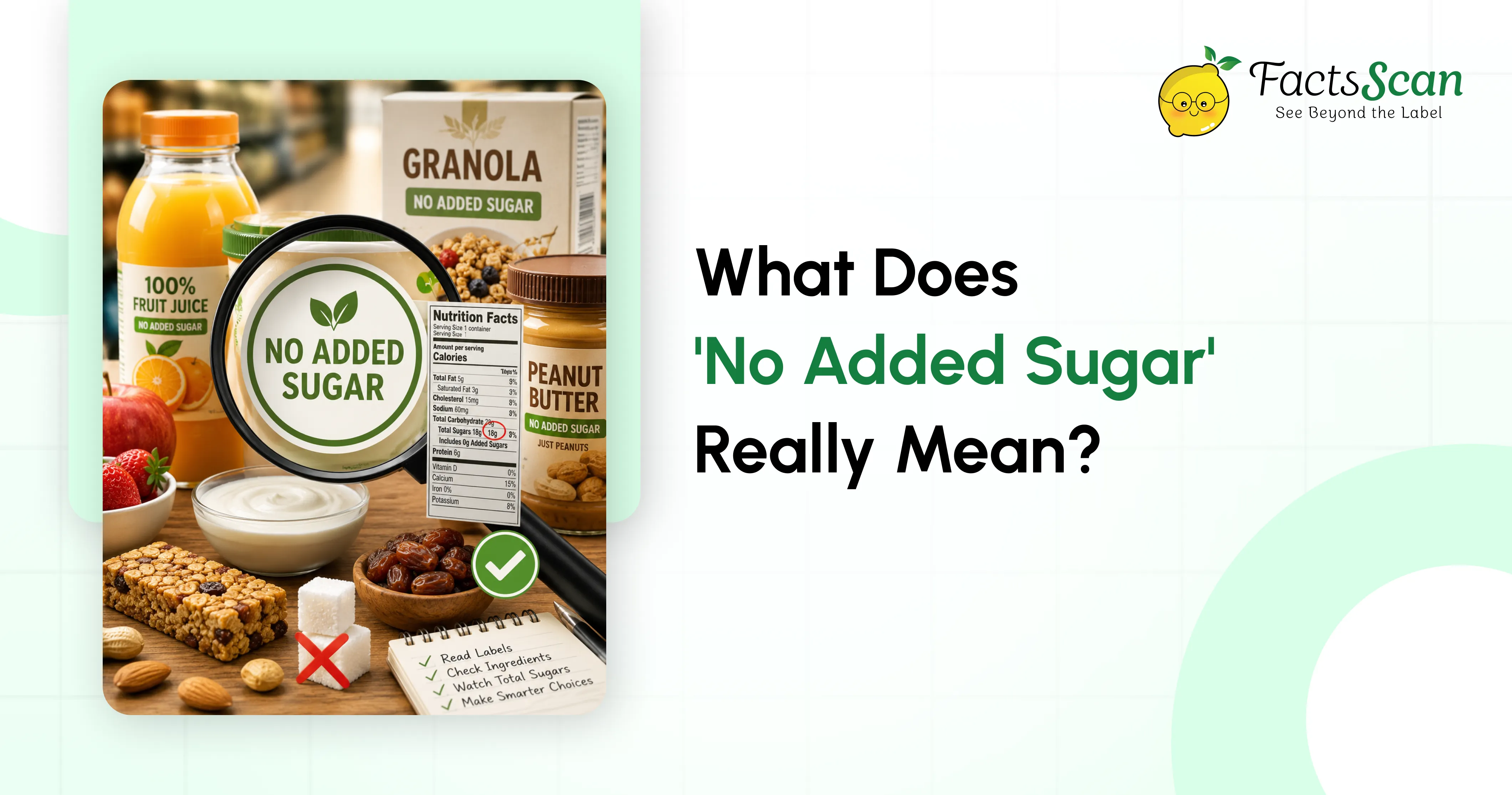
What Does ‘No Added Sugar’ Really Mean?
Many shoppers assume "No Added Sugar" means a product contains no sugar at all but that is not the full story. This article explains the difference between added and naturally occurring sugars, decodes common label claims, and shows you how to spot hidden sugars in everyday packaged foods. By the end, you will be equipped to read food labels with confidence and make genuinely healthier choices.
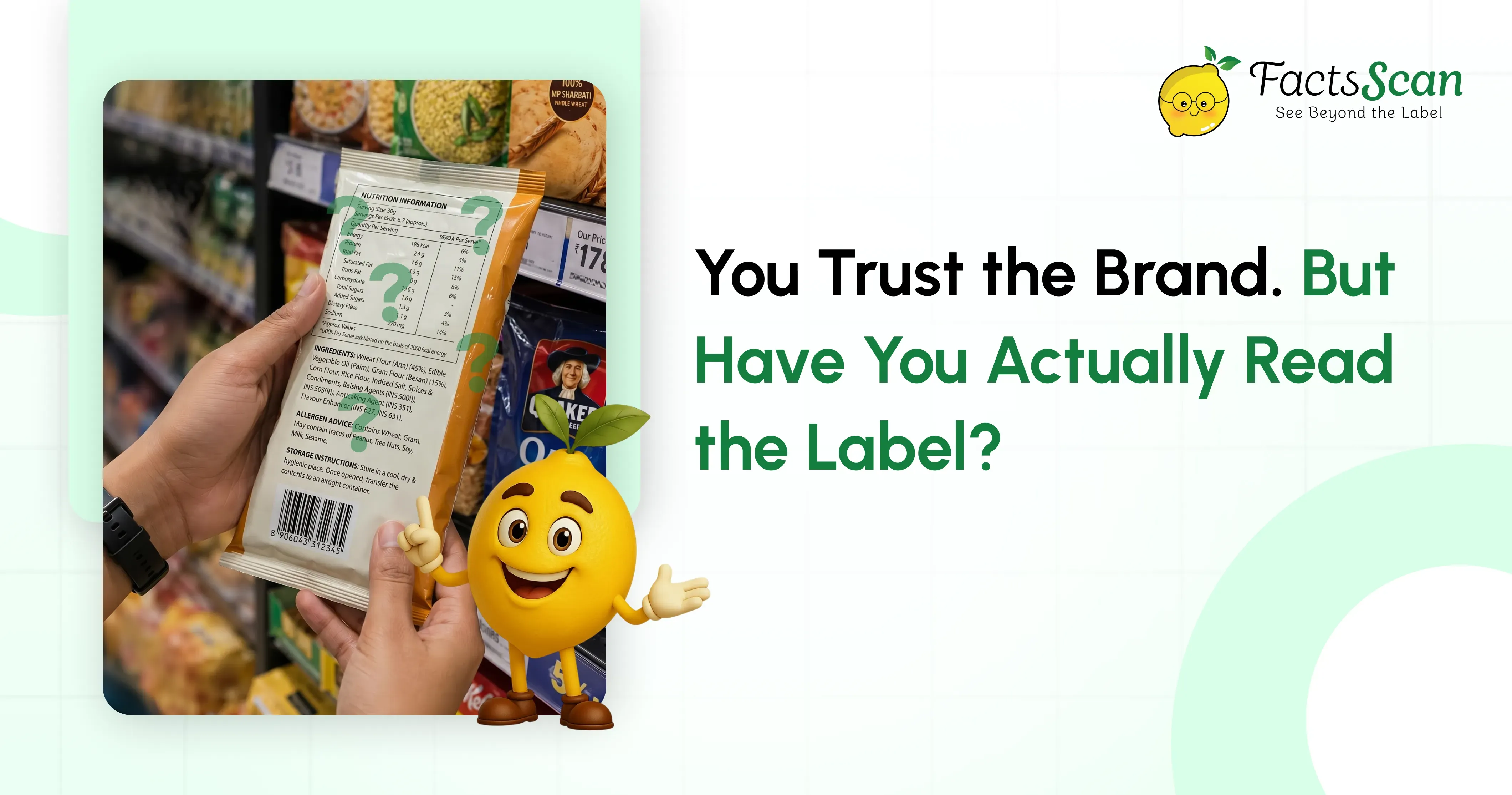

You Trust the Brand. But Have You Actually Read the Label?
What surveys and real data reveal about how Indian consumers actually shop, and why a trusted logo on the front is not the same as knowing what is inside.
Hidden Sugars in Packaged Foods: 50+ Names You Must Know Before Buying
Uncover the shocking truth about hidden sugars lurking in everyday packaged foods. Learn why manufacturers add them, understand the serious health risks, and master the skill of identifying over 50 disguised sugar names on ingredient labels to protect your health.