
Hidden Sugars in Packaged Foods: 50+ Names You Must Know Before Buying

 04 Dec 2025
 10 Min Read
 Views
Views

Summary :
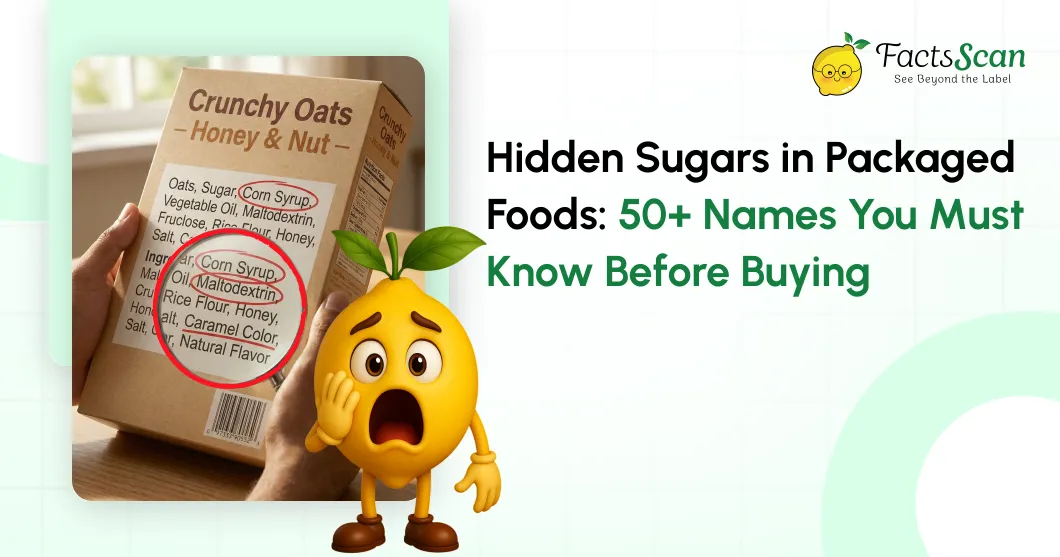
Uncover the shocking truth about hidden sugars lurking in everyday packaged foods. Learn why manufacturers add them, understand the serious health risks, and master the skill of identifying over 50 disguised sugar names on ingredient labels to protect your health.
Introduction
Walk through any supermarket aisle and you will find packaged foods promising health, convenience, and taste. Yet behind colourful packaging and clever marketing claims lies a widespread practice that threatens public health: the hiding of added sugars under dozens of different names. While consumers increasingly check nutrition labels, food manufacturers have become more sophisticated at disguising sugar content. A single product may contain five or more types of sweeteners, each listed separately to avoid revealing the true sugar load. This comprehensive guide reveals the extensive tactics used to hide sugars and equips you with expert knowledge to make genuinely healthier choices for you and your family.
Why Sugar is Added to Packaged Foods
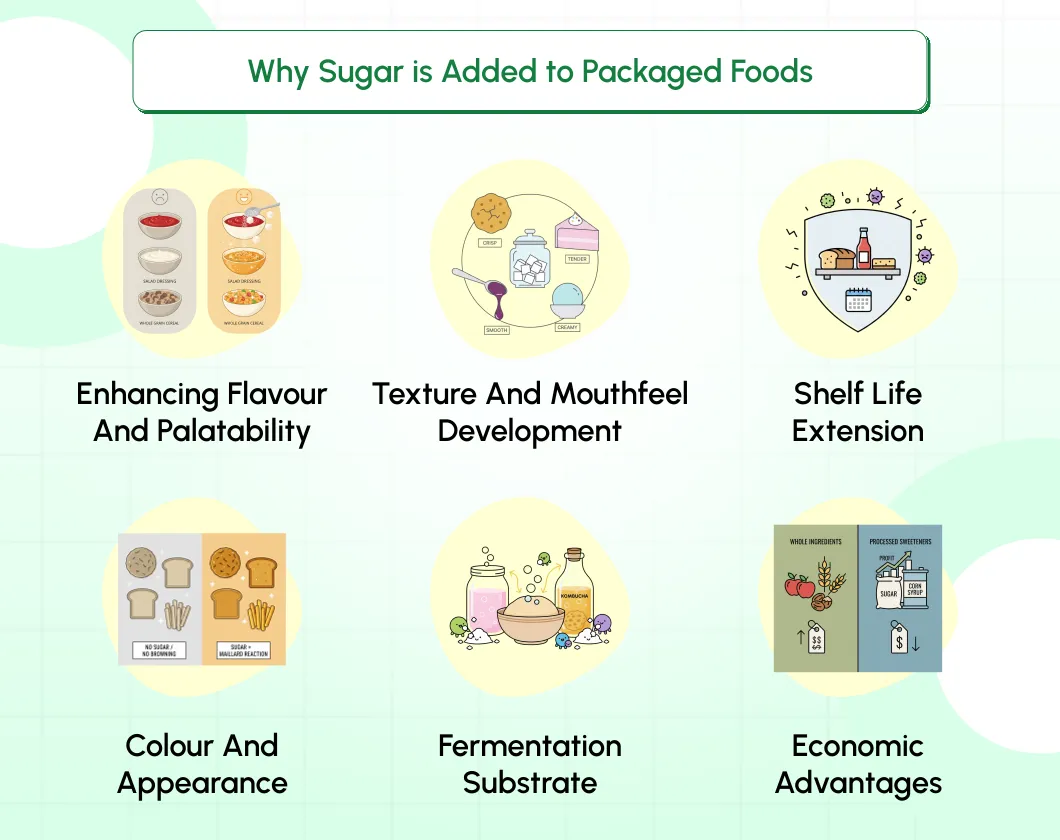
Food manufacturers add sugar to products for reasons far beyond simple sweetness. Understanding these motivations reveals why sugar appears in unexpected places like bread, sauces, and even savoury snacks.
1. Enhancing Flavour and Palatability: Sugar masks bitterness and enhances overall taste, making bland ingredients appealing. It brightens flavours in tomato sauces, salad dressings, and whole grain cereals that might otherwise taste unappealing to mass market consumers.
2. Texture and Mouthfeel Development: Sugar provides bulk and structure to foods. In baked goods, it creates tenderness and crispness. In ice cream, it prevents icy textures. In jams and preserves, it creates the proper consistency. This functional role means sugar appears in products where sweetness is not the primary goal.
3. Shelf Life Extension: Sugar acts as a natural preservative by reducing water activity in foods. This hygroscopic property prevents microbial growth, mold formation, and staleness. Breads stay soft longer, sauces resist spoilage, and snack bars maintain freshness through sugar’s preservative action.
4. Colour and Appearance: The Maillard reaction between sugars and proteins creates appealing golden brown colours in baked goods, roasted meats, and fried foods. Caramelization produces attractive colours in sauces, desserts, and beverages. Without sugar, many foods would look grey and unappetizing.
5. Fermentation Substrate: Sugar feeds beneficial bacteria in fermented products like yogurt, sourdough bread, and kombucha. This essential role means even healthy fermented foods require added sugars.
6. Economic Advantages: Sugar is inexpensive, abundant, and versatile. Using multiple sugar sources allows manufacturers to achieve desired taste and texture at lower cost than using whole food ingredients. This cost effectiveness makes sugar an attractive ingredient for profit focused companies.
Health Risks of Consuming Too Much Hidden Sugar
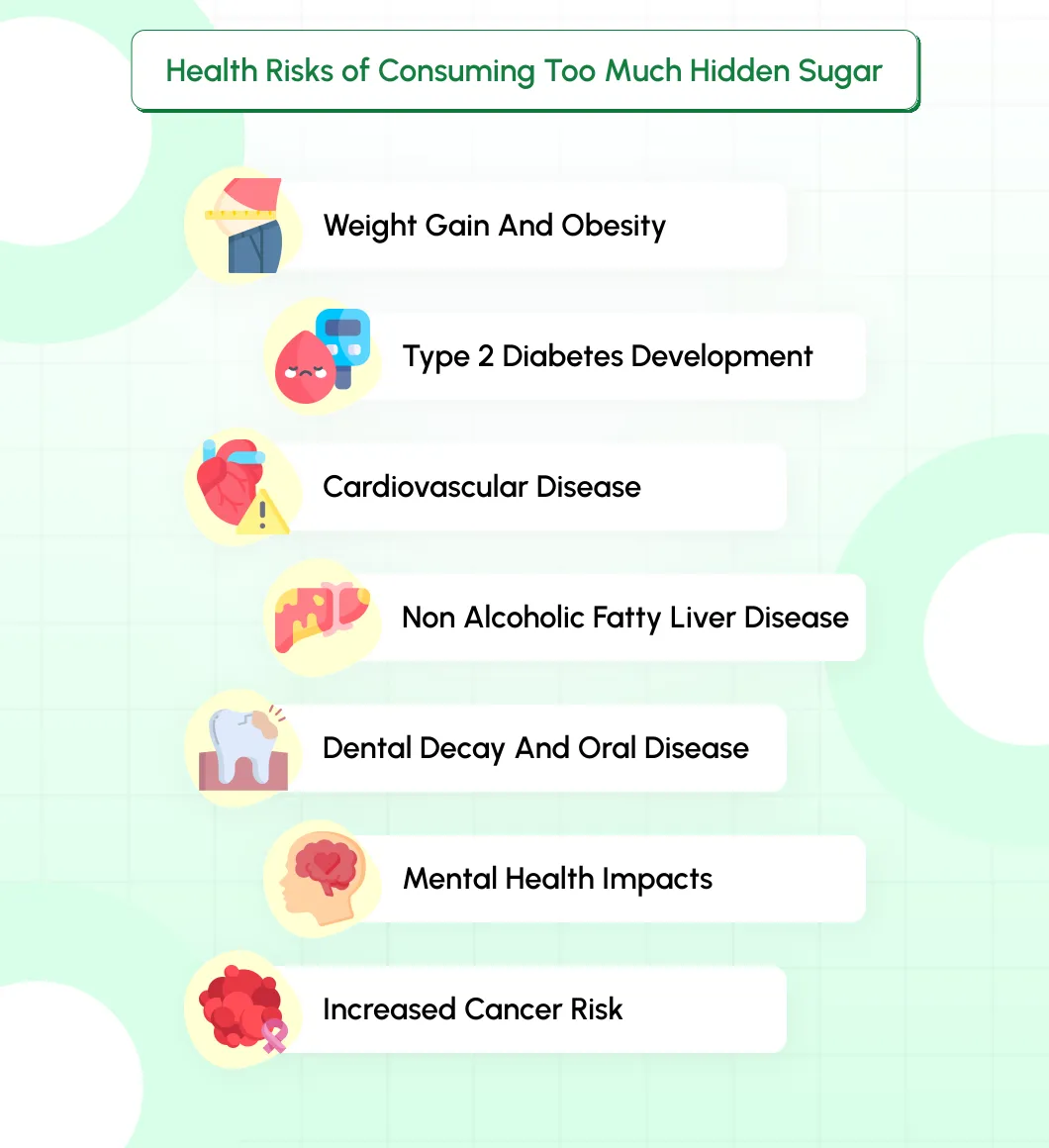
Excessive hidden sugar consumption creates a cascade of health problems that extend far beyond weight gain. The World Health Organization recommends limiting free sugars to less than 10 percent of daily energy intake, yet most consumers exceed this threshold unknowingly.
1. Weight Gain and Obesity: Added sugars contribute empty calories without satiety. Liquid sugars in beverages bypass normal fullness signals, leading to overconsumption. Research shows sugary drinks are a primary driver of obesity epidemics worldwide.
2. Type 2 Diabetes Development: Constant sugar spikes overwhelm the pancreas, leading to insulin resistance. Over time, this metabolic dysfunction progresses to prediabetes and type 2 diabetes. Hidden sugars in seemingly healthy foods accelerate this process.
3. Cardiovascular Disease: High sugar intake raises triglycerides, increases harmful LDL cholesterol, elevates blood pressure, and drives chronic inflammation. Studies demonstrate that individuals consuming high amounts of added sugar face significantly increased risk of heart disease mortality.
4. Non Alcoholic Fatty Liver Disease: Fructose, a common component in many sweeteners, burdens the liver. Excess fructose converts to fat stored in liver cells, causing fatty liver disease and potentially progressing to cirrhosis.
5. Dental Decay and Oral Disease: Oral bacteria thrive on sugars, producing acids that erode tooth enamel. Hidden sugars in snacks, beverages, and even medicines create constant fuel for cavity formation.
6. Mental Health Impacts: Sugar consumption correlates with mood swings, anxiety, and depression. Blood sugar fluctuations affect brain chemistry and neurotransmitter function, influencing emotional wellbeing.
7. Increased Cancer Risk: Obesity and inflammation driven by excess sugar consumption are linked to several cancers. Some research suggests direct effects of sugar on cancer cell proliferation.
Why You Must Learn to Recognise Sugar on Labels
Ingredient label literacy is your strongest defence against hidden sugars. Manufacturers exploit consumer confusion by using unfamiliar terms and scattering multiple sweeteners throughout ingredient lists. Since ingredients are listed by weight, splitting sugar into several types prevents any single sweetener from appearing first. This tactic disguises products where sugar is the primary ingredient.
Learning sugar nomenclature empowers you to:
- Accurately assess total sugar content regardless of marketing claims
- Compare products honestly to choose genuinely lower sugar options
- Avoid health conditions linked to excessive sugar consumption
- Make informed decisions for children who are especially vulnerable to sugar marketing
- Recognize that natural sounding sweeteners still contribute to sugar load
How Brands Hide Sugar Using Different Names
The most common deception tactic involves using multiple sugar sources. A breakfast cereal might contain sugar, brown rice syrup, honey, and fruit juice concentrate. Each appears lower on the ingredient list, creating the false impression that sugar is a minor component. Combined, these sweeteners may constitute over 30 percent of the product by weight.
Another strategy uses scientific sounding names that consumers do not recognise as sugar. Maltodextrin, ethyl maltol, and trehalose sound like food additives rather than sweeteners. This confusion allows manufacturers to maintain clean label appearances while loading products with sugar.
Natural sweeteners like agave nectar, coconut sugar, and date syrup appear wholesome but deliver similar sugar loads. The health halo around these ingredients distracts from their metabolic impacts.
List of More Than Fifty Hidden Names of Sugar
Common Sugar Names
- Sugar
- Cane sugar
- Brown sugar
- Coconut sugar
- Palm sugar
- Date sugar
- Beet sugar
- Raw sugar
- Turbinado sugar
- Demerara sugar
- Muscovado sugar
- Evaporated cane juice
- Cane juice crystals
- Confectioner’s sugar
- Powdered sugar
- Icing sugar
- Golden sugar
- Sanding sugar
- Castor sugar
- Grape sugar
- Milk sugar
Scientific Sounding Sugar Names
- Sucrose
- Dextrose
- Fructose
- Glucose
- Lactose
- Maltose
- Galactose
- Trehalose
- Cellobiose
- Maltodextrin
- Ethyl maltol
- Levulose
- Saccharose
- Panela
- Rapadura
- Sucanat
Syrups and Sweeteners
- High fructose corn syrup
- Corn syrup
- Rice syrup
- Brown rice syrup
- Barley malt syrup
- Malt syrup
- Tapioca syrup
- Carob syrup
- Sorghum syrup
- Maple syrup
- Agave nectar
- Date syrup
- Jerusalem artichoke syrup
- Cane syrup
- Golden syrup
- Invert syrup
- Glucose syrup
- Fructose syrup
- Molasses
- Treacle
Natural Sweeteners That Still Increase Sugar Load
- Honey
- Fruit juice concentrate
- Apple juice concentrate
- Grape juice concentrate
- Pear juice concentrate
- Peach juice concentrate
- Date paste
- Date powder
- Carob powder
- Yacon syrup
- Lucuma powder
- Monk fruit extract (when blended with sugar)
- Stevia blends (when mixed with sugar alcohols)
Sugar Alcohols
- Sorbitol
- Mannitol
- Xylitol
- Erythritol
- Maltitol
- Isomalt
- Lactitol
- Hydrogenated starch hydrolysates
Common Sugar Names and Their Typical Food Applications
| Sugar Name | Common Food Applications | Why It Is Used |
|---|---|---|
| High fructose corn syrup | Soft drinks, sauces, baked goods | Cheap, very sweet, extends shelf life |
| Maltodextrin | Protein powders, snack foods, sauces | Thickener, quick energy, not overly sweet |
| Brown rice syrup | Granola bars, cereals, health foods | Sounds natural, binds ingredients |
| Evaporated cane juice | Yogurts, baked goods, beverages | Sounds less processed than sugar |
| Fruit juice concentrate | Children’s snacks, cereals, yogurts | Sounds healthy, masks tartness |
| Barley malt | Cereals, malted drinks, beer | Adds distinct flavour, colour |
| Agave nectar | Health foods, organic products | Low glycemic index claim, liquid form |
| Dextrose | Sports drinks, cured meats, baked goods | Quick energy, helps fermentation |
| Maltose | Asian sauces, baked goods, candies | Less sweet than sucrose, browning |
| Coconut sugar | Health foods, desserts, beverages | Lower glycemic index, mineral content |
How to Spot Hidden Sugar on Labels Quickly
- Check the First Three Ingredients: The first three ingredients constitute the majority of the product. If any sweetener appears here, the product contains significant sugar.
- Scan for the Ose Ending: Scientific sugar names typically end in “ose”. Quickly run your eyes down the ingredient list looking for these telltale endings.
- Count the Sweeteners: Identify all sugar sources. If you find three or more different sweeteners, the manufacturer is likely using the splitting tactic.
- Examine the Added Sugars Line: The Nutrition Facts panel now shows added sugars separately. Compare this number to the daily value percentage. Over 20 percent per serving is high.
- Beware of Health Halos: Terms like organic, natural, whole grain, or high protein do not guarantee low sugar content. These claims often distract from high sugar levels.
- Use the Traffic Light System: Many products display front of pack colour coding. Red for sugar means high content. Green indicates lower sugar levels.
- Calculate Total Sugar Per Serving: Multiply grams of sugar by the number of servings you actually consume. A small package may contain multiple servings.
How to Choose Low Sugar Packaged Foods
- Prioritise Whole Foods: Select products with short ingredient lists featuring whole foods you recognise. The fewer ingredients, the less room for hidden sugars.
- Select Unsweetened Varieties: Choose unsweetened versions of plant based milks, yogurts, and applesauce. Add your own fresh fruit for natural sweetness.
- Compare Brands: Different brands of the same product type vary dramatically in sugar content. Compare labels to find the lowest sugar option.
- Avoid Liquid Sugars: Sweetened beverages, smoothies, and drinkable yogurts deliver sugar rapidly without fullness. Choose water, unsweetened tea, or black coffee.
- Prepare Simple Swaps: Replace sweetened cereals with plain oats topped with fresh berries. Choose plain yogurt with cinnamon instead of flavoured varieties. Select nut butters without added sugars.
- Watch Serving Sizes: Manufacturers often list unrealistically small serving sizes to make sugar content appear lower. Adjust calculations based on your actual portion.
- Select Savory Snacks: Choose nuts, seeds, roasted chickpeas, or vegetables with hummus instead of sweetened granola bars, cookies, or fruit snacks.
Why Using a Food Label Checking App Like FactsScan Makes This Easier
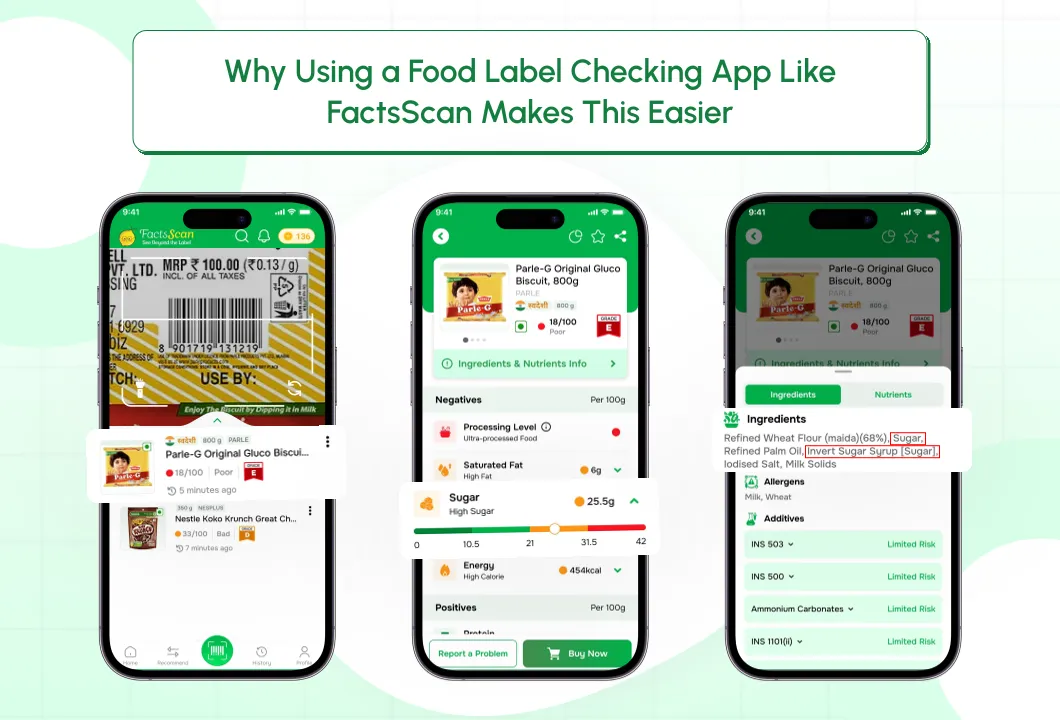
While manual label reading is essential, modern technology simplifies the process. A dedicated food label checking app like FactsScan instantly analyses ingredient lists and identifies all hidden sugar names, even those you have not memorised. Simply scan the barcode or photograph the ingredient list, and FactsScan highlights every sweetener, calculates total sugar load, and provides healthier alternatives.
FactsScan eliminates guesswork by maintaining an updated database of over 100 sugar aliases. The app flags products with high hidden sugar content, explains which ingredients contribute most sugar, and suggests similar products with lower sugar levels. For busy shoppers, this instant analysis saves time while ensuring accuracy. Parents can quickly screen snacks for children, and individuals managing diabetes or weight can shop with confidence. The app also tracks your cumulative sugar intake throughout the day, helping you stay within recommended limits across all meals and snacks.
Conclusion with a Strong Closing Message
Hidden sugars represent one of the food industry’s most pervasive deceptions, contributing to chronic disease epidemics while remaining invisible to uninformed consumers. Every package you examine, every label you decode, and every high sugar product you reject sends a powerful message to manufacturers that health conscious consumers demand transparency and accountability.
Your health is not negotiable. The few seconds spent reading ingredient labels can prevent years of managing preventable diseases. Arm yourself with knowledge, trust your ability to identify sugar in all its disguises, and choose foods that nourish rather than harm. Technology like FactsScan supports your efforts, but your commitment to label literacy drives lasting change. Take control of your shopping cart, take control of your health, and join the movement of informed consumers who refuse to be sweet talked into poor health choices.
Ready to make Healthier Choices?
Download FactsScan now from the Google Play Store and App Store and take charge of your food choices.




Sweety Patel

Author
Sweety Patel, founder of FactsScan, has over 14 years of experience in the development industry, where she has successfully created multiple applications. Driven by her passion for food safety and health, she launched FactsScan to provide consumers with a reliable solution to understand what they’re eating, its nutritional value, and better alternatives. With extensive research in food and nutrition, Sweety is committed to empowering people to make informed food choices for a healthier lifestyle.
Recent Articles
Hidden Sugars in Packaged Foods: 50+ Names You Must Know Before Buying
Uncover the shocking truth about hidden sugars lurking in everyday packaged foods. Learn why manufacturers add them, understand the serious health risks, and master the skill of identifying over 50 disguised sugar names on ingredient labels to protect your health.
How to Identify Organic Food in India: A Complete Consumer Guide
Discover how to confidently identify genuine organic food in India. Learn about certifications, label reading, and effective ways to verify authenticity using simple, actionable steps for your everyday shopping.
Top Food Ingredients You Should Avoid for Better Gut Health
Your gut microbiome is the foundation of your overall wellness, affecting everything from digestion to immune function. Yet many everyday food ingredients—artificial sweeteners, refined oils, emulsifiers, and preservatives—are slowly damaging this delicate ecosystem. Learn which harmful ingredients to eliminate from your diet and discover healthier alternatives using smart tools to identify nutritious, gut-friendly options that truly support your digestive health and long-term wellbeing.