
Supreme Court Pushes for Transparent Food Labelling in India

 05 Mar 2026
 7 Min Read
 Views
Views

Summary :
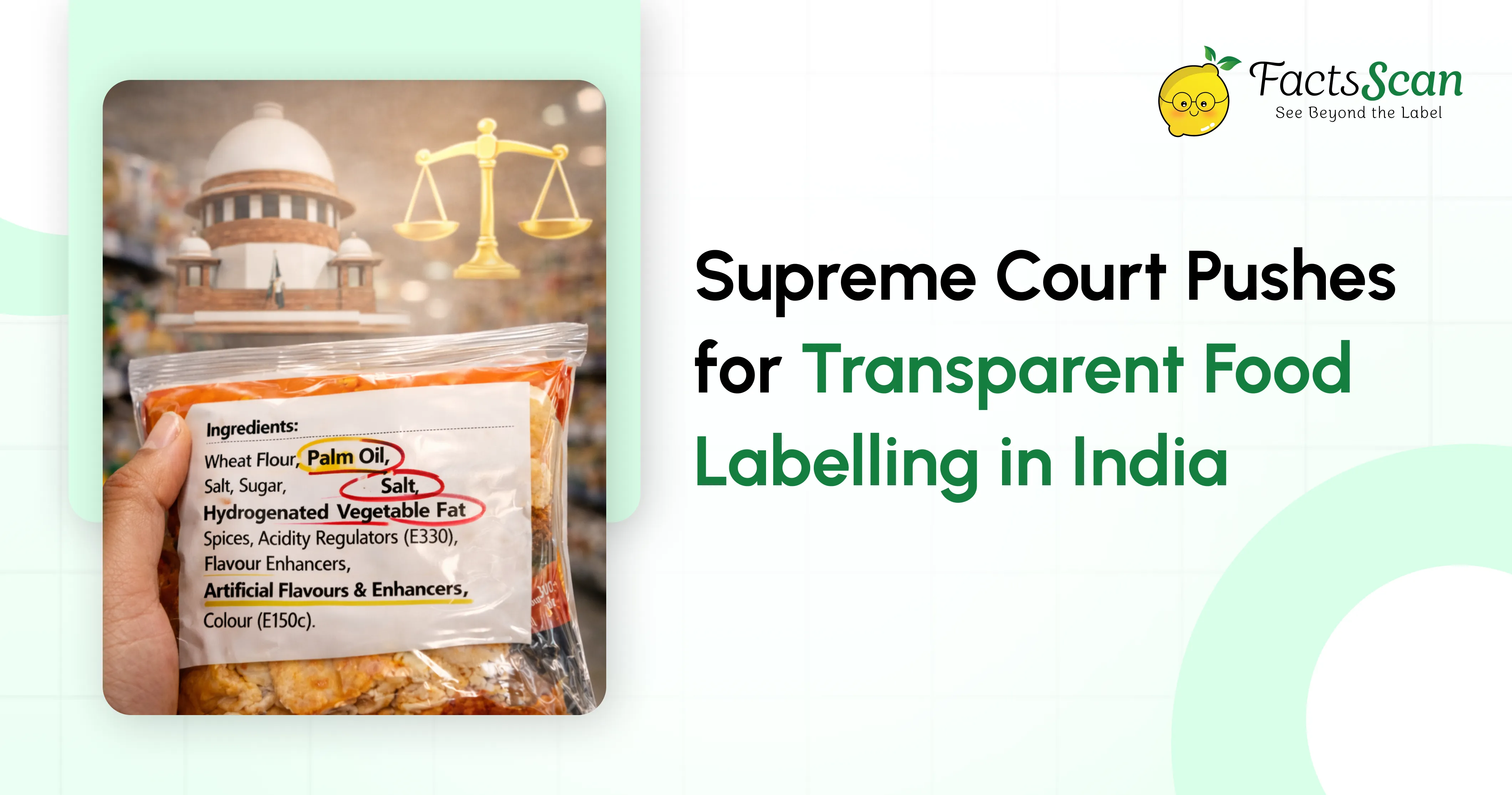
The Supreme Court of India has called for clearer and more transparent food labeling to help consumers understand what they are eating. The move aims to improve ingredient and nutrition disclosure, promoting healthier choices for people across India.
India is standing at one of the most important turning points in food transparency in its history.
In February 2026, the Supreme Court of India directed the Food Safety and Standards Authority of India (FSSAI) to implement mandatory front-of-pack (FoP) warning labels on packaged foods high in sugar, salt, and saturated fat. This follows a series of judicial interventions dating back to April 2025, when the Supreme Court gave the Central Government a three-month deadline to finalize nutrition labelling norms — citing Article 21 and every Indian’s constitutional right to health.
This is more than a regulatory development. It is a national reckoning with what goes inside our food — and how honestly it is communicated.
At FactsScan, this is the exact problem we were built to solve.
India's Packaged Food Problem
India’s packaged food industry is one of the fastest-growing in the world — and so are India’s rates of obesity, type 2 diabetes, and hypertension. The connection between these trends is not coincidental. Millions of Indians consume ultra-processed foods daily, often unaware of what is inside them.
The information technically exists on the label. The problem is that it is:
- Printed in fonts smaller than most people can comfortably read
- Buried in ingredient lists containing 30+ items
- Written using technical INS codes and chemical names most consumers don’t recognize
- Deliberately structured so that sugars appear under five or six alternate names — dextrose, maltose, glucose syrup, fructose, corn syrup — making the true sugar load invisible
The average Indian grocery shopper spends less than 10 seconds evaluating a product before placing it in the cart. Labels designed this way are not informative — they are compliant on paper and opaque in practice.
What the Supreme Court Said — and Why It Matters
The Supreme Court’s recent orders are the clearest judicial signal yet that consumer health is a constitutional priority, not just a regulatory checkbox.
Key directions from the Court include:
- FSSAI must introduce front-of-pack warning labels identifying products high in fat, sugar, and salt.
- The Central Government must finalize Front-of-Pack Nutrition Label (FOPNL) norms without further delay.
- Misleading packaging claims must be addressed.
- Consumer access to clear, understandable nutritional information is a fundamental consumer right.
Crucially, the Court specifically noted that popular products like Maggi and Kurkure lacked prominent front-facing nutritional information — sending an unmistakable signal to India’s largest food manufacturers.This is not a fringe demand. The World Health Organization, public health researchers, and consumer advocacy groups have supported FoP labelling globally as one of the most cost-effective tools for reducing non-communicable diseases.
How India's Current System Falls Short
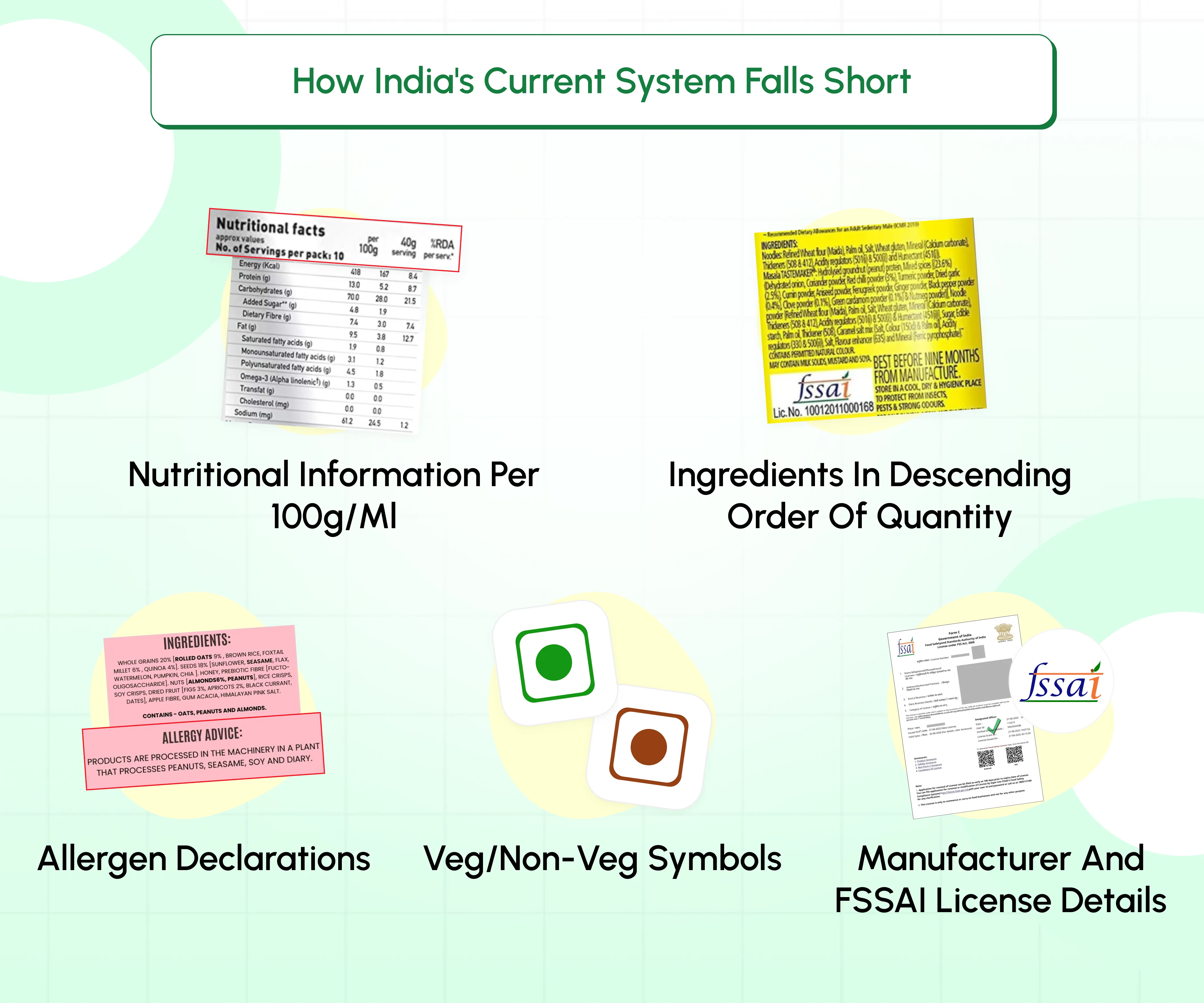
FSSAI regulations already require manufacturers to display:
- Nutritional information per 100g/ml
- Ingredients in descending order of quantity
- Allergen declarations
- Veg/non-veg symbols
- Manufacturer and FSSAI license details
But these requirements govern the back of the pack. They do not require simple, prominent warnings on the front. And they do nothing to prevent brands from simultaneously claiming “natural,” “healthy,” or “fortified” on the front while burying problematic ingredients in fine print on the back.
India needs what Chile and the UK already have: a system where a product that is high in sugar looks high in sugar from across the shelf.
How Global Leaders Have Solved This
| Country | System | Format |
|---|---|---|
| Chile | Bold black octagonal warnings | “High in Sugar / Salt / Fat” |
| United Kingdom | Traffic light system | Red / Amber / Green per nutrient |
| Brazil | Magnifying glass warning icons | Front-of-pack mandatory |
| Mexico | Black warning octagons | Mandatory across categories |
These systems have measurably reduced consumer purchases of high-risk products and pushed manufacturers to reformulate. India is now moving toward a similar framework — and the Supreme Court is ensuring it happens.
Also Read:
Artificial Colors in Food: Are They Safe?But Even Better Labels Have Limits
Let’s be practical about what regulation alone can achieve.
Even if India mandates front-of-pack warnings tomorrow:
- Shoppers still face hundreds of decisions per grocery trip
- Artificial additives, synthetic colors, and preservatives still require interpretation
- Comparing two “healthy-looking” products still takes effort
- Parents shopping with children don’t have time for ingredient-by-ingredient analysis
Transparency must be simplified to be useful. A warning label tells you a product is “high in sugar.” It doesn’t tell you whether the additives are problematic, how heavily the product is processed, or how it compares to an alternative in the next aisle.
That deeper layer of analysis is where FactsScan operates.
How FactsScan Delivers What the Supreme Court Is Asking For — Right Now
FactsScan was built on a single principle: make food label data simple, instant, and actionable for every Indian consumer.
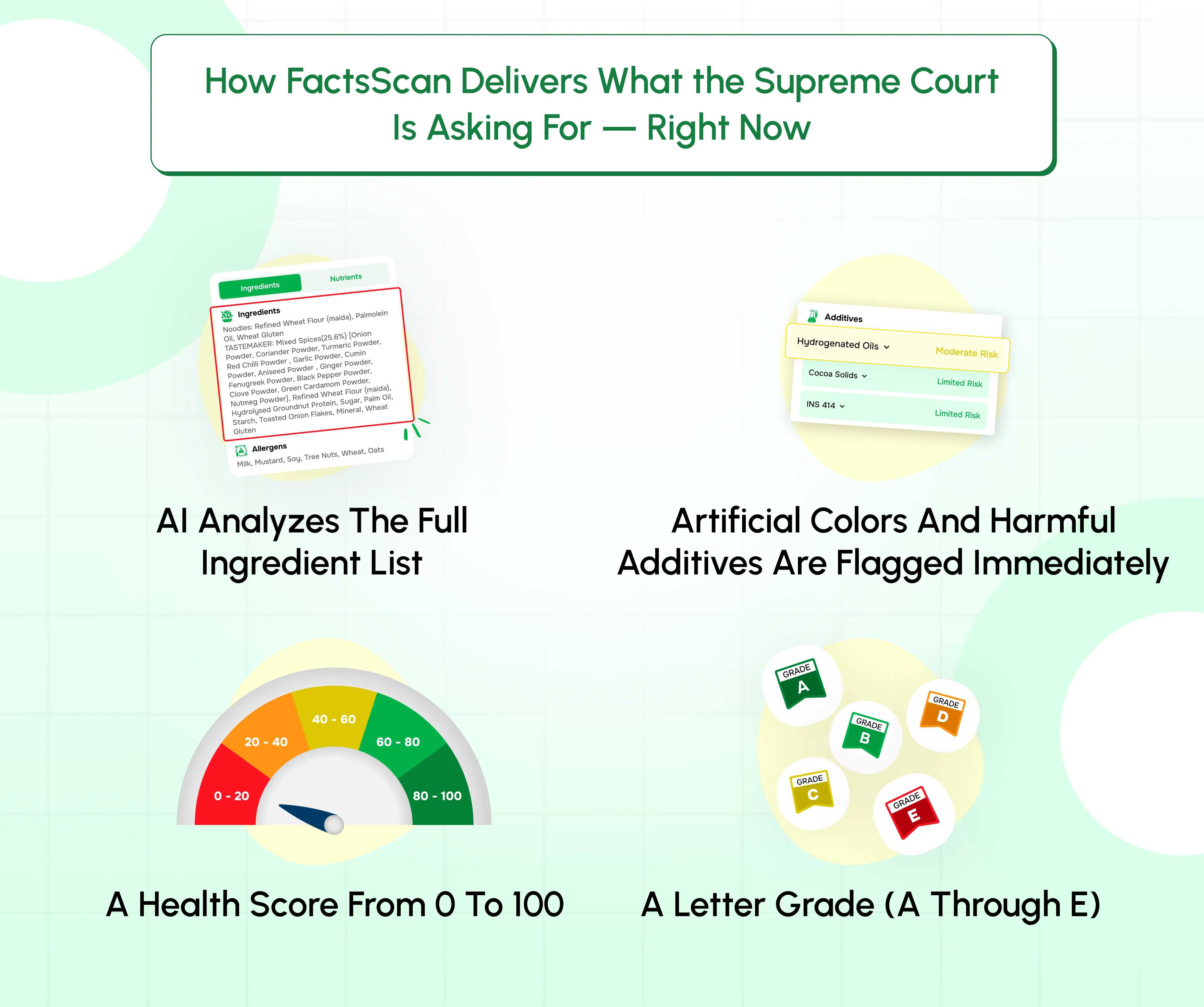
Here’s what happens when you scan a barcode with FactsScan:
- AI analyzes the full ingredient list — including additives, synthetic colors, preservatives, and processing agents
- Artificial colors and harmful additives are flagged immediately — with plain-language explanations, not INS codes
- A health score from 0 to 100 gives you an instant, comparable measure of product quality
- A letter grade (A through E) summarizes the score in a format anyone can understand at a glance
How the Score Is Calculated
| Category | Weight | What It Measures |
|---|---|---|
| Nutritional Value | 60% | Sugar, sodium, fats, fiber, protein balance |
| Additives | 20% | Synthetic dyes, preservatives, flavor enhancers |
| Processing Level | 20% | NOVA classification — how heavily processed the product is |
No jargon. No nutrition degree required. Just a clear answer to the question every shopper is actually asking: Is this product worth buying?
What This Regulatory Shift Means for FactsScan Users
The Supreme Court’s push creates an environment where:
- Consumer awareness is rising — more Indians are actively thinking about what’s in their food
- Regulatory pressure is increasing — manufacturers will face tighter scrutiny on claims and formulations
- Transparency is becoming a market differentiator — brands that score well will want to highlight it
FactsScan users are already ahead of this curve. Every scan delivers the kind of ingredient-level transparency that FSSAI is only beginning to mandate. And as front-of-pack labelling rolls out nationally, FactsScan becomes the tool that helps you go beyond the label — evaluating not just what’s disclosed, but what it means.
What Indian Families Can Do Today
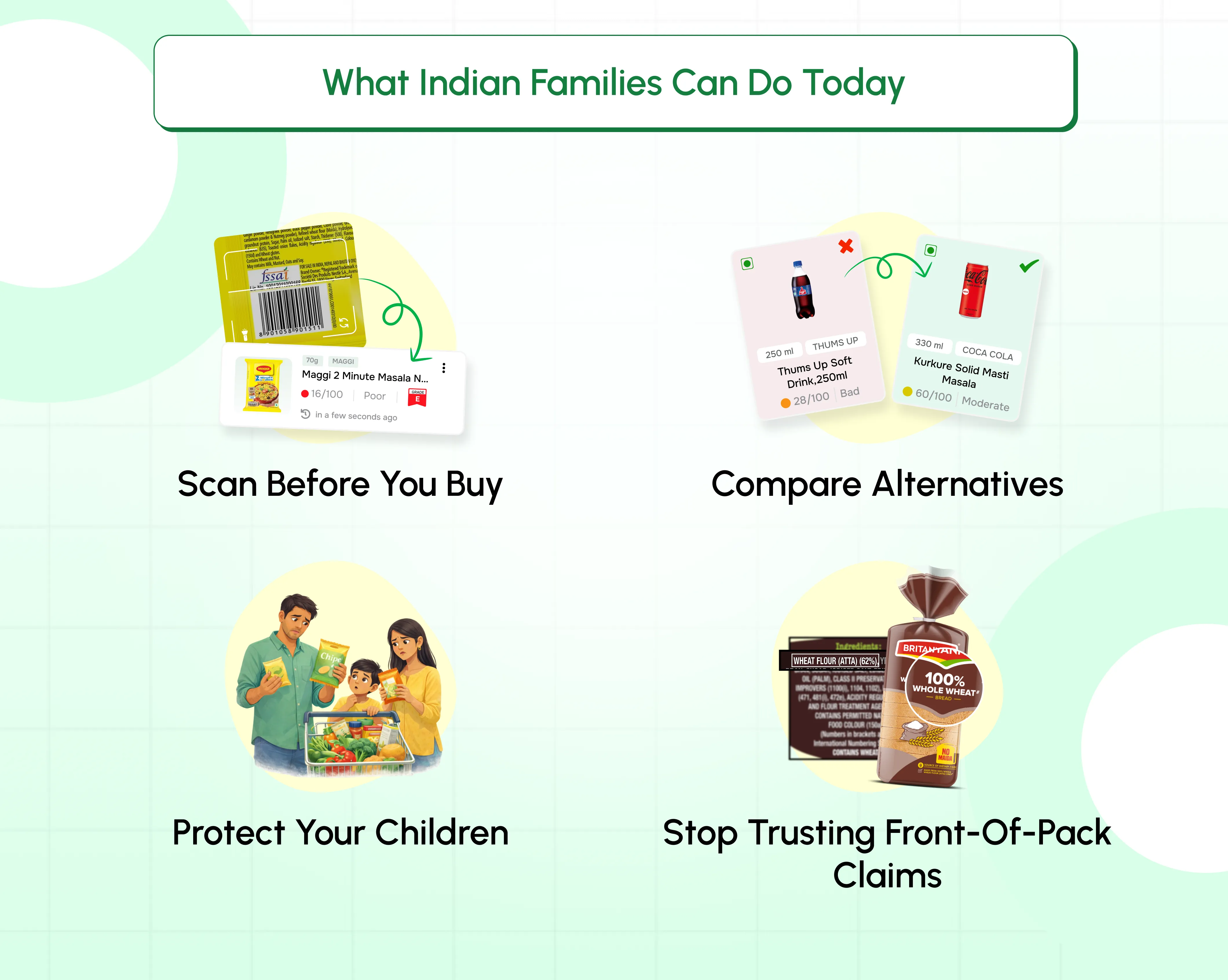
You don’t need to wait for regulation to catch up. Right now, you can:
- Scan before you buy — check the score on any packaged product before it goes in your cart.
- Compare alternatives — two products in the same category often have dramatically different scores.
- Protect your children — check snacks, breakfast cereals, and beverages that specifically target kids.
- Stop trusting front-of-pack claims — “natural,” “healthy,” “fortified,” and “light” are marketing words; your FactsScan score is a data point.
Transparency Is No Longer Optional
The Supreme Court’s message to FSSAI, to manufacturers, and to the food industry is clear: consumer health comes first. Labels must serve the person reading them — not the brand that printed them.
The future of food labelling in India will include:
- Mandatory front-of-pack warnings on HFSS (High Fat, Sugar, Salt) products
- Stricter enforcement of nutritional claims
- Greater digital integration between physical labels and consumer tools
FactsScan exists at the intersection of where policy is heading and where consumers need help today.
Because reading a food label shouldn’t require a nutrition degree.
Scan before you buy. Know what you eat. Choose better.
📲 Download FactsScan — and make transparency your superpower at the grocery store.
Ready to make Healthier Choices?
Download FactsScan now from the Google Play Store and App Store and take charge of your food choices.





Sweety Patel

Author

Sweety Patel, founder of FactsScan, has over 14 years of experience in the development industry, where she has successfully created multiple applications. Driven by her passion for food safety and health, she launched FactsScan to provide consumers with a reliable solution to understand what they’re eating, its nutritional value, and better alternatives. With extensive research in food and nutrition, Sweety is committed to empowering people to make informed food choices for a healthier lifestyle.
Recent Articles
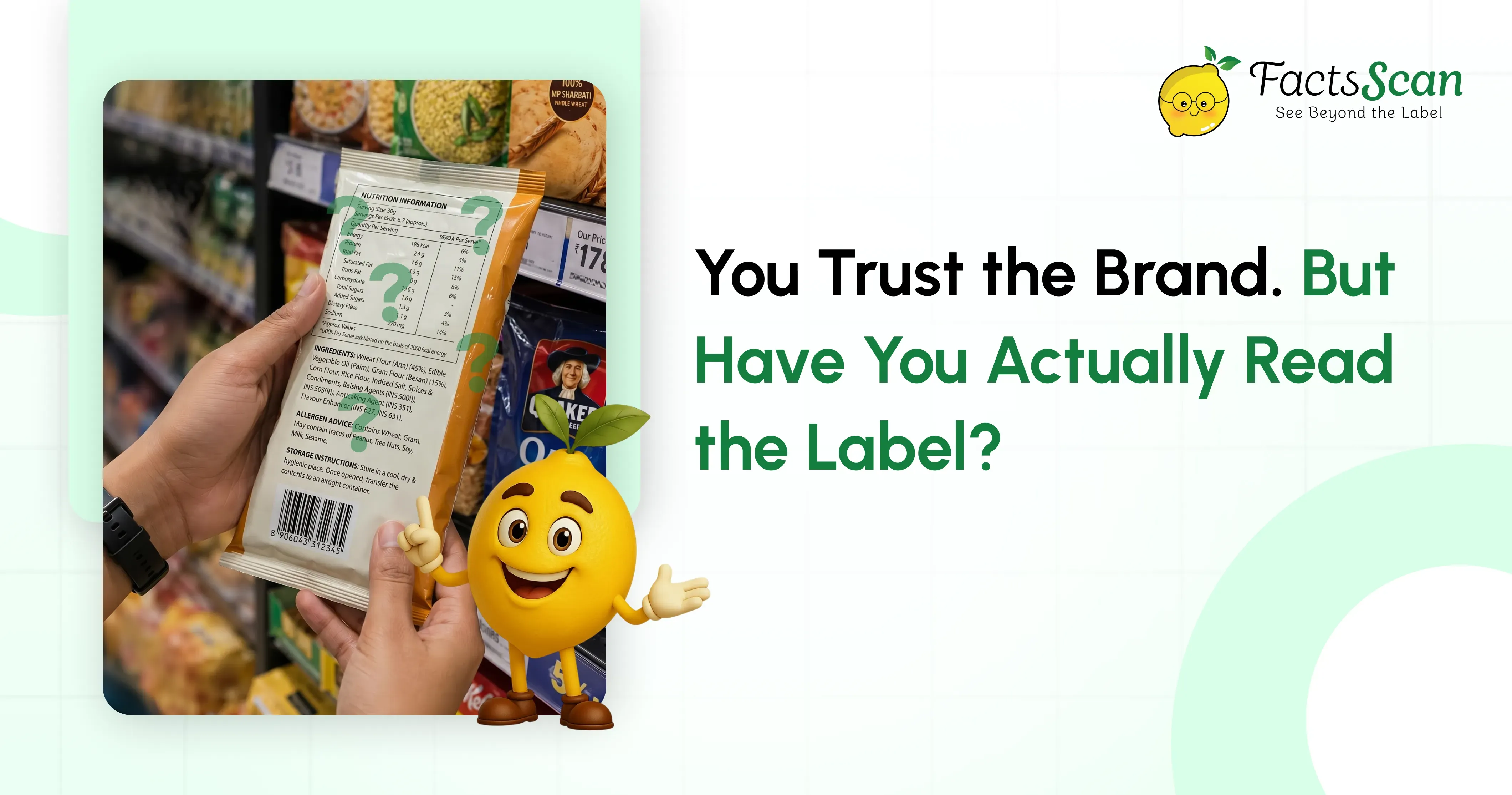

You Trust the Brand. But Have You Actually Read the Label?
What surveys and real data reveal about how Indian consumers actually shop, and why a trusted logo on the front is not the same as knowing what is inside.

Top Health Awareness Apps in India to Make Smarter Lifestyle Choices (2026)
Discover the top health awareness apps in India (2026) that help you make smarter lifestyle choices. From tracking nutrition and fitness to decoding packaged food, these apps empower you to stay informed, eat better, and live healthier every day.
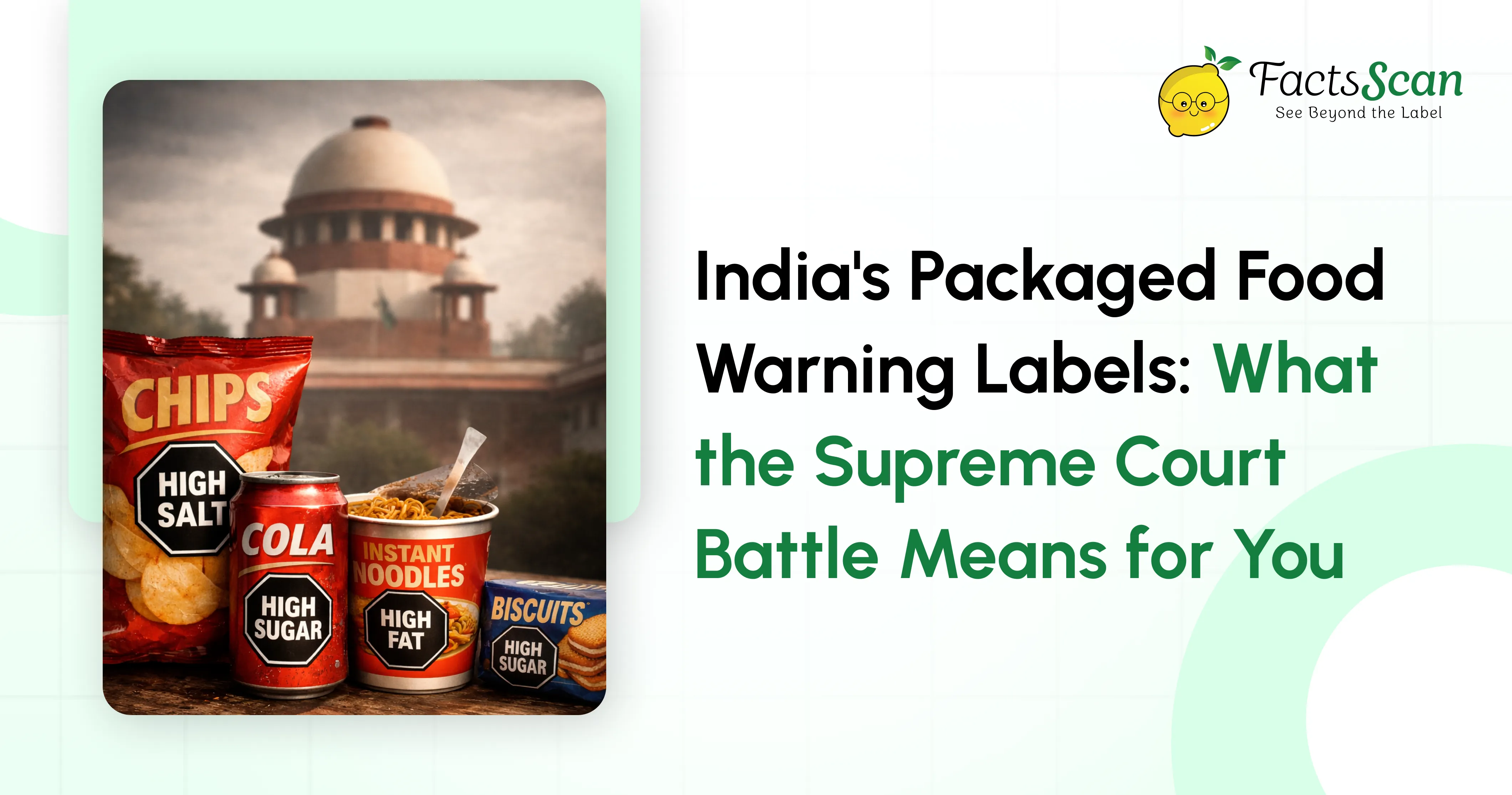
India’s Packaged Food Warning Labels: What the Supreme Court Battle Means for You
India's Supreme Court is actively pushing FSSAI to introduce mandatory front of pack warning labels on packaged foods high in fat, sugar, and salt. With the reform still in progress as of March 2026, millions of Indian consumers continue buying food based on misleading front panel claims. This article explains what's at stake, what global labelling models look like, and how you can make smarter food choices today — without waiting for the law to catch up.