
Best AI Food Scanner App: How Smart Technology Is Changing the Way We Eat

 23 Jan 2026
 9 Min Read
 Views
Views


Summary :
AI food scanner apps use advanced technology to decode complex food labels instantly. They help consumers identify hidden ingredients, allergens, and unhealthy additives, making grocery shopping safer and more informed for everyone.
Introduction
Walking through a supermarket today feels different than it did a decade ago. Shelves are packed with products claiming to be “natural,” “healthy,” or “low fat.” Yet the ingredients list on the back often tells a completely different story. Long chemical names, confusing nutritional data, and misleading marketing make it nearly impossible for average shoppers to know what they’re actually buying.
This is where artificial intelligence steps in. AI food scanner apps are transforming how millions of people make daily food decisions. These smart tools analyze product labels in seconds, revealing what manufacturers don’t want you to notice. For busy parents, health conscious individuals, and anyone trying to eat better, these apps have become essential companions during every shopping trip.
What is an AI Food Scanner App?

An AI food scanner app is a mobile application that uses your smartphone camera to scan product barcodes or ingredient labels. Once scanned, the app’s artificial intelligence engine analyzes the product information against massive nutritional databases. Within moments, it delivers a clear verdict about the food’s quality, highlighting potential concerns like excess sugar, hidden palm oil, or dangerous additives.
The technology works through three simple steps. First, you point your phone camera at the barcode or ingredients panel. Second, the AI instantly recognizes the product and pulls its complete nutritional profile from the database. Third, the app translates this technical information into plain language, often using color coded ratings or simple scores that anyone can understand.
Why Traditional Label Reading is No Longer Enough
Most people glance at calories and maybe check the sugar content. But modern food labels have become deliberately complex. Manufacturers list ingredients in descending order by weight, which sounds straightforward until you realize sugar appears under twenty different names like dextrose, maltodextrin, and corn syrup solids. A product might seem low in sugar when you check “sugar” alone, yet it could be loaded with these hidden sweeteners.
Reading labels manually also requires understanding nutritional science. What does “partially hydrogenated oil” actually mean for your heart health? How much sodium is too much for your blood pressure? Most shoppers lack this expertise, making them vulnerable to clever marketing and hidden health risks.
The human eye misses patterns that AI catches instantly. You might not notice that your favorite “whole grain” cereal contains three types of sugar and artificial colors. An AI scanner spots these red flags immediately and explains why they matter.
Key Problems an AI Food Scanner App Solves for Consumers
Modern food labels create several serious challenges for everyday shoppers. Understanding these problems reveals why AI assistance has become so valuable.
- Ingredient complexity: Tops the list. Labels now feature dozens of scientific names that sound more like chemistry experiments than food. Terms like carboxymethylcellulose or butylated hydroxyanisole mean nothing to regular consumers, yet these additives might cause allergic reactions or long term health concerns.
- Hidden fats and salt: Represent another major issue. Products marketed as “light” or “reduced fat” often compensate by adding excessive salt or sugar. A can of tomato soup might contain half your daily sodium limit. Salad dressing labeled as “heart healthy” could be packed with saturated fat. Without detailed analysis, these dangers stay hidden.
- Allergen risks: Pose life threatening consequences for millions of families. Wheat, soy, and milk derivatives hide in unexpected products under technical names. Parents of allergic children need absolute certainty, but manual checking is slow, stressful, and prone to mistakes. One overlooked ingredient could trigger a severe reaction.
Common Food Label Challenges and How AI Helps
| Challenge | Manual Reading Problem | AI Scanner Solution |
|---|---|---|
| Multiple sugar names | Miss hidden sweeteners scattered across ingredients | Identifies all sugar types and calculates total content |
| Palm oil derivatives | Appears as 200+ different chemical names | Flags all palm oil variants instantly regardless of terminology |
| Sodium content | Hard to calculate daily percentage quickly | Shows sodium level with clear traffic light warningy |
| Allergen traces | May be mentioned only in fine print | Highlights all allergens prominently with severity alerts |
| Artificial additivess | Difficult to recognize harmful ones | Cross references against health databases and provides risk ratings |
| Misleading health claims | Front label contradicts actual ingredients | Reveals gap between marketing and nutritional reality |
Features to Look for in the Best AI Food Scanner App
Not all food scanner apps deliver the same quality or accuracy. When evaluating options, prioritize these essential capabilities:
- Comprehensive ingredient database covering local and international products
- Real time scanning with instant results under three seconds
- Clear explanations of why specific ingredients are flagged as concerning
- Personalized alerts based on your dietary restrictions and health goals
- Allergen detection that covers all major and minor allergens
- Nutritional scoring system that’s easy to understand at a glance
- Palm oil identification across all its chemical variants
- Offline functionality for scanning in areas with poor connectivity
- Regular database updates to include new products and reformulations
- Independent analysis not influenced by food industry sponsorship
The best apps combine speed with depth. You want quick answers while shopping, but also access to detailed breakdowns when you’re researching products at home.
Who Benefits Most From Using an AI Food Scanner App
- Families: With young children gain tremendous peace of mind. Parents can quickly verify that snacks don’t contain harmful preservatives or excessive sugar. School lunch preparation becomes faster when you can scan multiple items efficiently.
- Health conscious consumers: Working to improve their diet appreciate the objective guidance. Whether you’re reducing sodium for blood pressure management or avoiding trans fats for heart health, the app acts as your personal nutrition consultant at every meal.
- People with dietary restrictions: Find these tools invaluable. Vegans can confirm no animal derived ingredients made it into the product. Those avoiding gluten can shop confidently without spending thirty minutes per grocery trip reading fine print. People managing diabetes get accurate carbohydrate counts instantly.
- Athletes and fitness: Enthusiasts use scanners to optimize their nutrition. Elderly individuals managing multiple health conditions benefit from simplified information that helps them follow doctor’s orders. Even adventurous eaters trying international products can understand unfamiliar ingredients.
How the FactsScan App Uses AI to Simplify Food Choices
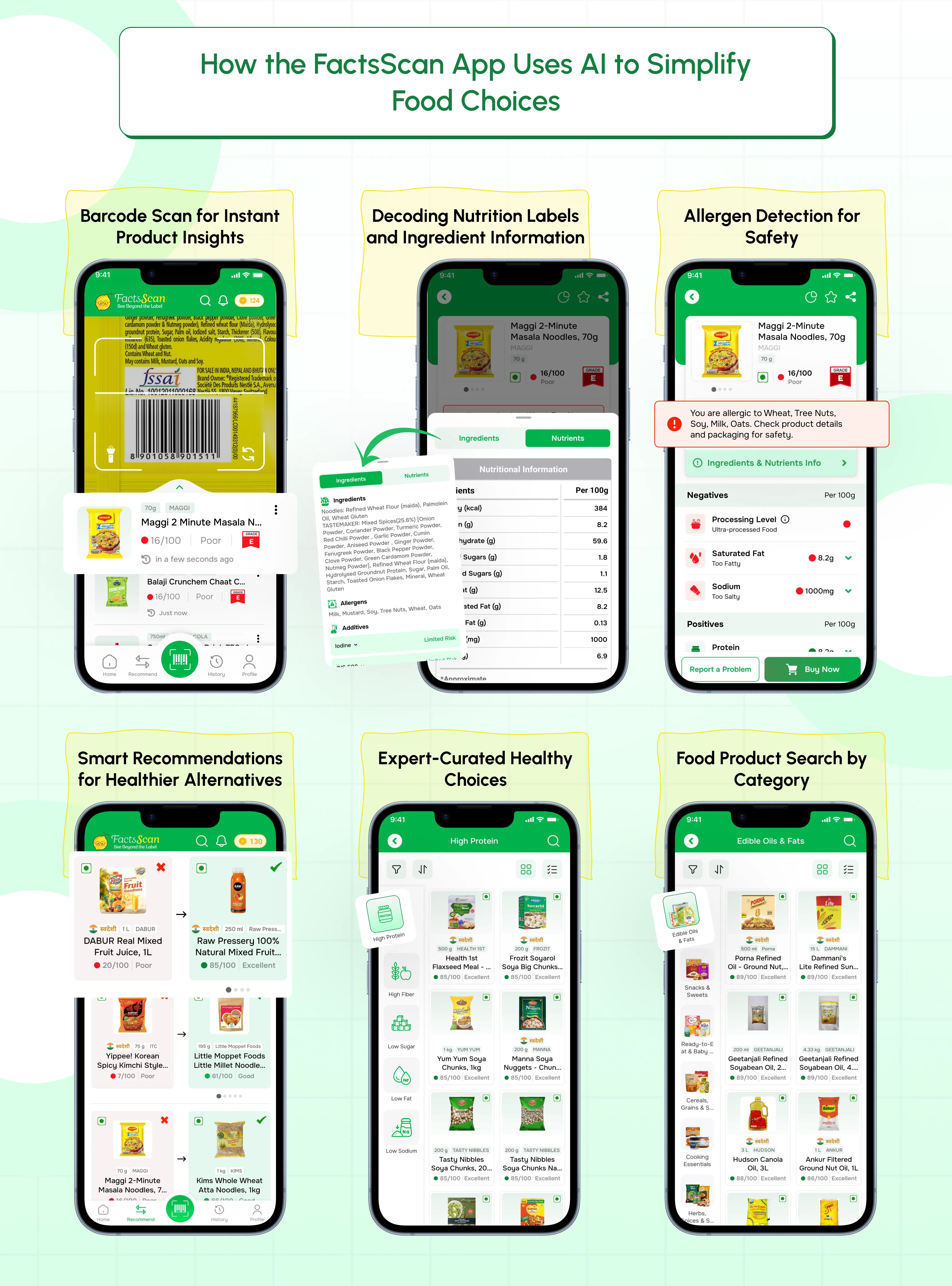
FactsScan represents the next generation of intelligent food analysis. The app combines cutting edge AI with a commitment to consumer transparency. When you scan a product with FactsScan, the artificial intelligence doesn’t just read labels but interprets them through the lens of nutritional science and current health research.
The platform’s AI engine evaluates products across multiple dimensions simultaneously. It checks for hidden sugars while also analyzing fat quality, sodium levels, and additive safety. This comprehensive approach means you get a complete picture, not just partial information that might miss critical concerns
FactsScan also learns from user preferences. Tell the app you’re avoiding palm oil or managing cholesterol, and it tailors every scan to highlight relevant information for your specific situation. The AI becomes more helpful the more you use it, creating a personalized nutrition guide that fits your unique needs
Practical Ways to Use an AI Food Scanner App Daily
- At grocery stores: Keep your phone ready as you shop. Scan products before placing them in your cart. Compare similar items from different brands to find the healthiest option. Use the app to decode confusing labels on new products you’ve never tried before.
- At home: Scan items already in your pantry for a nutritional audit. You might discover that products you’ve been buying for years contain ingredients you’d prefer to avoid. This awareness helps you make better choices during your next shopping trip.
- While comparing products: Use the app to settle debates about which brand truly offers better nutrition. Marketing claims become irrelevant when you have objective AI analysis showing the actual ingredient quality and nutritional content of each option.
- Build a routine: Of scanning everything new. Before trying a restaurant’s packaged sauce or a friend’s recommended snack, take five seconds to scan it. This habit creates a safety net that protects your health without requiring extensive nutritional knowledge.
Why AI Food Scanning is the Future of Healthy Eating
The food industry evolves constantly, with new additives and processing methods appearing regularly. Human ability to track these changes and understand their implications can’t keep pace. AI systems monitor global food databases, scientific research, and regulatory updates continuously, providing insights that would take nutritionists hours to compile.
Consumer empowerment drives this technology forward. People want control over what enters their bodies, but they need tools that work in real time. AI scanning delivers knowledge exactly when it matters most at the point of purchase. This shift puts power back in the hands of shoppers rather than marketers.
Transparency becomes enforceable through technology. Companies can’t hide behind technical jargon when AI instantly translates it into plain language. This pressure encourages food manufacturers to reformulate products with cleaner ingredients, creating a positive cycle that benefits everyone’s health.
Conclusion
The days of blindly trusting food labels are over. Complex ingredients, hidden additives, and misleading marketing have made grocery shopping a minefield for health conscious consumers. AI food scanner apps cut through this confusion, delivering instant clarity about what you’re really buying.
These intelligent tools serve as your personal nutritionist, allergen detector, and ingredient decoder all in one pocket sized package. They transform overwhelming technical information into simple, actionable insights that protect your family’s health with every scan.
Stop guessing about food quality. Start using reliable AI powered analysis to make choices based on facts, not marketing. Download the FactsScan app today and begin scanning every product before it enters your home. Your health deserves more than guesswork. It deserves the clarity, confidence, and control that only smart technology can provide in our complex food landscape.
Ready to make Healthier Choices?
Download FactsScan now from the Google Play Store and App Store and take charge of your food choices.




Sweety Patel

Author

Sweety Patel, founder of FactsScan, has over 14 years of experience in the development industry, where she has successfully created multiple applications. Driven by her passion for food safety and health, she launched FactsScan to provide consumers with a reliable solution to understand what they’re eating, its nutritional value, and better alternatives. With extensive research in food and nutrition, Sweety is committed to empowering people to make informed food choices for a healthier lifestyle.
Recent Articles
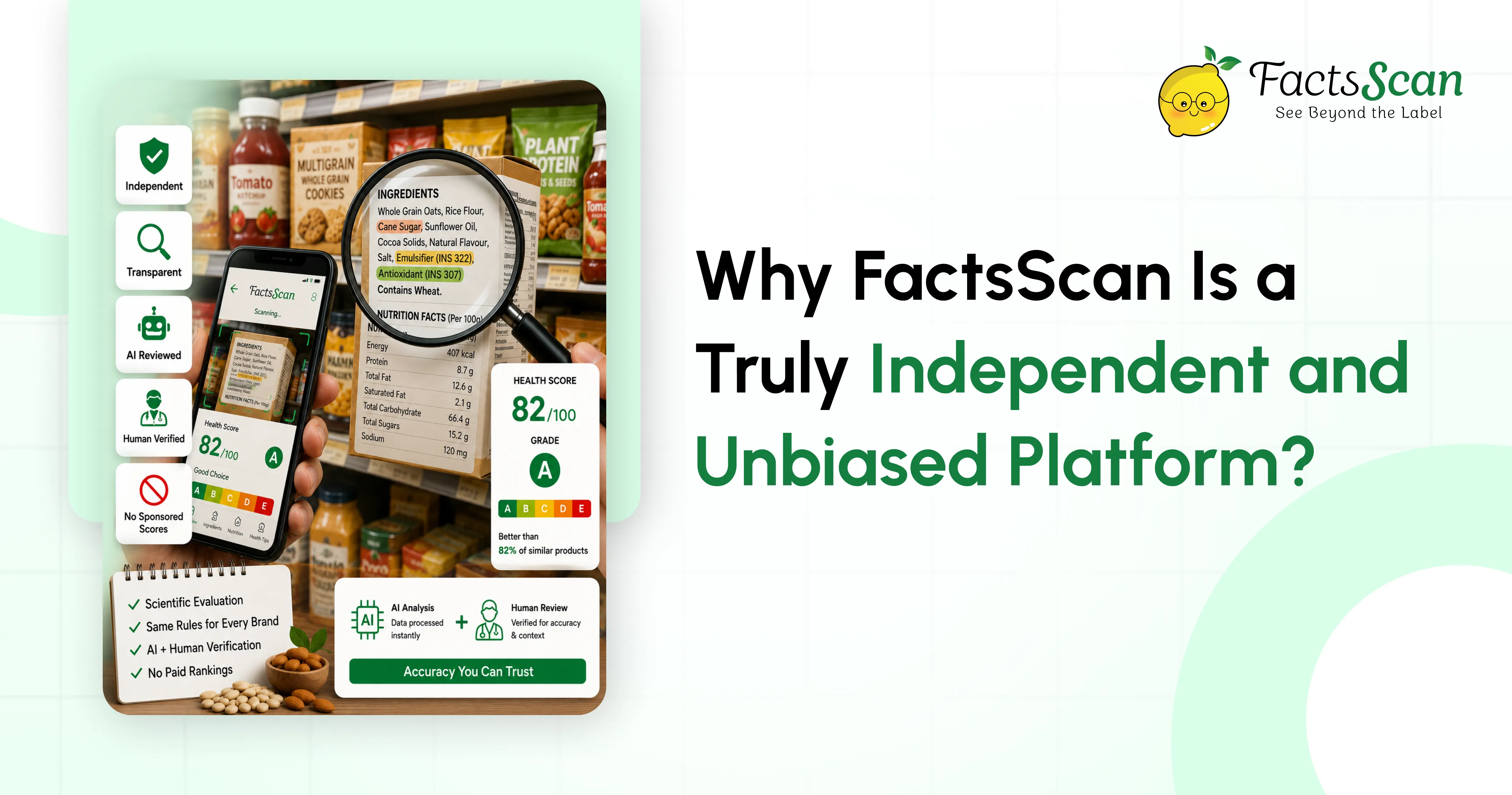
Why FactsScan Is a Truly Independent and Unbiased Platform?
FactsScan is built to provide transparent, unbiased, and evidence-based food information without favoring any brand or manufacturer. Every product is evaluated using consistent scientific criteria, helping users understand ingredients, nutrition, additives, and overall health impact so they can make informed and confident food choices.
FactsScan Celebrating 50,000 Downloads on Play Store: A Step Toward Healthier Choices
FactsScan has hit a major milestone with 50,000 downloads on the Play Store! This achievement reflects the growing awareness and commitment of users toward making healthier food choices. The app continues to empower families and individuals to understand what’s in their food and make smarter, informed decisions every day.
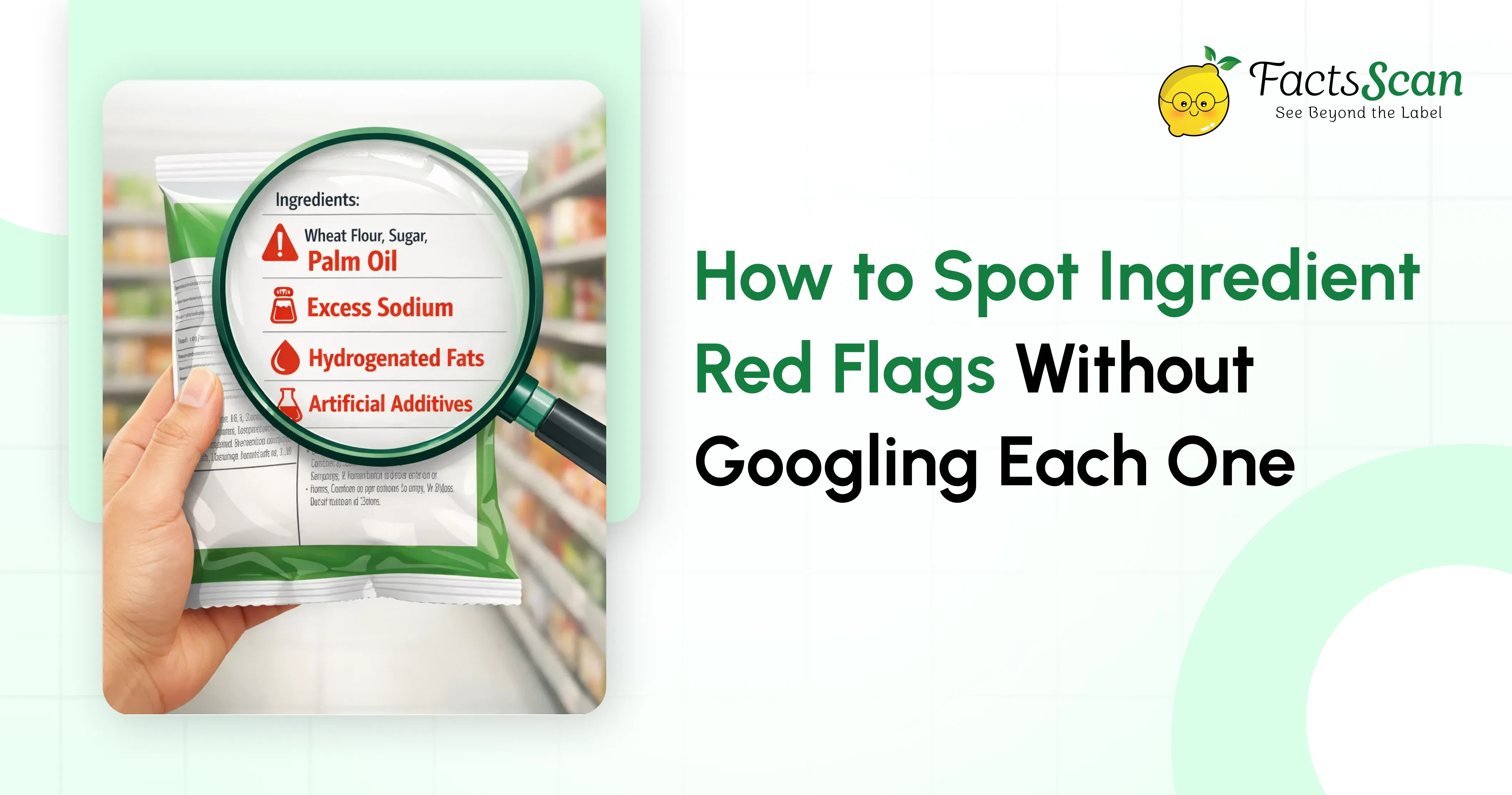
How to Spot Ingredient Red Flags Without Googling Each One
Learn to identify problematic ingredients like palm oil, excess sodium, hydrogenated fats and artificial enhancers on food labels without researching every term. Master quick scanning techniques to make healthier packaged food choices confidently.