
What Is Sodium Benzoate? Uses, Risks & Safety Facts

 15 Jun 2026
 11 Min Read
 Views
Views

Summary :
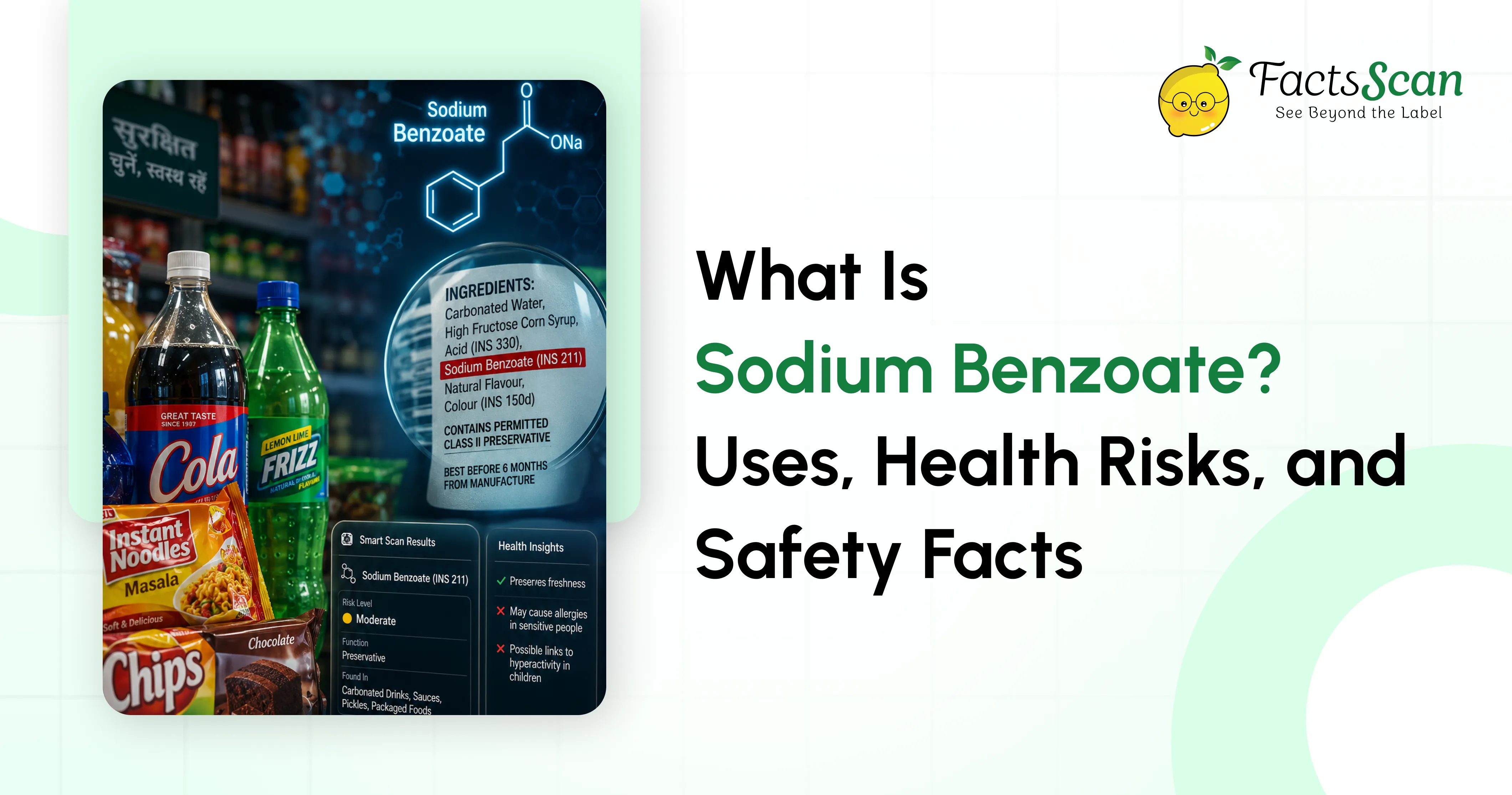
This guide explains what sodium benzoate is, why manufacturers use it as a preservative in packaged foods and beverages, and what current science says about its safety. Readers will learn how to identify it on ingredient labels, understand its potential health concerns in context, and make more informed food choices. The article presents a balanced, evidence based perspective free from sensationalism.
Walk down any supermarket aisle and pick up a bottle of soda, a jar of salad dressing, or a packet of pickles. Chances are you will find sodium benzoate listed somewhere on the label. It is one of the most commonly used food preservatives in the world, yet most consumers are not sure what it actually does or whether it is safe to consume.
This guide breaks down everything you need to know about sodium benzoate, from what it is and why it is used, to what the science says about its safety. The goal is straightforward: help you make informed choices based on facts, not fear.
What Is Sodium Benzoate?
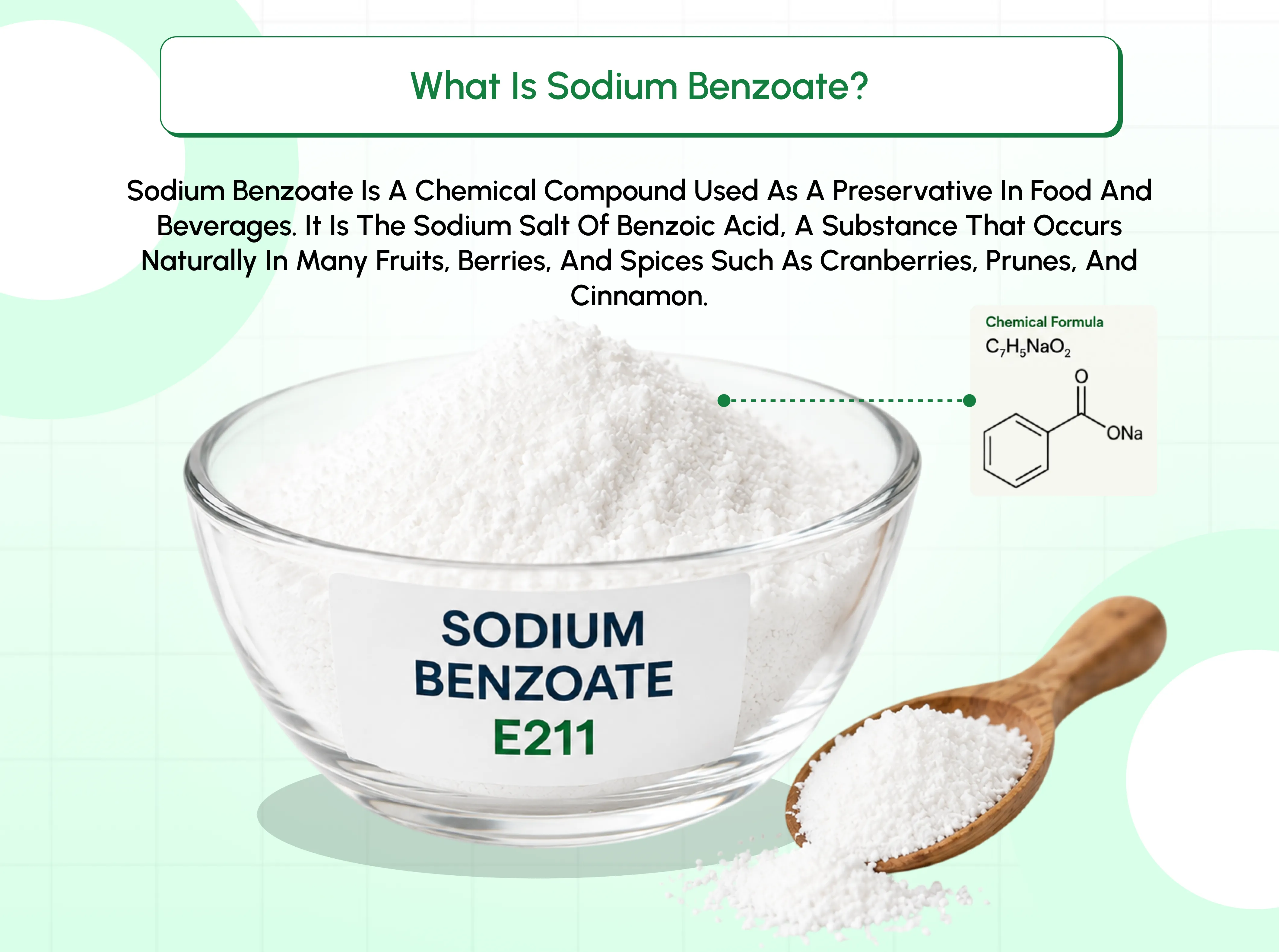
Sodium benzoate is a chemical compound used as a preservative in food and beverages. It is the sodium salt of benzoic acid, a substance that occurs naturally in many fruits, berries, and spices such as cranberries, prunes, and cinnamon. When used commercially, it is typically produced synthetically.
Food regulators around the world classify it under the food additive code E211. Its primary role is to prevent the growth of microorganisms, which helps packaged products stay safe and fresh for longer periods.
Quick Facts Table
| Fact | Details |
|---|---|
| Common Name | Sodium Benzoate |
| Food Additive Code | E211 |
| Category | Food Preservative |
| Main Function | Prevents Spoilage |
| Commonly Found In | Drinks, Sauces, Packaged Foods |
Manufacturers use it because it is highly effective at low concentrations, is cost efficient, and works well in a wide range of commonly consumed products.
Why Is Sodium Benzoate Used in Food?
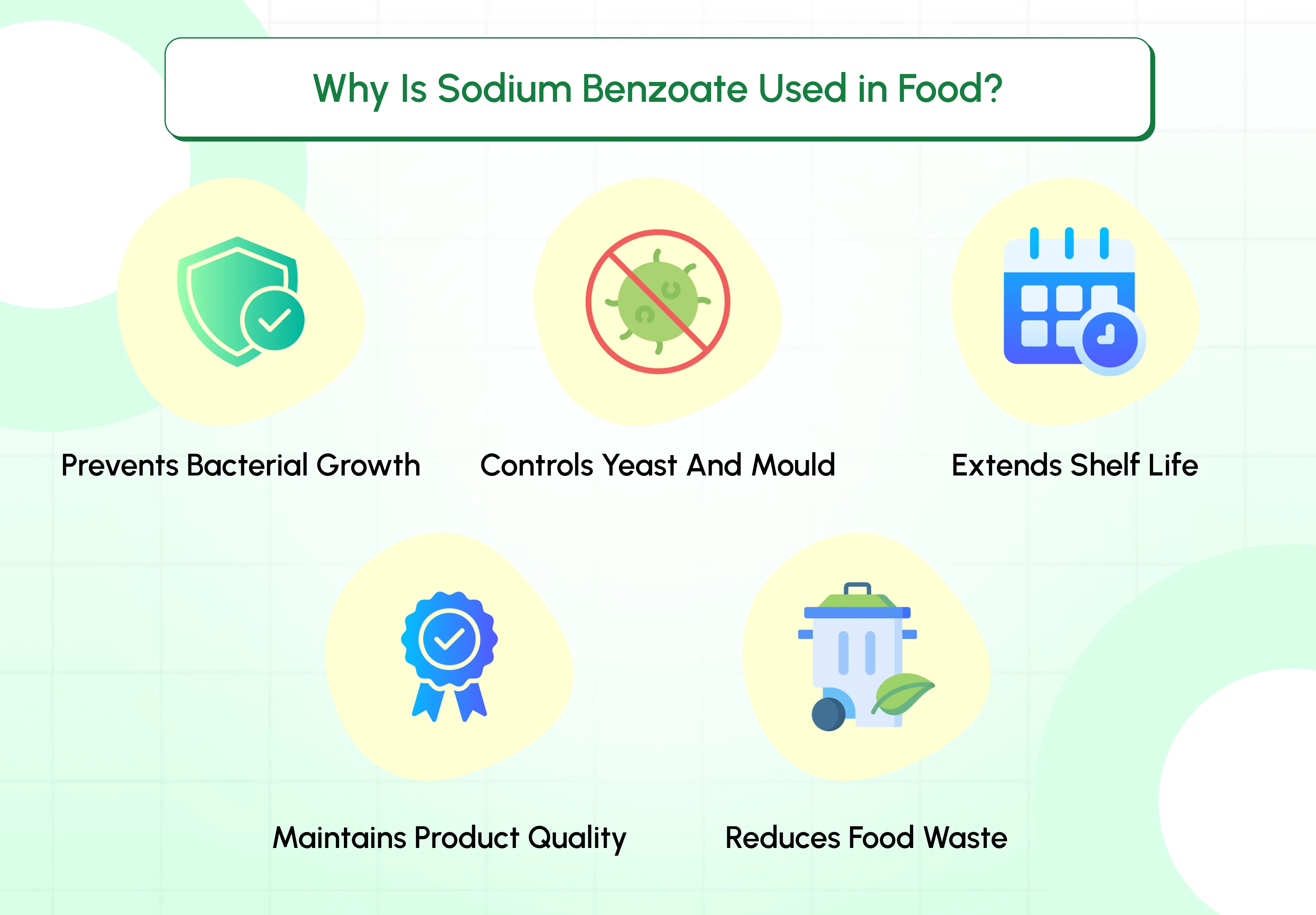
1. Prevents Bacterial Growth
Sodium benzoate disrupts the ability of bacteria to function inside food products. It interferes with the cell metabolism of bacteria, making it difficult for harmful microorganisms to multiply and spoil the product.
2. Controls Yeast and Mould
Beyond bacteria, sodium benzoate is also effective against yeast and mould. This is especially important in acidic foods like fruit juices and carbonated beverages where these organisms can thrive.
3. Extends Shelf Life
By controlling microbial activity, sodium benzoate allows packaged foods and drinks to remain safe and consumable for weeks or months longer than they would without a preservative. This matters significantly during long distance transport and storage.
4. Maintains Product Quality
Preservatives do not just prevent safety issues. They also help maintain the taste, texture, and appearance of food over time, so the product you open matches what was intended.
5. Reduces Food Waste
When food lasts longer, less of it gets thrown away. Sodium benzoate plays a practical role in reducing food waste along the entire supply chain, from factory to household.
| Benefit | Why It Matters |
|---|---|
| Preservation | Stops harmful microbial growth |
| Shelf Life | Products remain usable for longer |
| Food Safety | Reduces risk of spoiled or contaminated food |
| Product Stability | Maintains taste, colour, and texture |
| Reduced Waste | Less food discarded during transport and storage |
Common everyday examples include the fruit squash you store in your fridge after opening, or the tomato ketchup that stays fresh for months without refrigeration.
How Does Sodium Benzoate Work?
Sodium benzoate works by entering the cells of microorganisms and disrupting their internal pH balance. This prevents them from producing the energy they need to survive and reproduce.
Crucially, sodium benzoate is most effective in acidic environments, meaning foods and beverages with a pH below 4.5. This is why it is so commonly found in carbonated soft drinks, fruit juices, vinegar based sauces, and pickles. In a neutral or alkaline environment, it becomes far less effective.
The role of acidity is important for consumers to understand. Beverages like sodas and energy drinks are naturally acidic, which makes sodium benzoate an ideal choice for manufacturers looking to extend shelf life without adding large quantities of preservative.
Consumer Friendly Example: A fruit drink may contain sodium benzoate to prevent spoilage while maintaining freshness during transport and storage. The citric acid already present in the drink actually helps sodium benzoate work more effectively.
Common Foods That Contain Sodium Benzoate
| Food Category | Common Examples |
|---|---|
| Soft Drinks | Colas, lemon sodas, flavoured sparkling water |
| Fruit Juices | Packaged fruit punches, mixed fruit drinks |
| Energy Drinks | Popular sports and energy beverages |
| Sauces | Tomato ketchup, soy sauce, hot sauce |
| Salad Dressings | Bottled vinaigrettes, mayonnaise based dressings |
| Pickles | Jarred gherkins, mixed vegetable pickles |
| Jams and Preserves | Low sugar jams, fruit spreads |
| Processed Foods | Instant noodle seasoning packets, ready to eat snacks |
These food categories share something in common: they are acidic, moisture rich, or have long shelf life expectations. All of these factors make preservatives necessary from a food safety standpoint.
Sodium Benzoate vs Other Common Preservatives
Many preservatives are approved for food use worldwide. Here is how sodium benzoate compares to others you might see on labels:
| Preservative | Common Uses | Main Purpose |
|---|---|---|
| Sodium Benzoate | Soft drinks, juices, sauces | Prevents bacteria, yeast, and mould in acidic foods |
| Potassium Sorbate | Cheese, baked goods, wine | Inhibits mould and yeast across a broader pH range |
| Calcium Propionate | Bread, baked goods | Prevents mould in baked products |
| Sodium Nitrite | Processed meats, deli products | Prevents bacterial growth and preserves colour |
Each preservative has its own chemistry and ideal application. Sodium benzoate is specifically suited for acidic, liquid based products, while others like calcium propionate work better in baked environments where acidity is lower.
Is Sodium Benzoate Safe?
Sodium benzoate has been evaluated and approved by major food safety authorities including the US Food and Drug Administration (FDA), the European Food Safety Authority (EFSA), and the Food Safety and Standards Authority of India (FSSAI). It carries the designation of Generally Recognised as Safe (GRAS) in the United States when used within approved limits.
Regulators set an Acceptable Daily Intake (ADI) for sodium benzoate, which represents the amount considered safe for regular consumption over a lifetime. The amount typically found in packaged foods and drinks is well within these limits.
Sodium benzoate is a legally approved, extensively studied food additive. When consumed in amounts typical of a normal diet, current scientific and regulatory consensus holds that it is safe for the general population. Like any substance, excessive consumption beyond recommended levels is not advisable.
Potential Health Concerns Associated With Sodium Benzoate
Balanced discussion requires acknowledging the areas where questions have been raised.
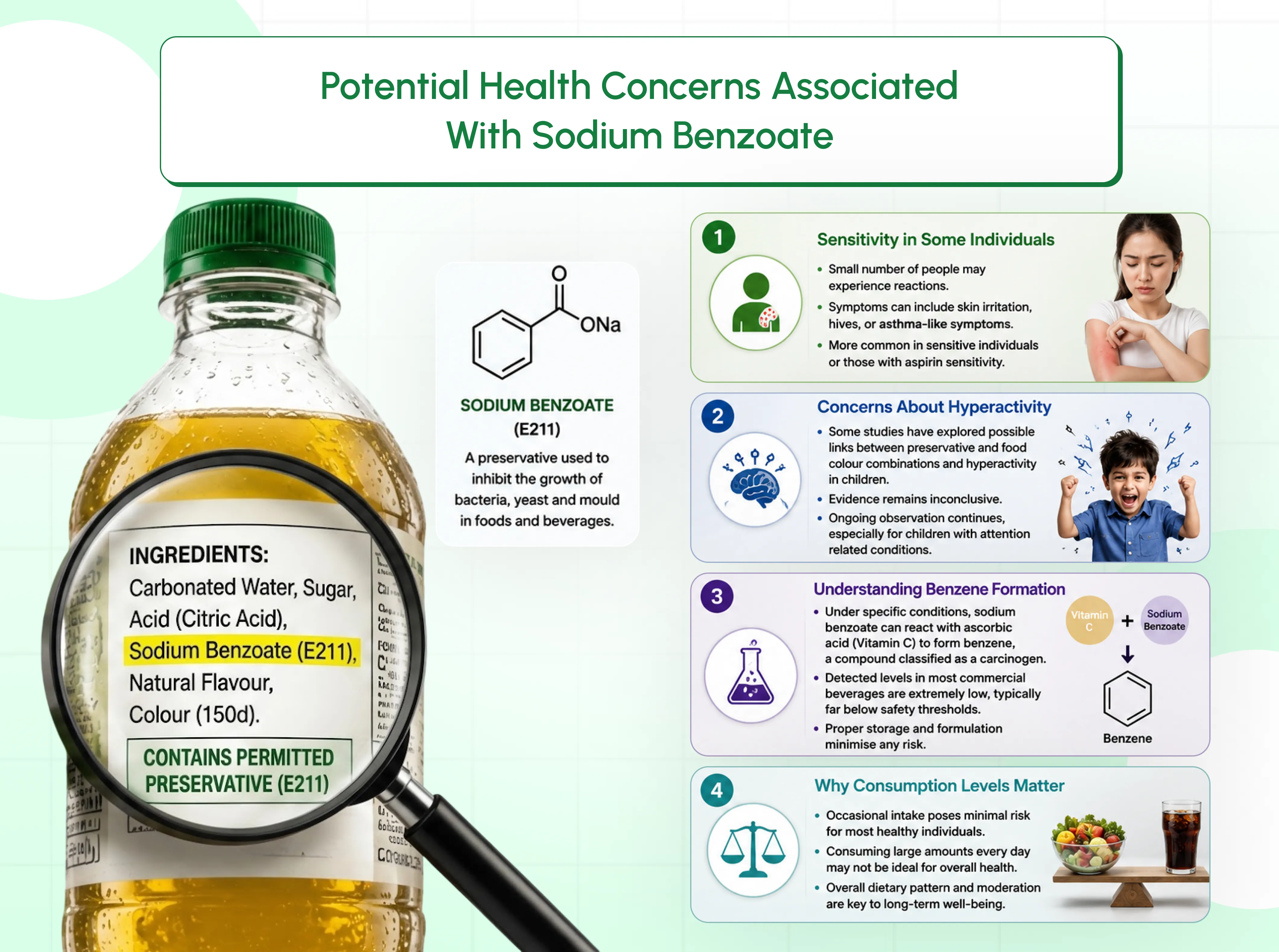
1. Sensitivity in Some Individuals
A small subset of people, particularly those with aspirin sensitivity or certain allergic conditions, may experience reactions to sodium benzoate. These can include skin irritation, hives, or asthma like symptoms. If you notice consistent reactions after consuming certain packaged foods, consulting a healthcare professional is the sensible step.
2. Concerns About Hyperactivity
A widely cited study published in 2007 suggested a possible link between certain food colour and preservative combinations, including sodium benzoate, and increased hyperactivity in children. This research prompted EFSA to review the evidence. The consensus that emerged is that the data is not strong enough to establish a definitive causal link, but it remains an area of ongoing observation, particularly for parents of children with attention related conditions.
3. Understanding Benzene Formation
One topic that attracts significant consumer concern is benzene. Under certain conditions, sodium benzoate can react with ascorbic acid (Vitamin C) to form benzene, a compound classified as a carcinogen. However, context matters here significantly. The benzene levels detected in most commercial beverages are extremely low, typically far below safety thresholds. Regulatory agencies monitor this, and manufacturers are required to formulate products carefully to minimise this reaction. Proper storage, avoiding excessive heat and direct sunlight, further reduces any risk.
4. Why Consumption Levels Matter
The difference between occasional consumption and daily excessive intake is significant in food safety. Enjoying a soda occasionally poses minimal risk for most healthy individuals. Consuming large quantities of sodium benzoate containing products every single day is a different scenario and, more broadly, likely reflects an overall dietary pattern that may not support optimal health for other nutritional reasons as well.
Myth vs Fact
| Myth | Fact |
|---|---|
| Sodium Benzoate Is Banned Worldwide | It is approved in most countries with regulatory oversight |
| Every Product Containing Sodium Benzoate Is Unsafe | Approved levels in commercial products are considered safe |
| All Preservatives Are Harmful | Preservatives prevent foodborne illness and reduce waste |
| Sodium Benzoate Causes Serious Illness in Everyone | Adverse effects are rare and mostly linked to individual sensitivity |
How to Identify Sodium Benzoate on Food Labels
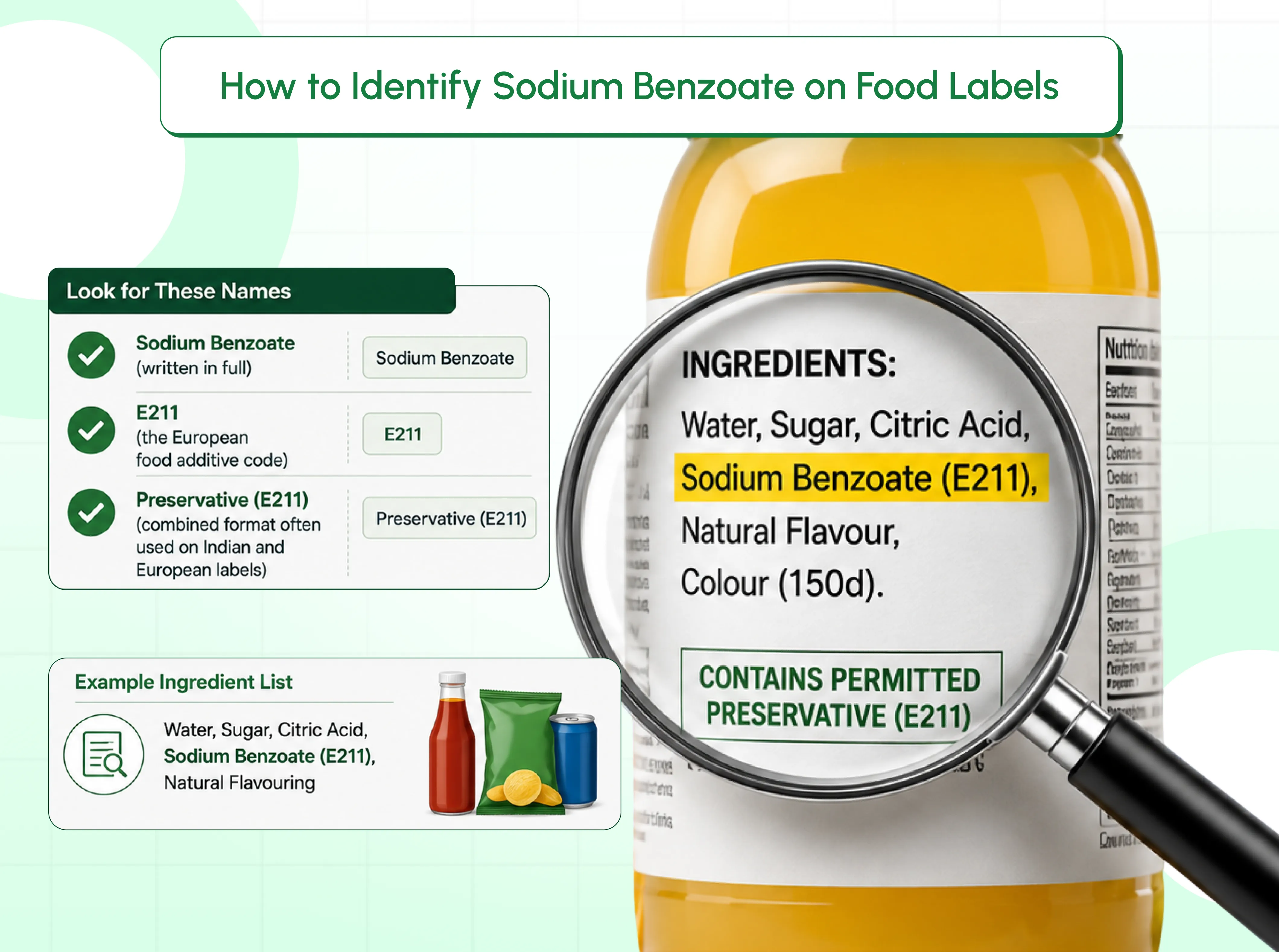
When reading ingredient labels, sodium benzoate may appear in several ways:
- Sodium Benzoate (written in full)
- E211 (the European food additive code)
- Preservative (E211) (combined format often used on Indian and European labels)
Here is what a typical ingredient list containing sodium benzoate looks like:
Water, Sugar, Citric Acid, Sodium Benzoate (E211), Natural Flavouring
Learning to read ingredient labels fluently is one of the most powerful habits a consumer can develop. If you want to understand labels more broadly, this guide on food labels covers everything from serving sizes to additive codes in simple language.
Should You Avoid Foods Containing Sodium Benzoate?
Not every food containing sodium benzoate is automatically unhealthy, and the presence of a single preservative does not define the nutritional value of a product. A bottle of water with sodium benzoate is very different from a highly processed snack that contains sodium benzoate alongside excessive sugar, saturated fat, and artificial colours.
The smarter approach is to evaluate the complete ingredient list and the nutritional profile of the product as a whole. Ask yourself: is this food giving me something nutritionally valuable, or is it mostly processed ingredients with very little benefit?
Knowing which ingredient red flags to look for helps you prioritise. You do not need to avoid every product with a preservative, but understanding harmful ingredients in packaged food more broadly helps you make choices that align with your health goals.
Making informed decisions is about context, balance, and the overall pattern of your diet.
How FactsScan Helps You Understand Food Additives
Understanding every additive on every label can feel overwhelming, which is exactly why FactsScan exists. The app allows consumers to:
- Scan barcodes of packaged foods instantly
- Analyse the complete ingredient list with plain language explanations
- Understand specific additives like sodium benzoate, their purpose, and any associated concerns
- View product scores that reflect overall nutritional quality
- Make faster, smarter decisions at the supermarket without needing a food science degree
The FactsScan scoring system is designed to give you an honest, easy to understand snapshot of a product's overall health profile so you are not left guessing.
Conclusion
Sodium benzoate is one of the most studied and widely used food preservatives in the world. It serves a genuine and practical purpose: keeping food safe, reducing spoilage, and extending shelf life in a wide range of products we consume every day.
Food safety authorities in India, the US, and Europe have reviewed the available evidence and approved it for use within defined limits. Like any food additive, it deserves informed scrutiny rather than blanket fear. For most people consuming a varied and balanced diet, sodium benzoate at levels present in commercial products does not pose a significant health risk.
The more useful question is not just "does this product contain sodium benzoate?" but rather "what does the complete picture of this product look like?" Reading labels, understanding additives, and evaluating products holistically are habits that serve you far better than avoiding any single ingredient in isolation.
Knowledge, not anxiety, is your best tool in the supermarket.
Understanding food ingredients should not be complicated. FactsScan helps you instantly scan packaged foods, decode preservatives like sodium benzoate, analyse full ingredient lists, and score products for their overall nutritional quality.
Download FactsScan today and take the guesswork out of your grocery shopping. Your next smarter food choice is just one scan away.
Frequently Asked Questions (FAQs)
Sodium benzoate is used as a preservative in packaged foods and beverages. It prevents the growth of bacteria, yeast, and mould, helping products stay safe and fresh during storage and transport.
Yes, sodium benzoate is approved by food safety authorities including the FDA, EFSA, and FSSAI. It is considered safe when consumed in amounts typical of a normal diet, well within established regulatory limits.
Soft drinks are acidic, which makes sodium benzoate particularly effective. It prevents microbial spoilage in beverages during the long periods between manufacture and consumption.
Sodium benzoate is commonly found in soft drinks, fruit juices, energy drinks, tomato ketchup, soy sauce, salad dressings, pickles, jams, and various processed food products.
E211 is the European food additive code for sodium benzoate. If you see E211 or Preservative (E211) on an ingredient label, it means sodium benzoate has been added to the product.
Most people consume sodium benzoate without any issues. However, individuals with aspirin sensitivity or certain allergies may experience reactions such as hives or respiratory symptoms. Consult a doctor if you notice consistent adverse reactions.
Benzoic acid, the parent compound, occurs naturally in some fruits and spices. However, the sodium benzoate used commercially as a food additive is synthesised chemically rather than extracted from natural sources.
Not necessarily. The presence of sodium benzoate alone does not make a food unhealthy. Focus on evaluating the overall ingredient list and nutritional profile of a product rather than singling out one preservative.
Sodium benzoate is not broadly banned. It is approved for use in most countries, including India, the United States, and across the European Union, subject to specific concentration limits.
Look for the terms "Sodium Benzoate," "E211," or "Preservative (E211)" in the ingredient list. These all refer to the same additive, and the format used typically depends on the country's labelling regulations.
Ready to make Healthier Choices?
Download FactsScan now from the Google Play Store and App Store and take charge of your food choices.





Sweety Patel

Author

Sweety Patel, founder of FactsScan, has over 14 years of experience in the development industry, where she has successfully created multiple applications. Driven by her passion for food safety and health, she launched FactsScan to provide consumers with a reliable solution to understand what they’re eating, its nutritional value, and better alternatives. With extensive research in food and nutrition, Sweety is committed to empowering people to make informed food choices for a healthier lifestyle.