
India’s Packaged Food Warning Labels: What the Supreme Court Battle Means for You

 03 Apr 2026
 8 Min Read
 Views
Views

Summary :
India’s Supreme Court is actively pushing FSSAI to introduce mandatory front of pack warning labels on packaged foods high in fat, sugar, and salt. With the reform still in progress as of March 2026, millions of Indian consumers continue buying food based on misleading front panel claims. This article explains what’s at stake, what global labelling models look like, and how you can make smarter food choices today — without waiting for the law to catch up.
You pick up a packet of your favourite instant soup. The front screams "rich in protein," "wholesome," and "goodness of vegetables." You feel reassured. You buy it.
What the front doesn't tell you: refined flour is the primary ingredient. Mushroom content? Around 2.5%. The sodium level? Well above what a single serving should carry.
This isn't a rare exception. Across India's packaged food industry, a widening gap exists between what the front of a product promises and what the ingredient list quietly reveals. And right now, that gap is the subject of a live Supreme Court battle — one that could permanently change how food is labelled in this country.
Here's what's happening, why it matters, and what you can do about it today.
The Supreme Court Steps In
In February 2026, a bench of Justices JB Pardiwala and KV Viswanathan made headlines when it expressed sharp dissatisfaction with the Food Safety and Standards Authority of India (FSSAI), India's primary food regulator, over its handling of front of pack labelling (FOPL) reform.
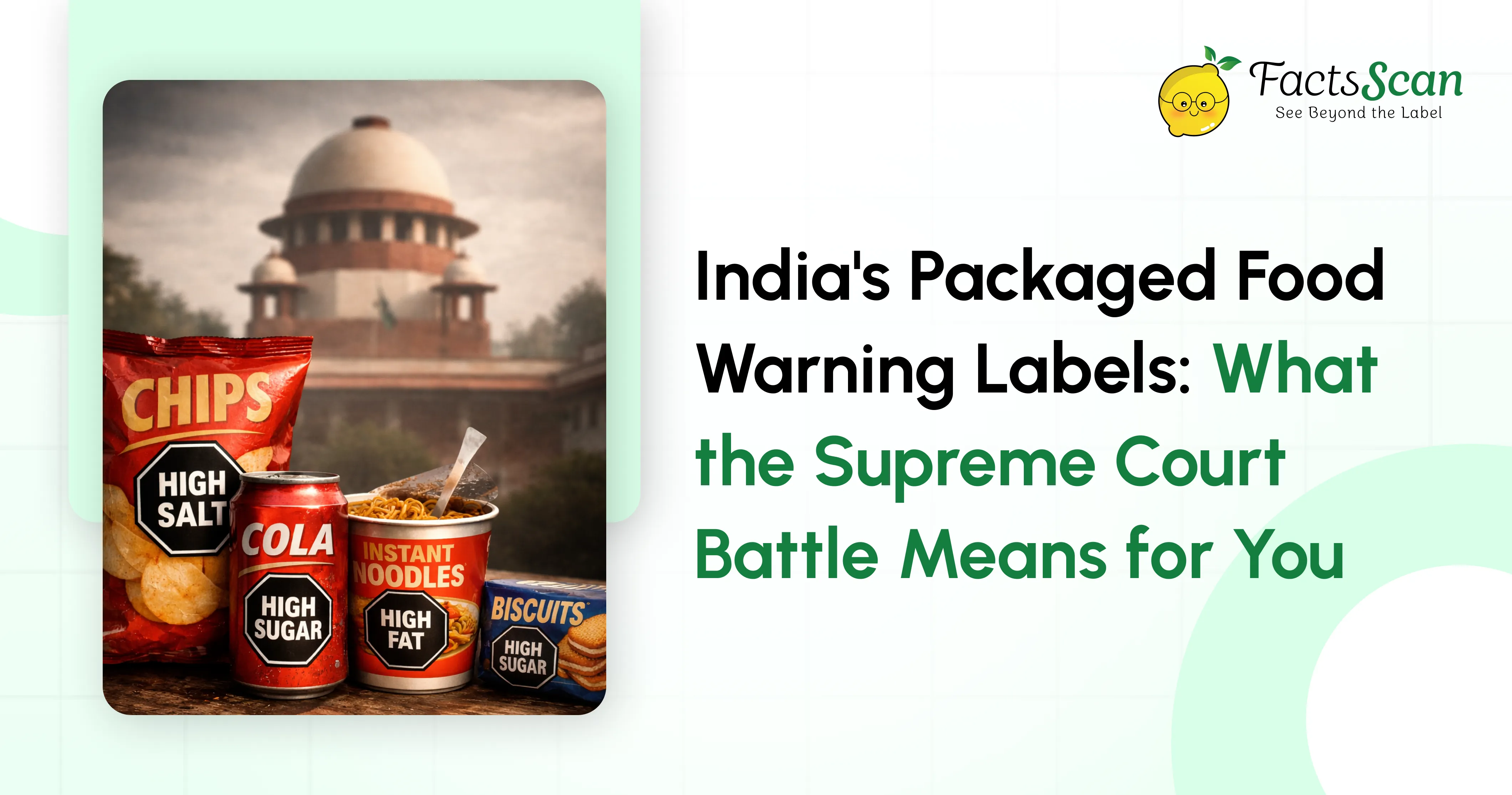
The court was hearing a public interest litigation filed by a public health trust seeking mandatory warning labels on packaged foods that are high in fat, sugar, and salt, collectively known as HFSS foods. These warning labels would appear on the front of a packet, not buried in the fine print on the back. The idea is simple: at a glance, before you read anything else, you'd know if a product crosses safe thresholds for these nutrients.
The court's reaction was direct. Whatever exercise FSSAI had undertaken so far, the bench noted, had "not yielded any positive result." Front of pack labelling is, it pointed out, "internationally prevalent" and already adopted in 44 countries, with 16 making it mandatory.
FSSAI filed a fresh affidavit on March 13, 2026, telling the court it is still evaluating whether to use a pictorial or tabular format for the labels, and requested six more weeks to consult with stakeholders and finalize a plan. The reform, in other words, is still very much in progress.
Why India Needs This Now
The scale of the problem becomes clear when you look at the numbers:
- Nearly 1 in 3 health claims on Indian packaged foods were found non-compliant or unsubstantiated in an independent audit of over 5,000 labels.
- Around 80% of health claims on honey failed compliance checks; for ghee, the figure was 65.5%; for edible oils and tea, more than half of all claims were flagged.
- Retail sales of ultra-processed foods grew by over 150% between 2009 and 2023, according to the Economic Survey 2025–26.
- Unhealthy diets now account for more than 56% of India's total disease burden, per ICMR-NIN estimates.
- Adult obesity in India has nearly doubled over the same period.
The connection between what Indians are eating and what's happening to their health is no longer abstract. It's showing up in hospitals, in disease statistics, and in the rising cost of healthcare for ordinary families.
What Are HFSS Foods?
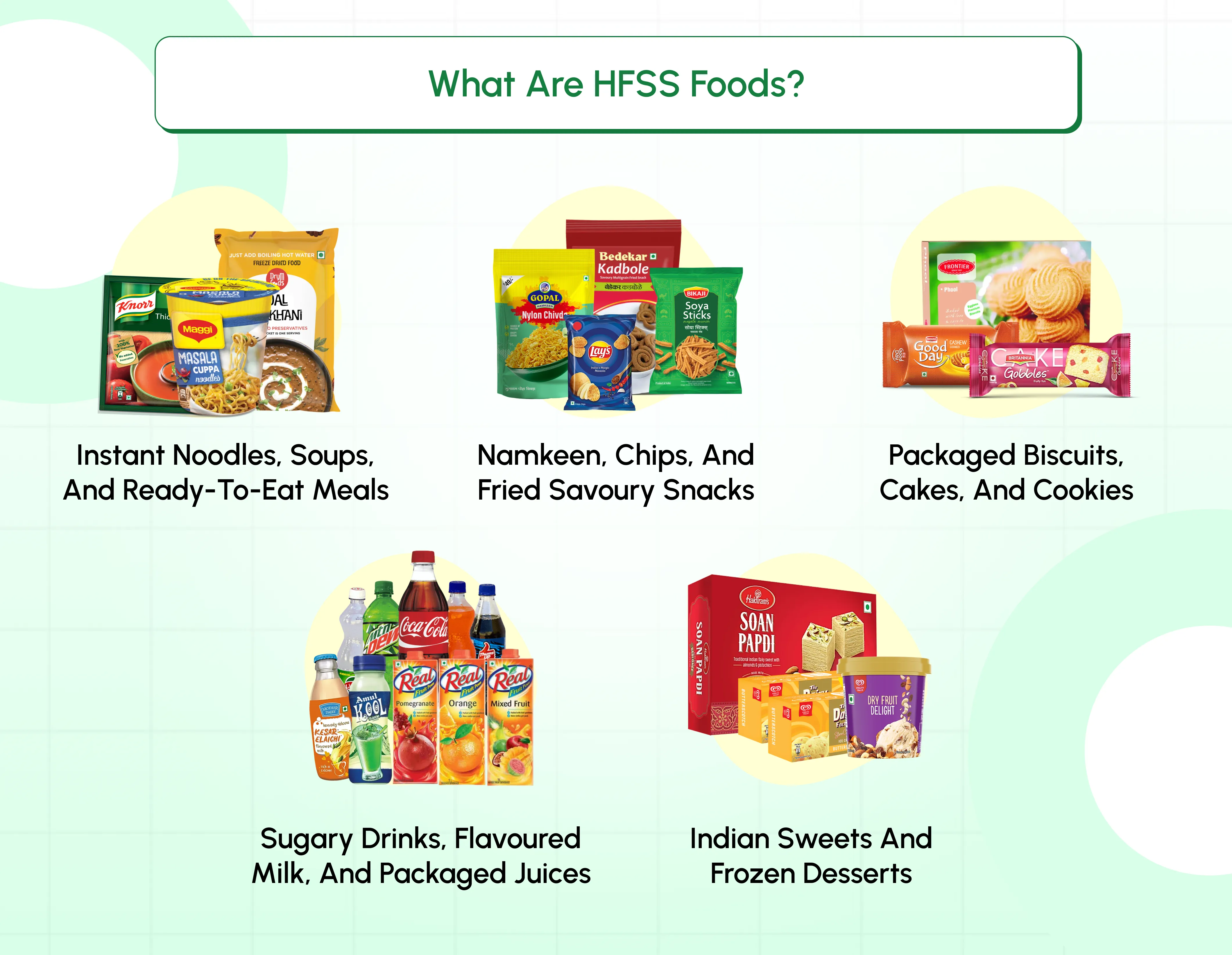
HFSS stands for High Fat, Sugar, and Salt. According to ICMR-NIN Dietary Guidelines for Indians 2024, HFSS foods are energy-dense, nutrient-poor products that exceed recommended thresholds for added fat, sugar, or sodium.
Common examples you'll find on Indian supermarket shelves include:
- Instant noodles, soups, and ready-to-eat meals
- Namkeen, chips, and fried savoury snacks
- Packaged biscuits, cakes, and cookies
- Sugary drinks, flavoured milk, and packaged juices
- Indian sweets and frozen desserts
Frequent consumption of HFSS foods is directly linked to obesity, type 2 diabetes, hypertension, and cardiovascular disease.
How Other Countries Have Solved This
India is not starting from scratch. Over 44 countries have already adopted front of pack labelling in various forms. Here is how the leading models compare:
| Country | FOPL Format | How It Works |
|---|---|---|
| Chile | Black octagonal warning | Direct "High in Sugar / Fat / Salt" labels on the front |
| United Kingdom | Traffic light system | Colour-coded red, amber, or green per nutrient |
| France | Nutri-Score (A to E) | Five-letter grade based on overall nutritional quality |
| India (proposed) | Under evaluation | Considering pictorial vs. tabular format; no final decision yet |
India's challenge is unique. With vast demographic diversity, hundreds of languages, and a wide range of literacy levels, no single foreign model translates directly. That's the complexity FSSAI is genuinely wrestling with, and it's legitimate. But it's also a complexity that has become a reason for delay stretching back years.
Consumer research conducted in India, including studies from AIIMS, has consistently found one result: people prefer warning labels over any other format. Simple, direct indicators of high fat, high sugar, and high salt outperform every other model when it comes to actually changing purchasing decisions.
The Misleading Front Panel Problem
Part of what makes this reform so urgent is the sophistication of modern food marketing. Packaged food brands invest heavily in front panel design, and the goal of that design is not neutrality. It's persuasion.
Here are some of the most common patterns consumers should watch for:
- "Multigrain" biscuits that are still high in sugar and refined flour.
- "Low fat" products that compensate with added salt or artificial sweeteners.
- "Natural" and "traditional" claims on products like honey and ghee that have been routinely flagged as misleading.
- Colour and imagery cues — soft greens, earthy browns, farm visuals — curated to trigger associations with health and wholesomeness.
None of this is illegal, strictly speaking. But it exploits the gap between regulatory intent and real consumer experience. Most people don't cross-reference the ingredient list against the nutrition table while standing in a supermarket aisle. Front panel warnings are designed precisely to close that gap, without requiring consumers to become food scientists to shop safely.
You Don't Have to Wait for the Law
The Supreme Court is pushing. FSSAI is deliberating. The regulation, when it comes, will be meaningful — but it will also take time.
That's the honest reality of policy reform in a country of India's size. Stakeholder consultations, scientific reviews, ministerial approvals, public comment periods — by FSSAI's own account, the process involves multiple rounds before a final notification. Six weeks becomes six months longer.
In the meantime, the packaged food you're buying today carries the same ambiguous labels it did last year.
This is where your phone changes everything.
How FactsScan Closes the Gap Right Now
FactsScan is built for exactly this moment — the gap between "this packaging looks healthy" and "but is it actually?"
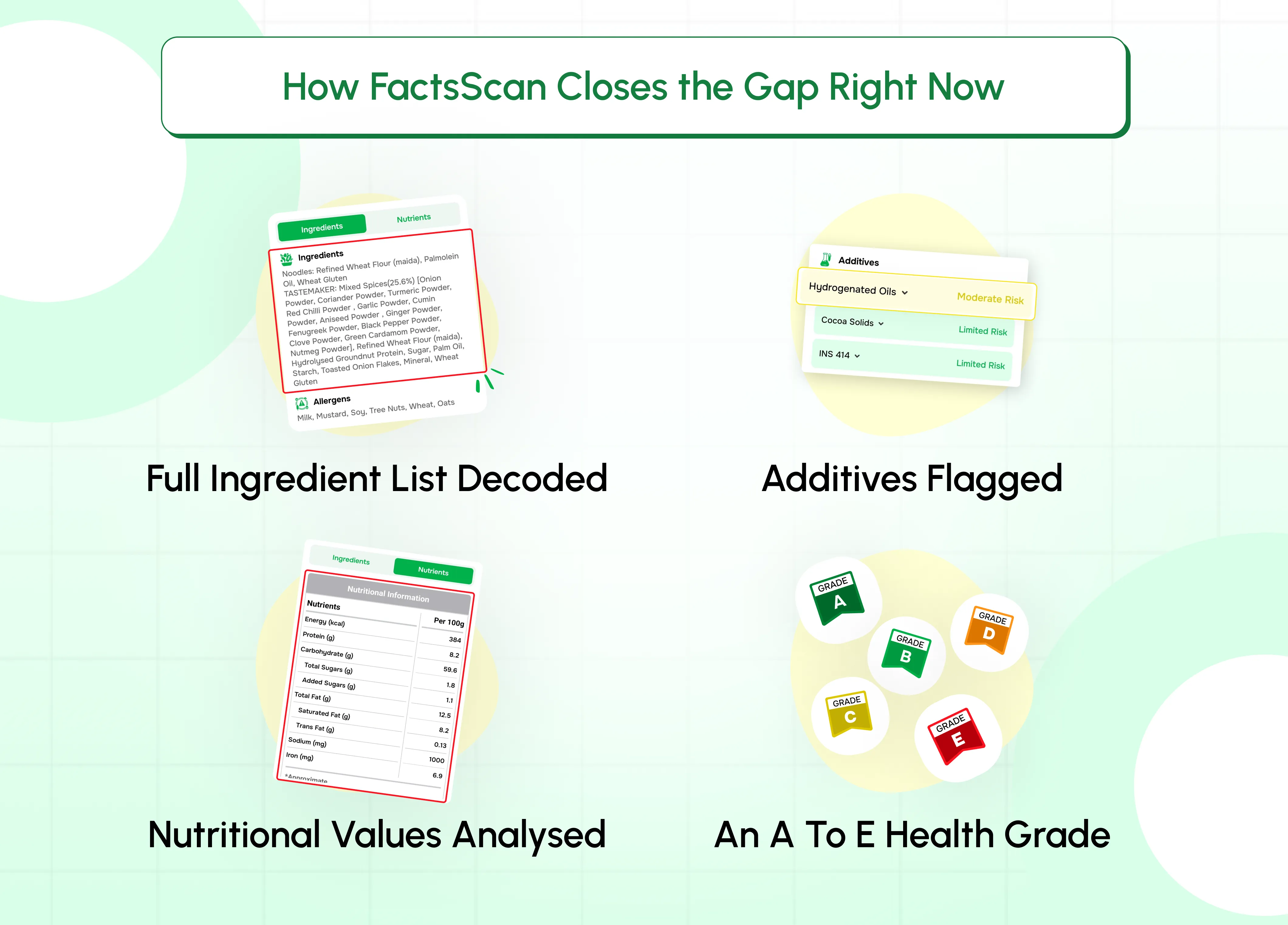
Scan any packaged food's barcode, and within seconds you get:
- Full ingredient list decoded — understand what's actually inside, not just what the brand wants you to see.
- Additives flagged — controversial preservatives, artificial colours, and flavour enhancers identified clearly.
- Nutritional values analysed — fat, sugar, and salt levels checked against recommended thresholds.
- An A to E health grade — an instant verdict from 0 to 100, no mental arithmetic needed.
The scoring is built on three transparent factors:
| Factor | Weight | What It Measures |
|---|---|---|
| Nutritional quality | 60% | Fat, sugar, salt, protein, and fibre levels |
| Additives and ingredients | 20% | Controversial or harmful additives present |
| Processing level (NOVA) | 20% | How heavily processed the product is |
A product that markets itself as "high protein" but relies on sugar, palm oil, and artificial flavour enhancers will reflect that in the grade — honestly, without the benefit of a curated front panel.
A Label on the Front, or Clarity in Your Hand
The Supreme Court's push for front of pack warning labels is a public health milestone in the making. When it finally arrives — and it should — it will make grocery shopping more transparent for hundreds of millions of Indians who deserve to know what they're actually eating.
Until then, the responsibility of decoding food labels doesn't have to fall entirely on you.
Try FactsScan Before Your Next Grocery Run
Before your next shopping trip, take 60 seconds to scan what's already in your kitchen. Pick any packaged product — breakfast cereal, cooking oil, instant noodles — and scan its barcode on FactsScan.
You may be surprised by what the front panel chose not to tell you.
Download FactsScan free on Android and iOS. No account needed. No subscriptions. Just honest food information, instantly.
Frequently Asked Questions (FAQs)
Front of pack labeling places simplified nutrition warnings on the front of food packaging, not buried on the back, so consumers can instantly identify products that are high in sugar, salt, or fat before purchasing.
Not yet. As of March 2026, FSSAI is still in consultation and has asked the Supreme Court for additional time to finalize the format. The reform is under active judicial pressure but has not been notified into law.
According to a 2025–26 independent audit, honey, ghee, edible oils, and tea had the highest rates of non-compliant or unsubstantiated health claims — products that consumers often assume are inherently healthy.
HFSS stands for High Fat, Sugar, and Salt. These are food products that exceed recommended nutritional thresholds and are linked to obesity, diabetes, hypertension, and cardiovascular disease. FOPL is specifically designed to flag these products clearly on packaging.
FactsScan scans any packaged food barcode and gives you an instant health score (A to E) based on ingredients, additives, and processing level — filling the transparency gap that current food labels leave open.
Ready to make Healthier Choices?
Download FactsScan now from the Google Play Store and App Store and take charge of your food choices.





Sweety Patel

Author

Sweety Patel, founder of FactsScan, has over 14 years of experience in the development industry, where she has successfully created multiple applications. Driven by her passion for food safety and health, she launched FactsScan to provide consumers with a reliable solution to understand what they’re eating, its nutritional value, and better alternatives. With extensive research in food and nutrition, Sweety is committed to empowering people to make informed food choices for a healthier lifestyle.
Recent Articles

You Trust the Brand. But Have You Actually Read the Label?
What surveys and real data reveal about how Indian consumers actually shop, and why a trusted logo on the front is not the same as knowing what is inside.

Top Health Awareness Apps in India to Make Smarter Lifestyle Choices (2026)
Discover the top health awareness apps in India (2026) that help you make smarter lifestyle choices. From tracking nutrition and fitness to decoding packaged food, these apps empower you to stay informed, eat better, and live healthier every day.
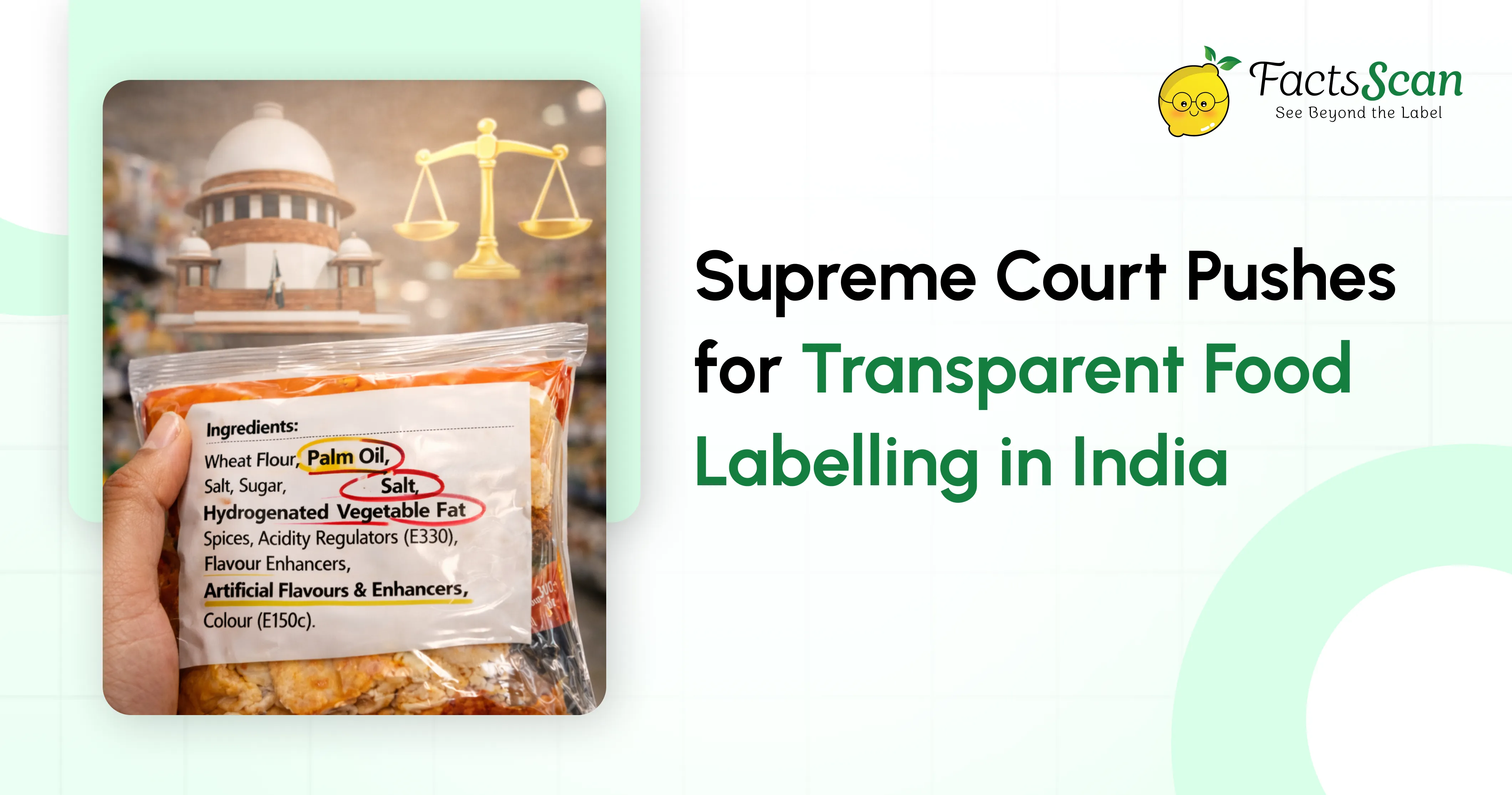
Supreme Court Pushes for Transparent Food Labelling in India
The Supreme Court of India has called for clearer and more transparent food labeling to help consumers understand what they are eating. The move aims to improve ingredient and nutrition disclosure, promoting healthier choices for people across India.